
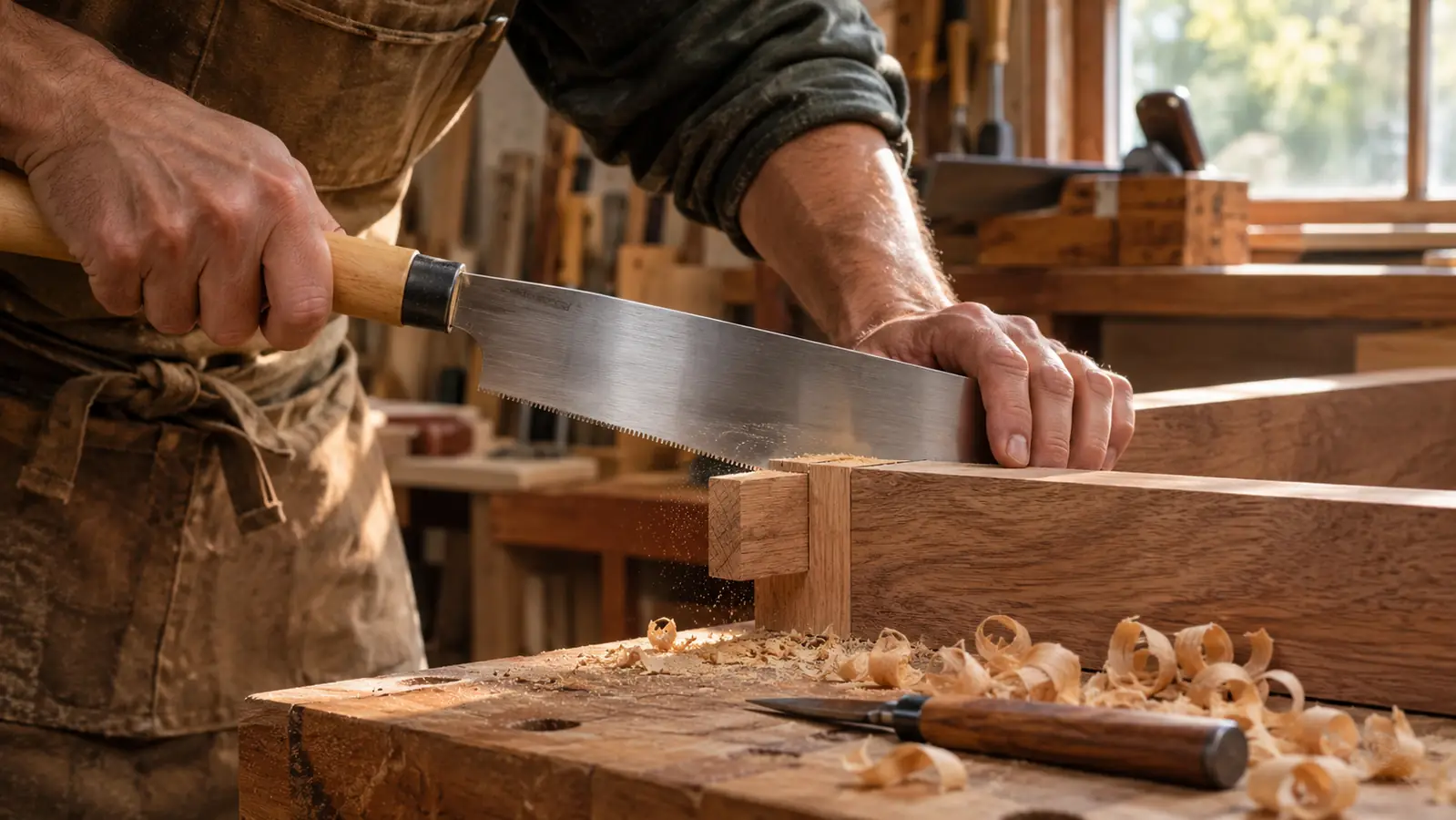
Twenty-odd years ago I watched a carpenter cut a set of dovetails with a saw that had no back, no brass spine, and teeth that pointed the wrong way. He finished the tails, tapped the waste out with a chisel, and handed the saw to me so I could try. I made three cuts into a scrap of pine and ruined all three. That was the day I learned that a pull saw does not forgive a heavy hand, and it took me a good while longer to admit that the saw had not been the problem. I have kept a Japanese saw in the shop ever since. For the past several months the one hanging on the peg above my maple bench has been the SUIZAN Ryoba Double Edge Saw, the 9.5 inch model. I have run it through white oak, hard maple, poplar, and a fair pile of construction-grade softwood, and I have opinions.
A ryoba is a two-sided saw. One edge carries rip teeth at 9 teeth per inch, for cutting along the grain. The other edge carries fine crosscut teeth at 15 teeth per inch, for cutting across it. The blade is 0.5 mm thick and takes out a kerf of roughly 0.8 mm, which is about a third of what a Western panel saw removes. It cuts on the pull stroke, not the push. The blade is held in the handle by a single screw. That is the entire tool. No adjustment, no dial, nothing to tune. You either learn to let the saw work or you spend your evenings fighting it.
The Quick Verdict
A thin, fast, accurate saw for joinery and trim. Held back only by a blade guard that fights you and teeth that reward patience far more than force.
Amazon Check Today's Price →If your backsaw leaves a kerf you can measure with a rule, start here
The 9.5 inch SUIZAN ryoba cuts a kerf about a third as wide as a Western backsaw's, with 15 TPI crosscut teeth for shoulders and 9 TPI rip teeth for tenon cheeks. The replacement blade is listed separately, which is worth knowing before you need one.
Amazon Check Today's Price on Amazon →How I've Used It
My bench sits against the north wall of a converted single-car garage, under a window I put in so I would have light to sharpen by. The saw lives on a peg within arm's reach, which tells you most of what you need to know. Over the winter I built four small boxes, two of cherry and two of butternut, and every shoulder and every tenon cheek on those boxes came off this blade. I cut the tails for a half-blind drawer front with it. I trimmed the ends of a neighbor's porch rail with it because my miter box was buried under a bench sweep. I have used it on 8/4 white oak, which is where a thin blade earns or loses its reputation, and on quarter-inch poplar drawer bottoms, where a heavier saw would have torn the far edge on the way out.
The drawer repair is the job I remember best. A neighbor brought over a small chest whose drawer bottom had split out of its groove, and the fix needed a shallow stopped cut about an inch and a half deep into a side that was already assembled. A backsaw would have been too deep in the plate to start without chewing the front corner. With this one I laid the blade flat against the side, took short pulls, and worked the kerf back until the bottom slid home. It was not a pretty job. It was an accurate one, and the chest is still in her hallway.
The thing that takes getting used to is the direction of the stroke. A Western saw cuts when you push, so your instinct, built up over decades, is to lean into the push and let the weight and stiffness of the plate carry the cut. Do that here and the blade buckles and the line wanders. The ryoba cuts when you pull, so the blade is in tension through the whole stroke, and a thin blade in tension stays straight. Once that clicked, my cuts got faster and my shoulders got squarer. It took a couple of weeks of reminding myself at the vise. I say it plainly because every review of a pull saw says the same thing and every new user ignores it anyway.
Where the difference showed up most was at the start of a cut. A thin blade with fine teeth sits in a knife line and stays there. You can bring the saw up against your thumbnail, take four or five light pulls to establish a groove, and then lengthen the stroke. With my backsaw I am forever fighting to keep the toe from hopping out of the line on the first push. There is far less of that here, partly because the teeth are finer and partly because pulling draws the teeth down into the wood instead of skating them across the surface.
The Two Edges, and When Each One Earns Its Keep
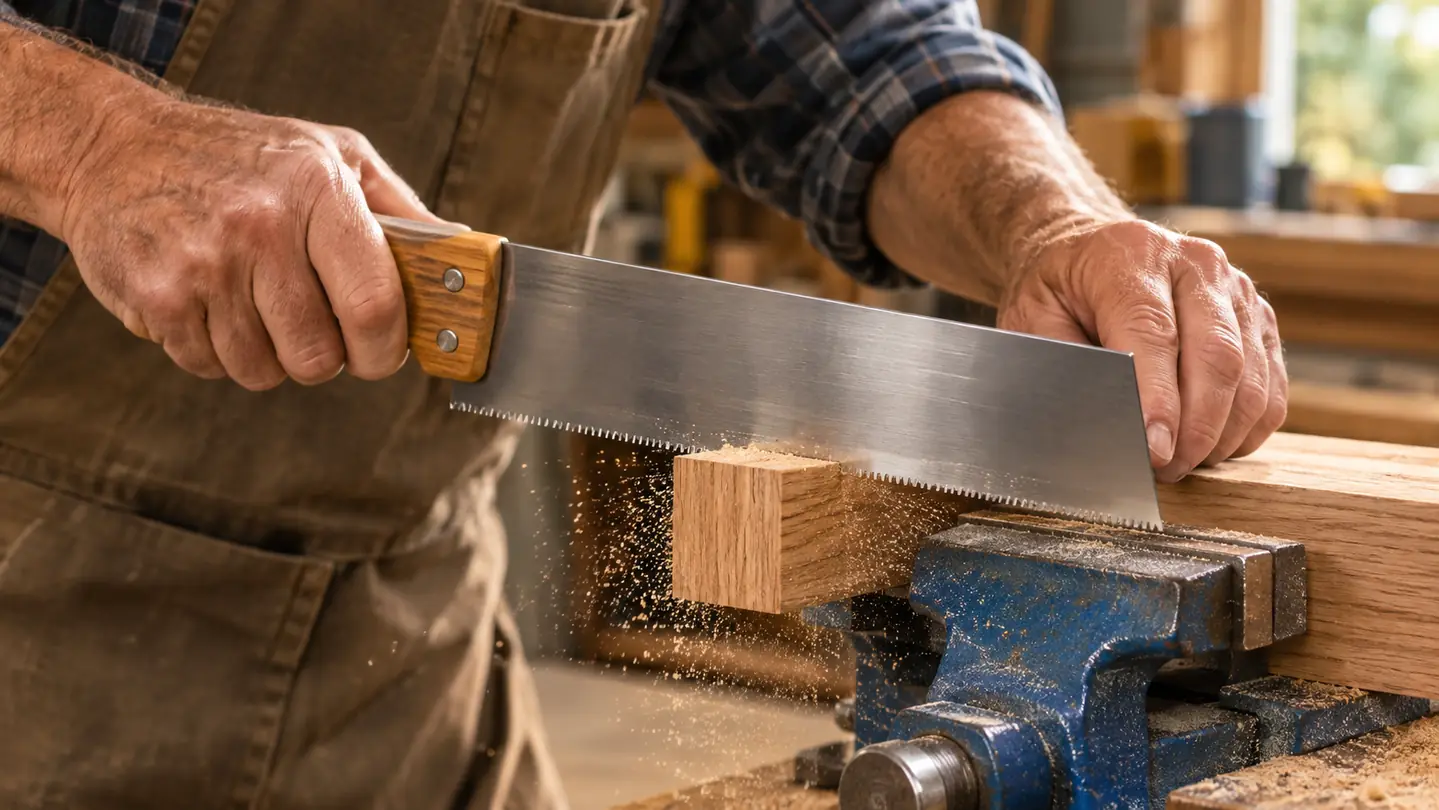
The 15 TPI crosscut edge is the one I reach for first, and the one that does most of the work in my shop. It cuts tenon shoulders, it trims dovetail pins, it cuts the ends of drawer sides, and it clears the waste from a stopped dado if I am careful about where I stop. The teeth are filed for crosscutting, meaning they sever fibers on both sides of the kerf rather than chiseling them off, so the surface left on end grain is smooth. On poplar and butternut I have skipped the shooting board entirely and gone straight to a light paring cut at the shoulder.
The 9 TPI rip edge handles tenon cheeks and any cut that runs with the grain. It is not a fast saw. Nine teeth per inch on a 9.5 inch blade is a joinery count, not a carpentry count, so if you are ripping a two-foot board down to width you will be there a while and your arm will know it. For a cheek that is an inch deep and three inches long, though, it is quick enough and it tracks a line well. I clean up the cheek afterward with a shoulder plane or a wide chisel, same as with any saw, so the slightly rougher surface the rip teeth leave does not trouble me.
The mistake I made early on, and I suspect the mistake most people make, is grabbing the rip side for a crosscut because it happens to be the side facing me. The saw does not refuse. It just cuts slower and leaves a fuzzier edge, and you spend ten minutes wondering why the saw has gone dull overnight. It has not gone dull. You are using the wrong set of teeth. Once turning the saw over before you start becomes a habit, that stops happening. I still catch myself maybe once a month, and I still feel foolish every time.
On thin stock the crosscut edge does something a backsaw cannot easily do, which is finish a pin cut without blowing out the far face. I built a run of small parts from quarter-inch butternut this winter, and the far edge on those cuts came out clean enough that I did not need a backer board. That is not a claim I would make for a Western saw with any set to its teeth. Fine teeth and a thin plate make the exit side of a cut gentler, and on a box with thin walls that is the difference between a good fit and a piece of firewood.
What a 0.8 mm Kerf Actually Buys You
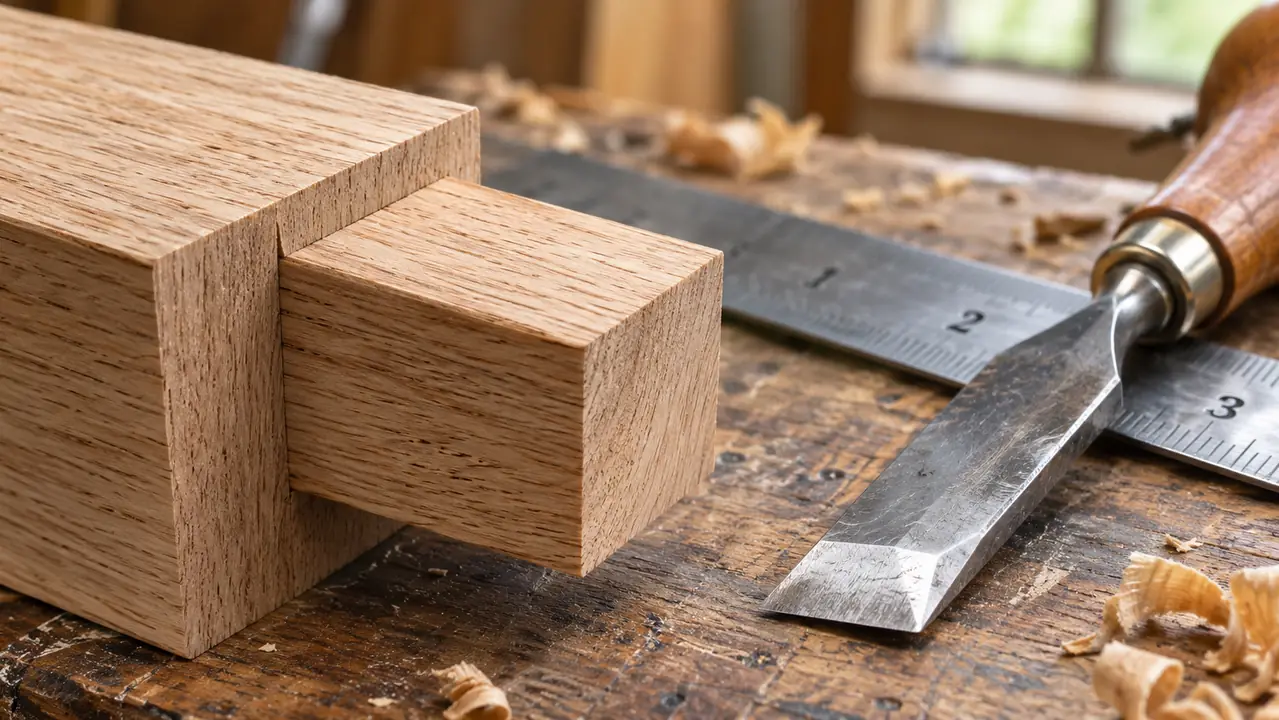
0.8 mm is not much of a kerf. A typical Western backsaw takes out somewhere between 1.5 and 2 mm, and a full-size panel saw more than that. In practice, when I cut a tenon cheek I am removing noticeably less material, so the fit is closer off the saw and I have less paring to do before the shoulder seats. On a small box with three-eighths walls that difference matters twice over, because a wide kerf throws the proportions off and leaves you less stock to correct with. It also means less binding in a deep cut, since there is not a thick plate dragging in a narrow slot. The whole saw measures 23.2 inches end to end and weighs 0.2 kg, so it is not a tool you notice carrying around the shop.
The tradeoff is that there is no room in the cut to correct a mistake. With a stiffer, thicker saw you can sometimes steer a wandering blade back to the line by twisting the handle a touch. With this one, by the time you feel the drift the kerf is already where it is, and your choices are to finish the cut and pare back to the line or start over on a fresh piece. I have done both, more than once. It makes you slower and more deliberate at the marking stage, which is not the worst habit a woodworker can build.
How It Has Held Up Through the Months
I have had this saw through four boxes, a drawer repair, a couple of dozen tenons, and one ill-advised attempt at cutting aluminum channel for a shop jig, which I do not recommend and which I am not proud of. The teeth are still sharp enough to shave end grain on poplar. The blade has not kinked, which was the failure I expected, because I have been careful not to lever it sideways when clearing a cut. The single screw in the handle has not loosened. I check it every couple of weeks anyway, out of long habit with any tool that comes apart.
When the teeth finally go, the fix is a new blade rather than a sharpening. The blade is held by one screw, so you loosen it, slide the old blade out, slide the new one in, and tighten. SUIZAN sells a 9.5 inch Ryoba replacement blade separately, and I would order one at the same time as the saw rather than waiting until the morning you need it. Japanese saw teeth are hardened and thin, and hand-filing them is not a job most people should take on. I would not attempt it. The listed warranty runs 30 days, which speaks to manufacturing defects rather than wear, and that is ordinary for the category.
What I Don't Care For
The blade guard is the part I like least. It is a sleeve that slips over the teeth, which is the right idea, and it protects them when the saw is rattling around in a drawer, which matters. But it is fussy to get on straight, and mine has split at one end after a few months of daily handling. I still use it, because a saw with bare teeth knocking against a chisel roll will chip them, and a chipped tooth leaves a track in every cut after that. I just wish the guard were stiffer and a hair longer.
The other honest limitation is length. The blade is 9.5 inches, which is right for joinery and wrong for anything wide. Cutting a 14 inch panel down to width with this saw is possible and tedious, and you will not hold the line over that distance with a plate this thin. I keep a Western saw for carpentry work and I do not apologize for it. This one is a bench tool. That is less a criticism than a reminder that no single saw does everything, and the talk around Japanese saws sometimes suggests otherwise.
What I Liked
- Cuts a kerf of about 0.8 mm, so joints fit closer off the saw and there is less to pare
- The 15 TPI crosscut edge leaves end grain smooth enough to skip the shooting board on poplar and butternut
- Pulling keeps the blade in tension, so a thin plate follows a knife line instead of wandering
- One screw holds the blade, so a worn blade swaps out in under a minute
Where It Falls Short
- A plate this thin will kink if you lever it sideways to clear a cut
- The 9.5 inch blade is too short for wide panels and long rips
- The blade guard is fussy to fit and mine has already split
- Worn teeth mean a new blade, not a sharpening, and the replacement is sold separately
Four months in, the 15 TPI edge still shaves end grain on poplar clean enough that I skip the shooting board.
Who This Is For
If you cut joinery by hand, or you want to start, this is the saw I would put in your hand. It suits someone who works at a bench with a vise and a knife line, who is willing to spend two weeks unlearning the push stroke, and who wants a finer cut than a Western backsaw gives without buying three saws to get there. It suits the returning hand-tool woodworker who keeps a table saw for stock preparation and wants the joinery end of the work to be quiet and accurate. If you build small boxes, drawers and cabinet parts, the 9.5 inch blade is the right length for nearly everything you will do at the vise.
Who Should Skip It
Skip it if you are framing, building a deck, or breaking down sheet goods. A 9.5 inch pull saw with 9 rip teeth is the wrong tool for that work and you will be miserable within the hour. Skip it if you are not willing to change how you saw, because forcing this blade is exactly how you kink it, and a kinked blade is a blade you replace. And skip it if the idea of a consumable blade bothers you. This is not a saw you file yourself at the bench; it is a saw you keep a spare blade for. Some woodworkers never make peace with that, and there is no shame in knowing which sort you are before you buy.
Start with the crosscut edge and a spare blade in the drawer
The 9.5 inch SUIZAN ryoba covers shoulders, tenon cheeks and trim work at the bench, and the replacement blade is listed on its own so you are not stranded the week the teeth go. Check today's price on Amazon.
Amazon Check Today's Price on Amazon →