
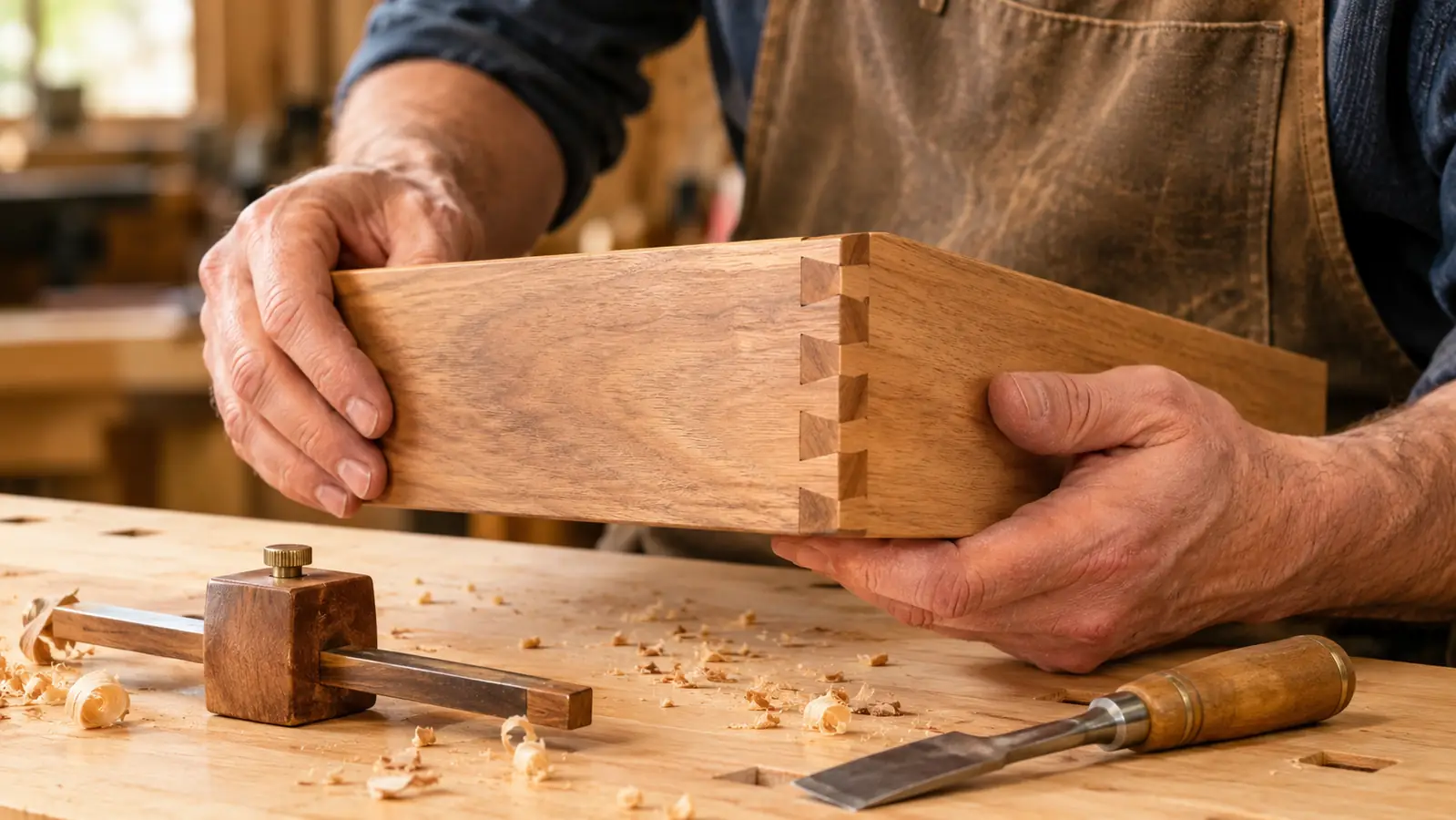
The first dovetail I cut with a pull saw was a mess. Thirty years of push-saw habits were in my hands and not one of them carried over. I leaned into the stroke the way you lean into a Western backsaw, the plate folded under my thumb, and the line wandered a sixteenth off the gauge before I caught it. I put the saw in a drawer, shut it, and went back to what I already knew how to do.
That was the mistake. Not the cut, the drawer. It took me two more winters to work out that the saw had not failed me. I had failed the saw by handling it like a tool it was never built to be.
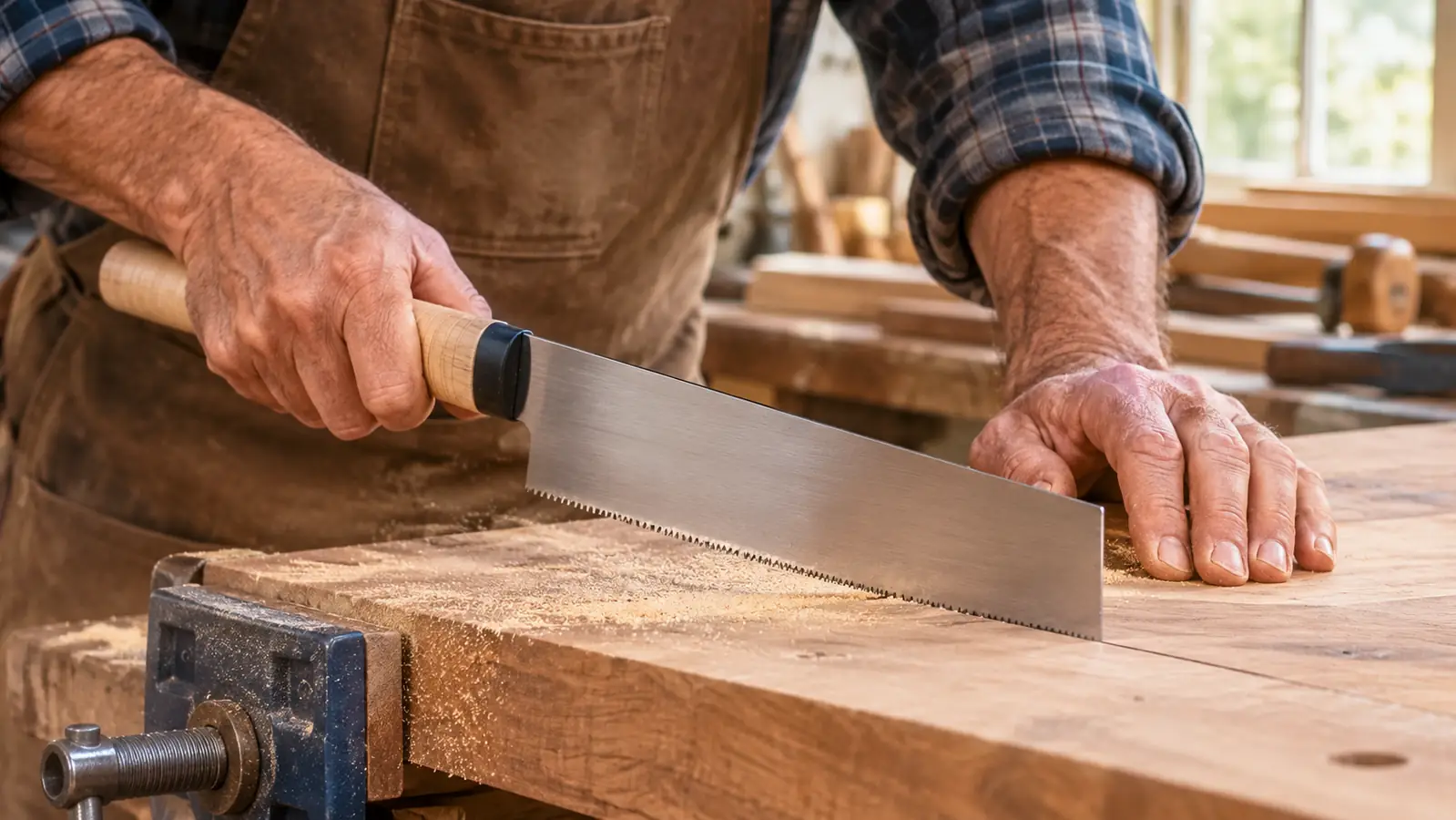
The saw is the SUIZAN Ryoba Double Edge Saw, 9.5 inch, and it has lived on my bench for going on three years now. On a one-man bench that is a real trial, because everything in this shop either earns its place or gets moved out to the shelf by the stove. Ryoba means double edge: rip teeth down one side, crosscut teeth down the other. SUIZAN cuts the rip side at 9 teeth per inch and the crosscut side at 15.
The numbers that matter are the plate and the kerf, which is the width of the slot the saw leaves behind. The blade is 0.02 in thick and the cut it makes is 0.03 in wide. That sounds like nothing until you stand it next to a Western saw. The plate flexes between two fingers. That thinness is the entire reason the saw works, and it is also the reason the first thing you have to learn is the stroke, not the tooth count.
A push saw is a column braced against the cut. A pull saw is a wire under tension. Push a wire and it folds. Pull it and it stays exactly where you pointed it.
Three years on the bench, and it is still the saw my hand reaches for first
SUIZAN Ryoba, 9.5 inch. Rip teeth at 9 TPI, crosscut at 15, on a 0.02 in plate that leaves a 0.03 in kerf.
Amazon Check Today's Price on Amazon →Here is how I use it now, and it is the opposite of how I was taught. The saw gets pulled, never pushed. You set the teeth on the far side of the line, lift the handle just enough to start the kerf, and draw the blade back toward your hip. The plate is in tension for the whole stroke, so it tracks the line instead of hunting around it. The far hand holds the stock steady. The near hand does nothing but travel straight back. Once that clicks, the saw stops feeling foreign and starts feeling like an extension of your forearm.
Which edge you reach for depends on the direction of the grain. Rip teeth for a cut running with the grain: tenon cheeks, the waste between pins, anything long. The 15 TPI crosscut side for shoulder cuts and trim, where you want severed fibers and a clean arris, that sharp corner where two faces meet, instead of torn end grain. I sort them by feel now. The rip teeth are coarser under the thumb, and after a while your hand knows without your eyes getting involved. The teeth are set at a 9 degree cutting angle and clear the kerf without the plate rubbing.
The narrow kerf earns its keep in ways I did not expect. 0.03 in is roughly a third of what my old backsaw takes out. Across a set of four dovetails that is a real amount of wood that never has to come off with a chisel afterward. On a small box, where a pin might only be a quarter inch wide, that gap is the difference between a joint that closes tight and one you have to shim.
The blade hangs on a single screw. Loosen it and the blade lifts off, so when the teeth dull you fit a SUIZAN 9.5 in Ryoba replacement blade, sold separately, instead of buying a new tool. I have swapped mine once. It took less time than walking to the bench for the screwdriver. The saw weighs 0.2 kg and is listed at 23.2 in long overall, so it hangs on a nail behind the bench and I never notice it is there until I need it. The blade guard comes with it and I use it, because a thin plate on a nail is an accident waiting to happen.
Where it lets me down. It is a joinery saw, not a breakdown saw, and it will not replace a panel saw for sizing a plank. The plate is thin enough that a heavy hand can kink it, so if you have spent forty years bearing down, this is a tool that will punish the habit before it cures it. The warranty runs 30 days, which is short for a hand tool. Treat the blade as the wear part it is, hang it with the guard on, and the handle will outlast your patience for sharpening.
What I'd Tell You If We Were Sitting at My Kitchen Table
Buy it because you want to learn to saw to a line, not because you want a faster way to break down boards. The first ten cuts will be worse than what your backsaw does. That is not the saw, that is your wrists arguing with a new motion, and the argument ends after about a month of joinery work.
Second thing. Buy a spare blade when you buy the saw. A dull pull saw is worse than no saw at all, because a dull one teaches you to force the stroke, and forcing is the one habit that will kink a 0.02 in plate. Third, practice on scrap pine for a week before you touch a piece of good hardwood. Pine tells you the truth about your stroke faster than oak will, and the SUIZAN teeth will read every wobble back to you.
And when somebody tells you a pull saw is faster, let the speed claim go and keep the part about control. It is not faster. It is quieter in the cut and it leaves a line you can work to, and after thirty years of carpentry I will take those two things over faster every time.
If you buy one saw this year, buy the one you will actually learn from
The SUIZAN Ryoba, 9.5 inch. Rip and crosscut on a single plate, one screw holding the blade. Order the spare blade at the same time.
Amazon Check Today's Price on Amazon →