
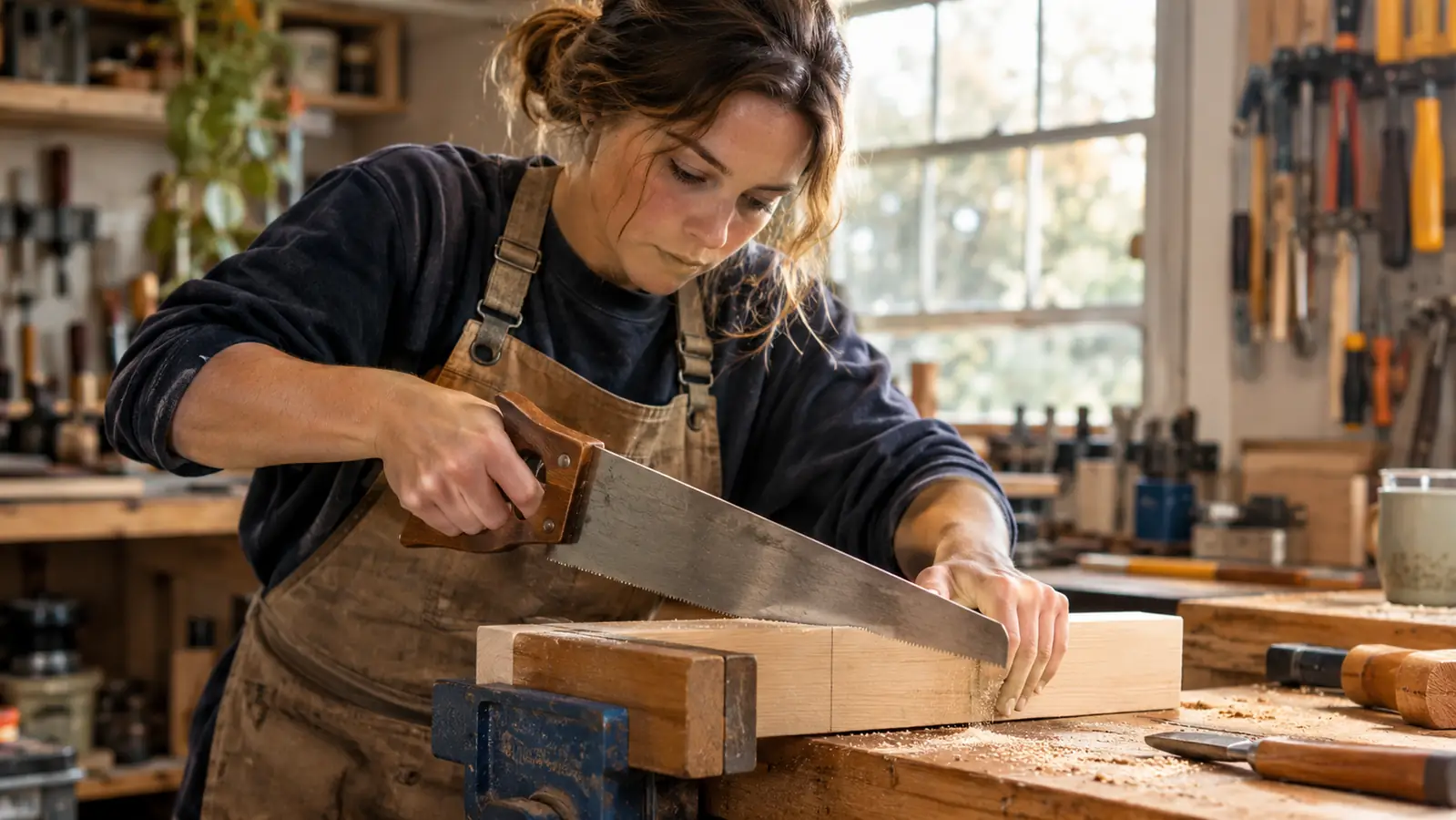
You have seen the videos. A woodworker lays a saw on a pencil line, gives it four easy pulls, and the end of the board drops away clean as a planed edge. No motor, no dust cloud, nothing louder than the hiss of teeth in the wood. It looks like the simplest thing in the world, and it looks a little like cheating.
I bought the SUIZAN Ryoba Double Edge Saw, the 9.5 inch model, for about the same reason. I spent close to thirty years repairing old New England houses, and I had cut more joinery with a western saw than I care to count. I wanted to know whether a Japanese pull saw had earned its reputation or whether the internet had simply talked it up past its merits. That was six years ago. The saw is still on my bench, still the one I reach for first most days, and I still think most of what gets written about it online leaves out the parts that decide whether you keep it or hang it on a nail.
The Quick Verdict
A genuinely fine saw that rewards a light hand and punishes a hurried one. Buy it for joinery, trim and fine cutting. Do not buy it expecting to saw through a nail, a sheet of plywood, or thirty years of push-saw habits without a fight.
Amazon Check Today's Price →The saw that made my western backsaw feel heavy
9.5 inch blade, rip teeth on one edge and fine crosscut teeth on the other, and a kerf thin enough that the cut nearly closes behind the plate. Check today's price and the replacement blade options.
Amazon Check Today's Price on Amazon →How This Saw Ended Up on My Bench
My shop is a single-car garage I converted years back. One hard maple bench I built myself, a wood stove that makes February bearable, and a sharpening station by the window because that is where the light is best. It is a hand-tool shop. No table saw. I cut dovetails, tenons, and the occasional stopped groove by hand, and I take in repairs from neighbors who bring me old house parts that need to look as though nobody ever touched them.
Before the SUIZAN I used a western backsaw for joinery and a panel saw for anything larger. Both worked. Both had a stiff spine and a heavy plate, and both wanted me to push them through the wood. That push is what my hands had trained to do for three decades, and it is the first habit the new saw broke.
The saw arrived with a blade guard fitted. I set the guard aside in a way I would later regret, and I will get to that. The tool itself weighs about 0.2 kg, which is a shade under half a pound, and it measures 23.2 inches long overall. I mention the numbers because they explain the feel, and the feel is the whole reason you either take to this saw or you do not.
The Pull Stroke Is Not the Hard Part
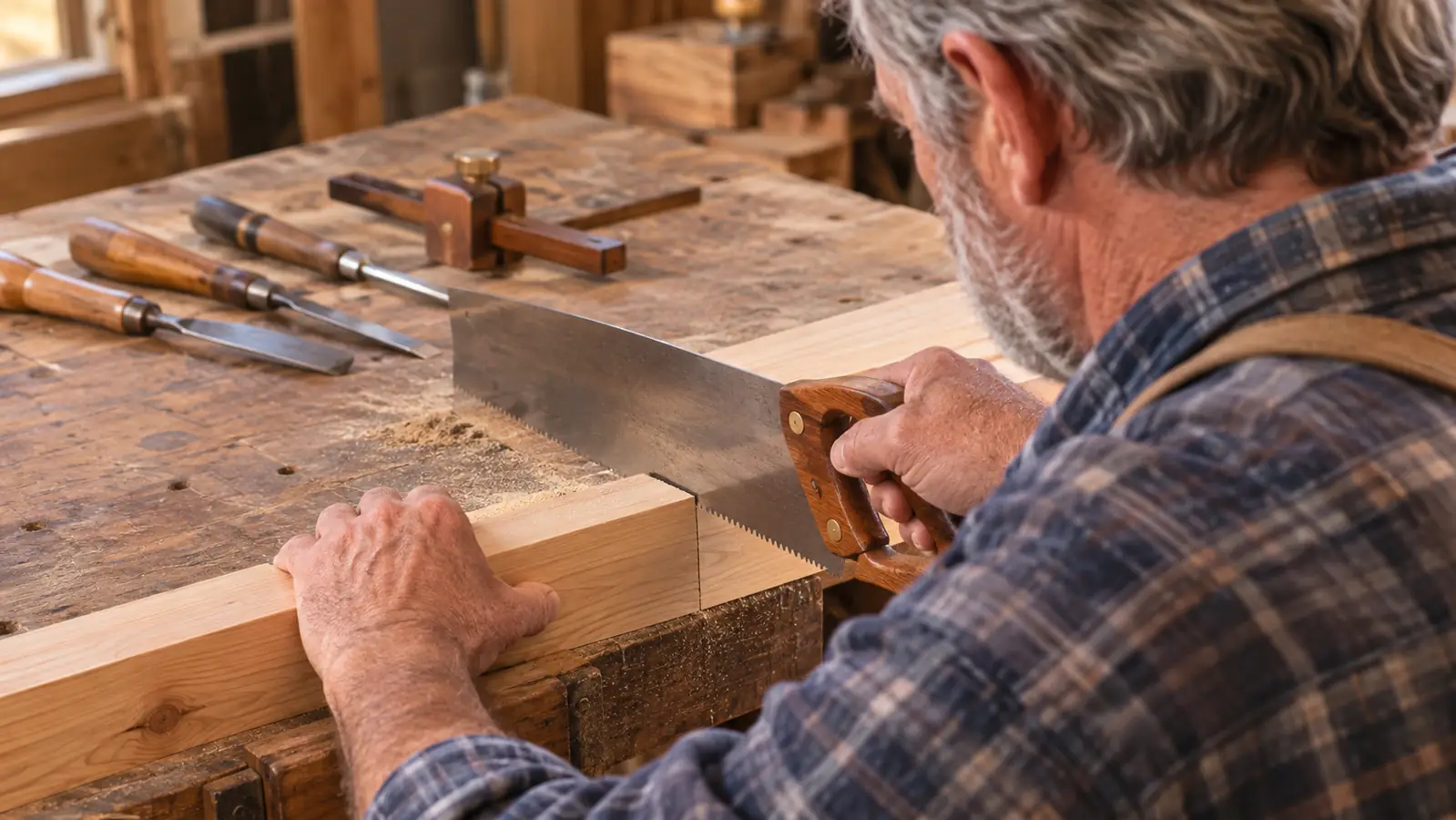
Every account of a Japanese saw tells you it cuts on the pull. That is true and it is easy. The teeth rake back toward the handle, so the saw bites when you draw it toward your body and glides when you push it away. Your arm does less work on the return, the plate stays loaded against the fibers, and the cut steers better than a push saw because the blade is being drawn into tension instead of shoved toward buckling.
Here is the part the videos skip. The hard part is not the direction of the stroke. The hard part is that this saw will not accept force. A western saw with a stiff back lets you lean on it and bully it through a cut, and leaning is what I had done for most of my working life. Lean on a Ryoba and the thin plate flexes, the teeth skate off the line, and the kerf wanders somewhere you did not ask it to go. My first dozen dovetails with it were worse than the ones I had been cutting with a backsaw, and it took me longer than I would like to admit to see that the fault sat in my hands and not in the tool.
The cure was a few weeks of deliberately dull practice on scrap pine. Long, slow pulls with almost no downward pressure, letting the teeth find their own pace and their own line. Once I stopped helping, the saw started cutting straight. That is the bargain this tool offers. Patience comes back to you as accuracy, and hurry comes back to you as a crooked line you have to plane out.
Two Edges, Two Very Different Jobs
The plate carries teeth on both edges. One edge is rip cut at 9 teeth per inch, filed to chisel wood out along the grain, the way you would cut a tenon cheek or break a board down its length. The other edge is crosscut at 15 teeth per inch, with finer teeth filed to slice fibers like a row of small knives so the end grain comes away clean. If you have only used western saws, it is the same idea as owning a rip saw and a crosscut saw, except both edges live on one plate and you turn the tool over to change jobs.
In practice I use the crosscut edge for maybe ninety percent of what I do. Trimming a tenon shoulder, cutting a dovetail, paring the end of a drawer side, taking a board to length across the grain. The rip edge comes out for tenon cheeks, for the long cuts when I am splitting a board down its face, and for widening a groove that came out tight. The crosscut side leaves a surface that needs very little cleanup in softwood and only a stroke or two of the chisel in cherry or walnut.
One thing nobody mentions: the two edges sit close together, and on a deep cut a careless stroke can drag the opposite set of teeth along the face of the board and scratch it. That is not a defect, it is geometry. I keep the first inch of the cut shallow, get the kerf established, and the problem goes away on its own.
The plate is 0.02 inch thick and the kerf is 0.03 inch. That is the whole review in two numbers: less wood turned to dust, less effort out of your arm, and almost no room for a mistake.
The Thin Plate Is the Whole Point, and the Whole Risk
The blade runs 0.02 inch thick, half a millimeter, and it cuts a kerf of 0.03 inch, or 0.8 mm. A typical western saw takes a kerf two or three times that wide. A narrow kerf means less wood converted to dust, a faster cut for the same effort, and less strain on the plate and on your shoulder. It also means a cut that closes up behind the blade as you go, which is a strange and pleasant thing to watch the first time you see it happen.
It also means the blade has almost no forgiveness in it. Twist the handle even slightly while the saw is buried in a cut and the plate will kink. A kinked blade does not come back, and a blade that has lost its set will not track a line no matter how careful you are afterward. I learned this the expensive way on a piece of white oak that was sitting badly in my vise, and now I spend an extra minute making the workpiece solid before the saw comes off the wall. If you take one thing from this review, take that one.
The cutting angle is listed at 9 degrees, the angle the teeth present to the wood. It is a sensible general purpose grind, which is why the saw feels at home in white pine and in hard maple without complaint. It is not a dedicated ripping monster and it is not a fine finishing saw for delicate inlay, but it handles the middle of the work, and the middle of the work is most of what a furniture maker actually does.
The other thing the thin plate changes is the sound and the mess. There is no motor noise to mask what the teeth are doing, so you hear the cut. A clean pull has a steady rip to it. A pull where the plate is binding goes quiet and gritty, and that sound is your warning to stop and look before you force something you will regret. I have come to trust that feedback more than I trust my eye on a pencil line.
The One Screw Blade Change, and How I Manage It
The blade is held to the handle by a single screw. When the teeth dull, or when you chip them, you loosen that screw and fit a SUIZAN 9.5 inch Ryoba replacement blade, which is sold separately. That is the entire maintenance story. You are not sharpening these teeth at home unless you are a far more patient person than I am, and there is no saw doctor in my corner of New Hampshire who will touch a Japanese saw for what the job is worth.
One screw sounds flimsy. It is not, provided you treat it properly. Check that it is snug before you start and check again after a long session, because a loose blade will rattle and cut poorly and you will blame the saw for it. Do not gorilla it tight either. The screw bites into wood, and you can crush the seat if you get enthusiastic with a screwdriver. The saw carries a 30 day warranty, which tells you plainly what the maker considers a defect and what it considers ordinary wear.
What I Liked
- Thin 0.02 inch plate and a 0.03 inch kerf cut fast with very little effort
- Rip teeth on one edge and 15 TPI crosscut teeth on the other cover most bench work
- Weighs about 0.2 kg, so an hour of sawing does not wreck your arm
- Blade swaps out with one screw when the teeth finally go
- Leaves clean end grain in hardwood with almost no cleanup
Where It Falls Short
- The plate kinks if you twist it, and a kinked blade is finished
- It will not tolerate forcing, so old push-saw habits have to go
- Teeth cannot be resharpened at home, so blades are a consumable
- The opposite edge can scratch a deep cut if you get careless
- Wrong tool for plywood, nails, or demolition work
What the Hype Gets Wrong
The marketing around Japanese saws makes them sound like a replacement for everything on the saw rack. They are not. A Ryoba is a joinery and fine-cutting saw. It is not for framing, it is not for plywood, and it is not for anything that might have a nail or a staple buried in it. I keep an old western panel saw for shelves and rough stock and a cheap hardpoint for anything that might be dirty, and I make no apology for either of them.
The second thing the short videos leave out is the learning curve, and it is not small if you carry decades of push-saw muscle memory. Expect two or three weeks of worse results than you were getting before. Expect to saw past a line because your hand is trying to steer with pressure instead of letting the teeth track. Expect to fight the urge to add weight on the downstroke. The saw does teach you, but it teaches by making every mistake obvious and immediate.
The third is the blade guard. One comes with the saw, and it is easy to drop in a drawer and forget about. Do not. The teeth are fine and unprotected edges in a toolbox full of chisels and squares will chip. I lost the first inch of the crosscut edge on my original blade to a careless afternoon, then worked around that damage for the better part of a year before ordering a replacement. A strip of leather or a folded bit of cardboard and tape does the job if the guard the saw ships with goes missing.
The fourth is the handle. The grip is sized for a choked-up one-handed hold or a two-handed hold, and it suits my hands fine. If you have very large hands, or you are used to the big meaty handle of an old Disston, this one may feel small to you. Worth holding one in person if you get the chance, though I know most of us buy tools online now and take our chances with the photographs.
The fifth is speed on long cuts. A pull saw is quick across a tenon shoulder and slow when you are breaking down a six foot board into rough lengths. It is not that the saw cuts slowly. It is that the thin plate wants a full, unhurried stroke and the teeth load up if you rush through resinous stock. For breaking down lumber I still reach for the panel saw. The Ryoba is for the cuts that have to land exactly where you drew them.
Where It Earns Its Place
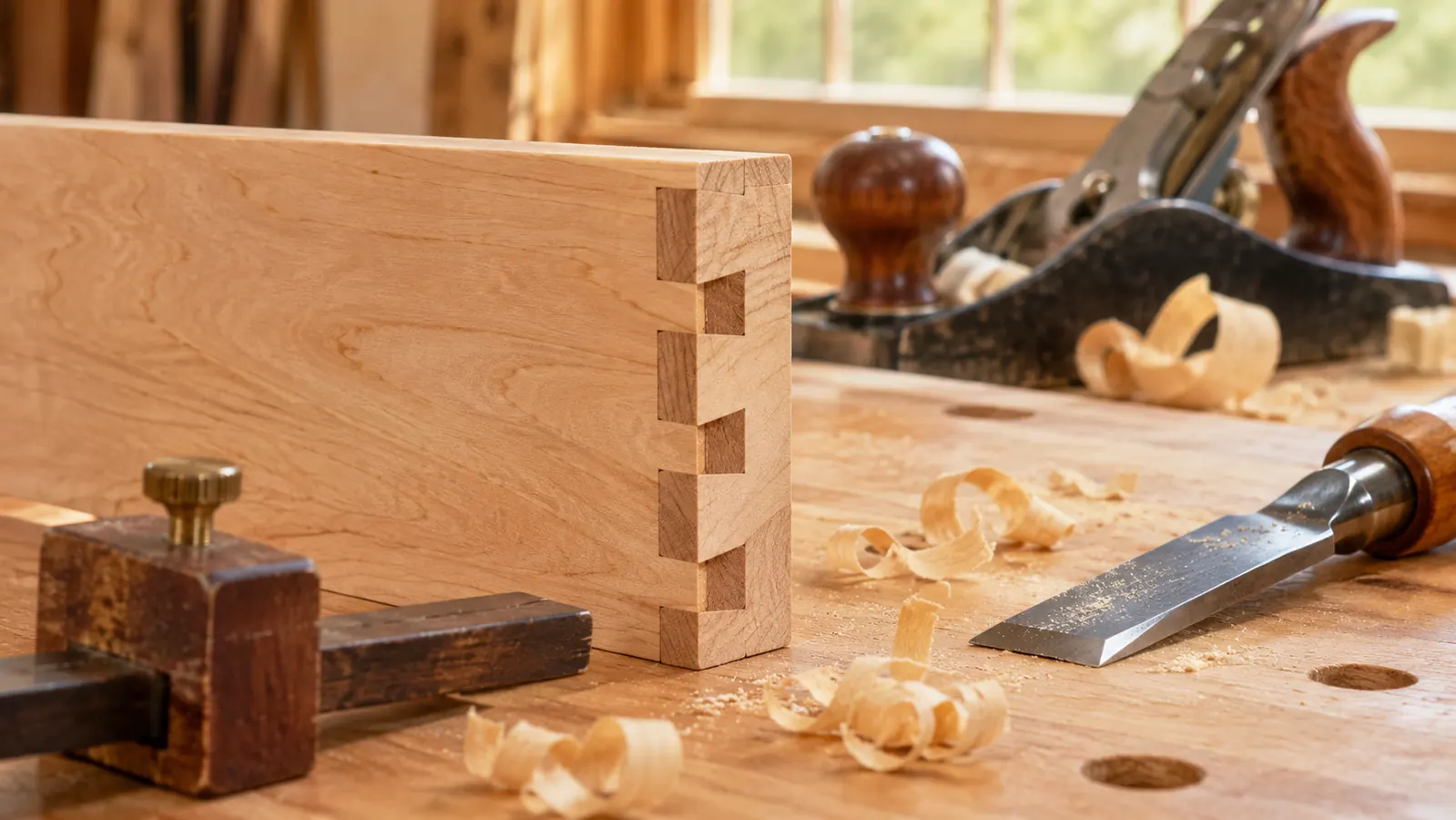
Dovetails are where the saw made the largest difference for me. The thin plate and the fine crosscut teeth let me cut to a scribed line and leave the line there, and the pull stroke keeps the waste side of the cut clean. Tenon cheeks go quickly with the rip edge, and shoulders trimmed with the crosscut edge want a stroke or two of the chisel instead of a whole sharpening session.
It is also the saw that goes with me to a repair in someone else's house, because it rolls into a canvas tool roll with the chisels and it weighs next to nothing. Trimming a sticking door, cutting a shim, easing a drawer bottom, taking a piece of trim to length in place where no power saw would fit: this is where a light, thin, sharp saw is worth more than any machine in the shop. I have cut a good deal of white oak threshold stock in other people's kitchens with mine, in rooms where I could never have run a cord.
Blade life has been better than I expected, given how fine the teeth are. My first blade lasted through roughly three years of weekend work before the crosscut edge started to feel slow in maple, and it would likely have gone longer if I had not chipped it early on. The replacement went on in under a minute with the same single screw. That is not free, but it is a fair arrangement for a tool you will use on every project for a decade.
Who This Is For
If you cut joinery by hand, or you want to learn to, this is a sensible saw to learn on. It is forgiving of a light hand and it shows you plainly where your technique drifts. If you build furniture, small boxes, or do finish and repair work, the 9.5 inch size is the practical one, long enough for a tenon and short enough to control with one hand. If you have been cutting dovetails with a western saw and wondering whether the fuss is real, the fuss is real, though it arrives with a few weeks of humility attached.
Who Should Skip It
If your sawing is mostly studs, plywood and demolition, skip it. If you are not willing to slow down for two or three weeks and let the tool retrain your hands, skip it. If you want one saw that does everything in the shop, this is not that saw, and a decent hardpoint will serve you better with less aggravation. And if you are the sort who lends tools out, think twice, because a kinked blade comes back kinked and there is nothing anyone can do about it afterward.
If you want the saw that made my western backsaw feel like a club
9.5 inch Ryoba, 9 TPI rip on one edge, 15 TPI crosscut on the other, 0.03 inch kerf, about 0.2 kg in the hand. Replacement blades are available when the teeth finally give out. Check today's price before you decide.
Amazon Check Today's Price on Amazon →