
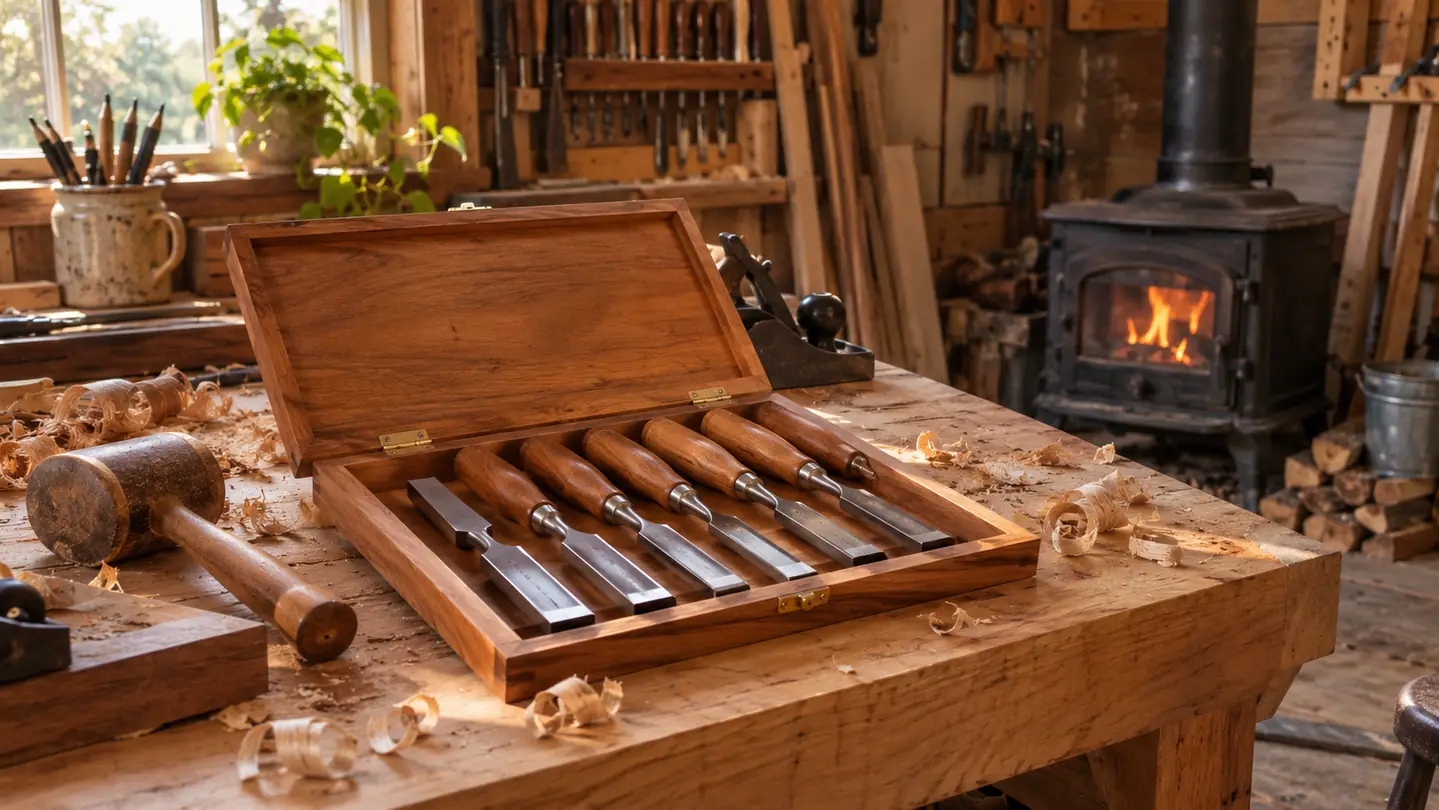
Most of what you will read about the Narex 6 pc Bevel Edge Chisel Set lands in one of two camps. Either it is the last chisel set you will ever need, or it is a budget import dressed up in a wooden box. I have used mine long enough to call both of those lazy. The useful answer sits in the middle, and the middle is where I will stay for the rest of this review.
I spent close to thirty years cutting joinery by hand in old New England houses before I owned anything that could do it faster. I am not a collector. I buy a tool, I work it hard, and then I decide whether it earned its hook on the wall. This set earned its hook. It did not earn it the way the enthusiastic write-ups say it did, and that difference is the point of what follows.
The Quick Verdict
Honest steel at a hardness that holds up, a bevel angle you can sharpen without fighting it, and a handle that suits some hands and not others. Buy it for the working end, not for the box.
Amazon Check Today's Price →Six sizes, honest steel, nothing you have to baby
Chrome-manganese blades hardened to Rc 59, bevel ground at 25 degrees, sizes from 6 mm to 26 mm. If that matches the work on your bench, this is the set to look at.
Amazon Check Today's Price on Amazon →How I Have Actually Used These Chisels
My shop is a single-car garage I converted years ago. One hard maple bench I built myself, a wood stove in the corner, and a sharpening station by the window where the afternoon light is decent. That is the whole operation. Everything I say about these chisels comes out of that one room.
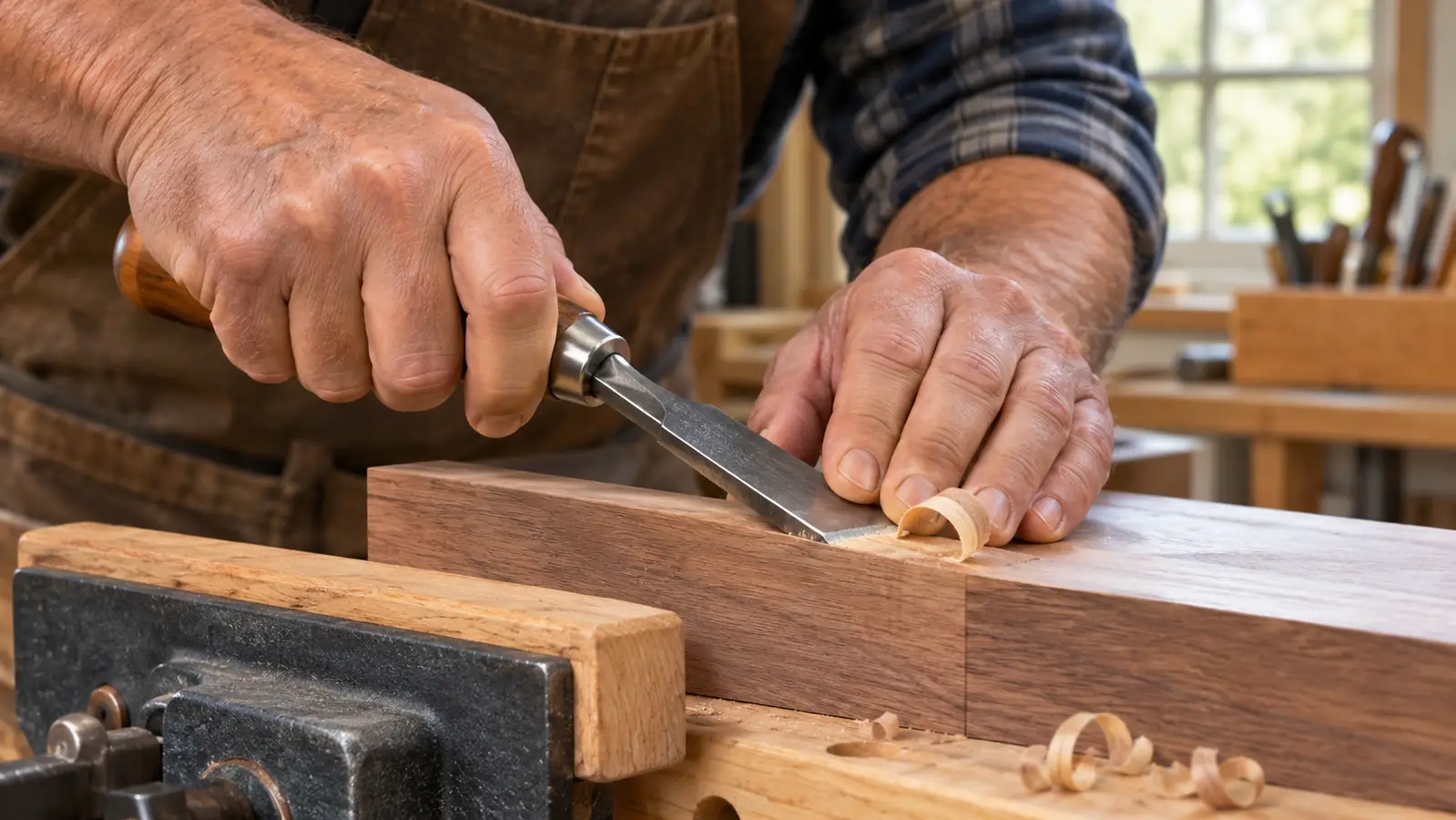
The work I do now is furniture, small boxes, and the occasional repair for a neighbor whose old house has a sill or a casing that has given up. That means a lot of paring and a lot of fitting. Paring is the cut where you take a sliver off a shoulder or a mortise cheek with the chisel held flat and pushed by hand, no mallet involved. It is the cut that punishes a thick, blunt edge, and it is the cut that told me the most about this set.
I have chopped mortises with them, cleaned up half lap shoulders, trimmed dovetail baselines, and pared end grain on white oak that had dried hard as a brick. Nothing in the set chipped out on me. Two of the six needed real work on the back before they would pare cleanly, which I will get to.
The 6 mm and the 10 mm are the two that live on the bench. The 26 mm comes out maybe a dozen times a year, but when it does, nothing else will do. That pattern has held through three years of steady weekend work and it has not shifted.
I have also used them on pine, which is the wood that tells you how sharp your edge really is. Pine crushes. A dull chisel bruises the grain and leaves a line you cannot sand out without changing the shape of the piece. These stopped bruising pine once the backs were flat.
The Steel Is the Part Worth Talking About
The blades are chrome-manganese steel, hardened to Rc 59. Rc is the Rockwell C scale, and 59 is a specific place on it. For a chisel that number is a trade. Push it higher and the edge lasts longer but turns brittle and chips on hard, gritty wood. Drop it lower and the edge rolls instead of failing, which is easier to fix but puts you back at the stone more often. Rc 59 sits on the sensible side of that trade for bench work.
What that means in practice is that I sharpen roughly once every two or three sessions, depending on what I am cutting. White oak dulls an edge faster than pine, and a dirty board off a salvage pile will dull anything short of carbide. I have never had a chip deep enough that it needed more than a few passes on a coarse stone to get past.
The other half of the steel story is the back. A chisel needs a flat back to register against the work. On a bevel edge chisel the back is the wide face, and it has to be flat enough that the edge meets the wood at the angle you intended. Two chisels in my set took genuine work on a coarse stone before the back was flat across its width. The other four were close enough that ten minutes each got them there. If you have never flattened a back, budget an evening for the set and a sore forearm for the day after.
The 25 Degree Bevel and What It Means at the Stone
The listing says the bevel is ground at 25 degrees. That is the primary bevel, the long shallow angle that forms the cutting edge. Twenty-five degrees is a common working angle for a bench chisel because it balances edge durability against how easily the tool enters the wood. It is not a paring angle and it is not a mortise angle. It is a starting point, and you are meant to change it if your work wants something else.
I keep most of mine at 25 and add a small secondary bevel, a slightly steeper micro angle right at the tip, which saves time at the stone. The 26 mm went to 30 degrees because I use it for heavier chopping and would rather have the support behind the edge than the last degree of sharpness. The steel took that change without complaint.
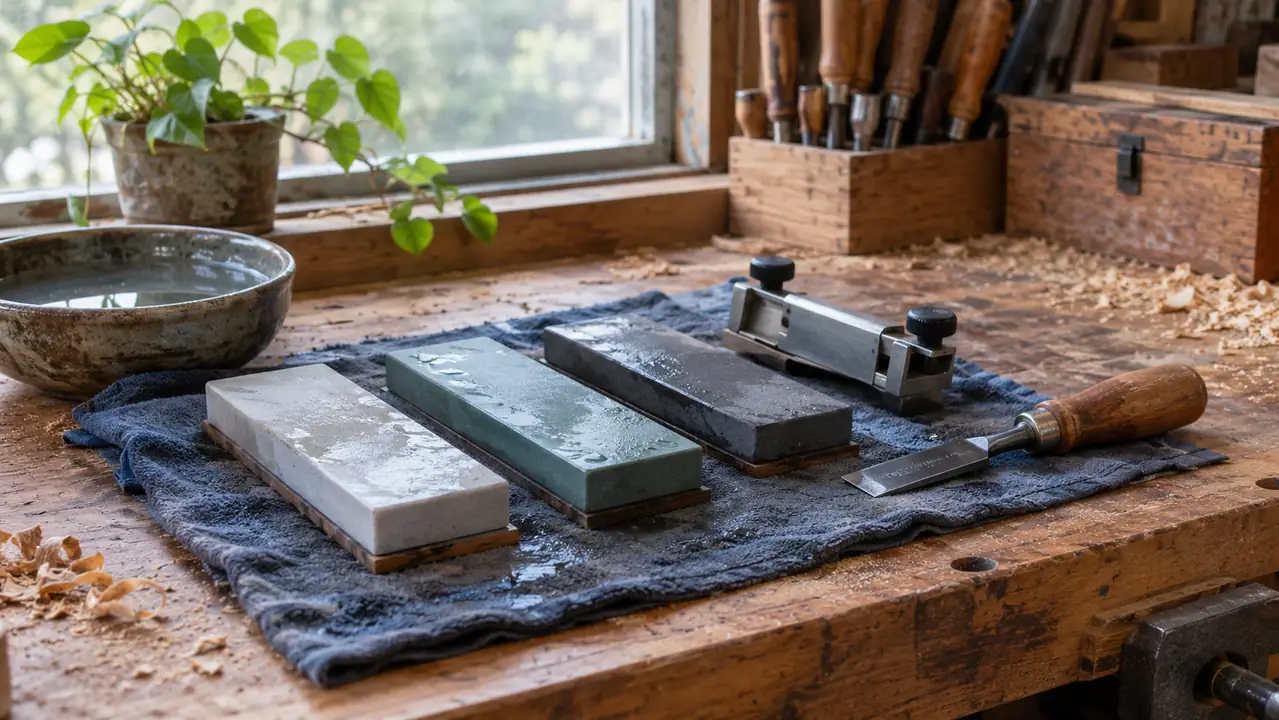
Here is the part the glowing reviews skip. A 25 degree bevel on a chisel that shaves paper is not the same as a chisel that is ready to work. What arrives is a factory grind. Mine needed a session on the stones before they behaved the way I wanted, and I would expect any chisel at this level to need the same.
I have chopped mortises in white oak with the 10 mm and never taken a chip deep enough to need more than a few passes on a coarse stone.
The Handles Divide People, and I Understand Why
The handles are stained European beech. Beech is a sensible choice here. It is dense, it takes mallet shock reasonably well, and it does not cost what a tropical hardwood would. Whether the handle suits your hand is another question, and it is not one a spec sheet can settle.
I have average hands for a man my size, with a thumb that thirty years of framing has left a little arthritic. I can work a full afternoon with these without cramping. A friend who does finer work than I do and has much larger hands found them too slender for comfortable paring and went back to his old set. He is not wrong and neither am I. If you can put your hand around one before you commit, do that.
One more note on the beech. Wood handles move with the seasons, and a heated shop in a New Hampshire January is about as dry as a shop gets. I have not had one loosen. I keep them out of the stove's direct line and I do not soak them, and that has been enough.
Six Sizes, Two of Which Do Most of the Work
The set is 6, 10, 12, 16, 20 and 26 mm. If you think in inches, that runs from roughly a quarter inch to about an inch with the usual gaps. Sizing in millimetres is no problem in practice. You pick the chisel that fits the width of the cut, not the one that matches a number on a drawing.
Six millimetres gets into dovetail baselines, small hinge mortises, and the corners of a stopped groove. Ten millimetres is the one I reach for without thinking, and if I lost the rest I would replace that one first. Twelve and sixteen cover most general fitting. Twenty and twenty-six handle wider paring, cleaning up a hinge leaf, or taking a shoulder down flat.
The 26 mm is the interesting one. It is wide enough to flatten a small area properly and wide enough to be awkward in a tight corner. Most hobby woodworkers will use it rarely. When they do need it, the alternative is a router plane or a great deal of sanding, and neither is faster.
The Box, the Weight, and What It Does Not Do
The set comes in a wooden presentation box with a slot for each chisel. It is a good box. It looks presentable on a shelf. It is also not a tool roll and not something I would carry to a job. Mine sits on a shelf holding the chisels I am not using that week, and the three I am using live on the bench where I can reach them.
The whole set lists at 1.6 pounds and the case is listed at 13.5 inches by 6.37 inches, so it takes a bit over a foot of shelf. That is worth knowing if your shop is a converted garage with more tools than wall.
What the box does not do is protect the edges. The slots hold the chisels, but they will not stop a blade from meeting grit if you close the lid with shavings in there. I keep a scrap of oiled cloth over mine. That is not a defect, it is just what a box is.
Where It Falls Short
These are good working chisels, not fine ones. The difference shows up on the last pass. A proper paring chisel, the kind with a long blade you can flex slightly with your fingers, gives a level of control on a delicate fit that a bevel edge bench chisel cannot match. These chop and they pare and they do both well enough. On the final shaving, you will feel the difference.
The second shortfall is the factory setup, and I keep coming back to it because it is the biggest single source of disappointment with this set. Someone buys it expecting the chisel from the video, gets a chisel straight off a grinder, and concludes the steel is no good. The steel is fine. The setup is unfinished, and nothing in the listing claims otherwise.
The third is the handles, over the long haul. Beech is the right call at this level, but it will not survive thirty years of daily site work the way a tightly grained exotic will. For a hobby shop that hardly matters. For someone heading back to full time work, it is worth knowing before you buy.
What Nobody Tells You in the First Week
The first week decides whether you keep these. Out of the box they will cut. They will not cut the way they will after you have flattened the back and reset the bevel on your own stones. Most people who give up on a chisel set give up in that week, comparing a factory edge against a chisel somebody else already tuned.
The second thing nobody mentions is that tuning six chisels is six times the work of tuning one. It is not difficult. It is just long. An evening with a coarse stone, a hone, and something to keep the water where it belongs will get you there. Do it once and you will not do it again for years.
The third is that a set is not the economical way to buy chisels. You buy a set because you want the sizes consistent, the steel the same, and the handles to feel alike in your hand. If you only ever need two sizes, buy two chisels. That is not a knock on Narex. It is a knock on sets.
The fourth is the box. Everyone mentions the box. Nobody mentions that you will stop using it inside a month, because a chisel in a box is a chisel you have to open a box to reach. Decide early where the working three will live.
What I Liked
- Chrome-manganese steel at Rc 59 holds an edge through a full afternoon of paring
- The 25 degree factory bevel is a sensible starting point and takes changes without complaint
- Six sizes from 6 mm to 26 mm cover almost all bench fitting
- Beech handles absorb mallet shock and stay tight through dry winters
- No chipped edges in three years of steady weekend work
- The wooden box keeps the set organised on a shelf
Where It Falls Short
- Two of the six needed real work on a coarse stone before the backs were flat
- The factory edge is a starting point, not a working edge
- The handle suits average hands and may feel slender to larger ones
- The 26 mm is rarely used and still takes up shelf space
- The box holds the chisels but will not protect the edges from grit
Who This Is For
This set suits the person who has decided to cut joinery by hand and wants one purchase that covers the sizes they will actually use. Building furniture in a garage shop, fitting hinges and casings, learning dovetails on scrap pine: six sizes from 6 mm to 26 mm carry you a long way. It is also a fair set for someone coming back to hand tools after years away, because the steel will tolerate the learning curve better than a harder, more brittle blade would.
Who Should Skip It
Skip it if you only ever need one or two sizes. Skip it if you want a chisel that arrives ready to pare without any work from you, because this one will not. Skip it if your hands are large and slimmer handles have bothered you before. And skip it if you are buying for the box, because the box is the least interesting thing in it.
Three years on, I have not replaced a single chisel in this set and I have not wanted to. That is a plain statement and it is the highest compliment I can pay a tool. The Narex set does the work, it forgives a beginner, and it rewards the hour you spend setting it up. It just will not do that hour for you.
Buy it for the steel and the six sizes, not the box
Chrome-manganese blades at Rc 59, a 25 degree bevel you can change, and the 10 mm you will reach for every session. Current price and the full size breakdown are on the listing.
Amazon Check Today's Price on Amazon →