
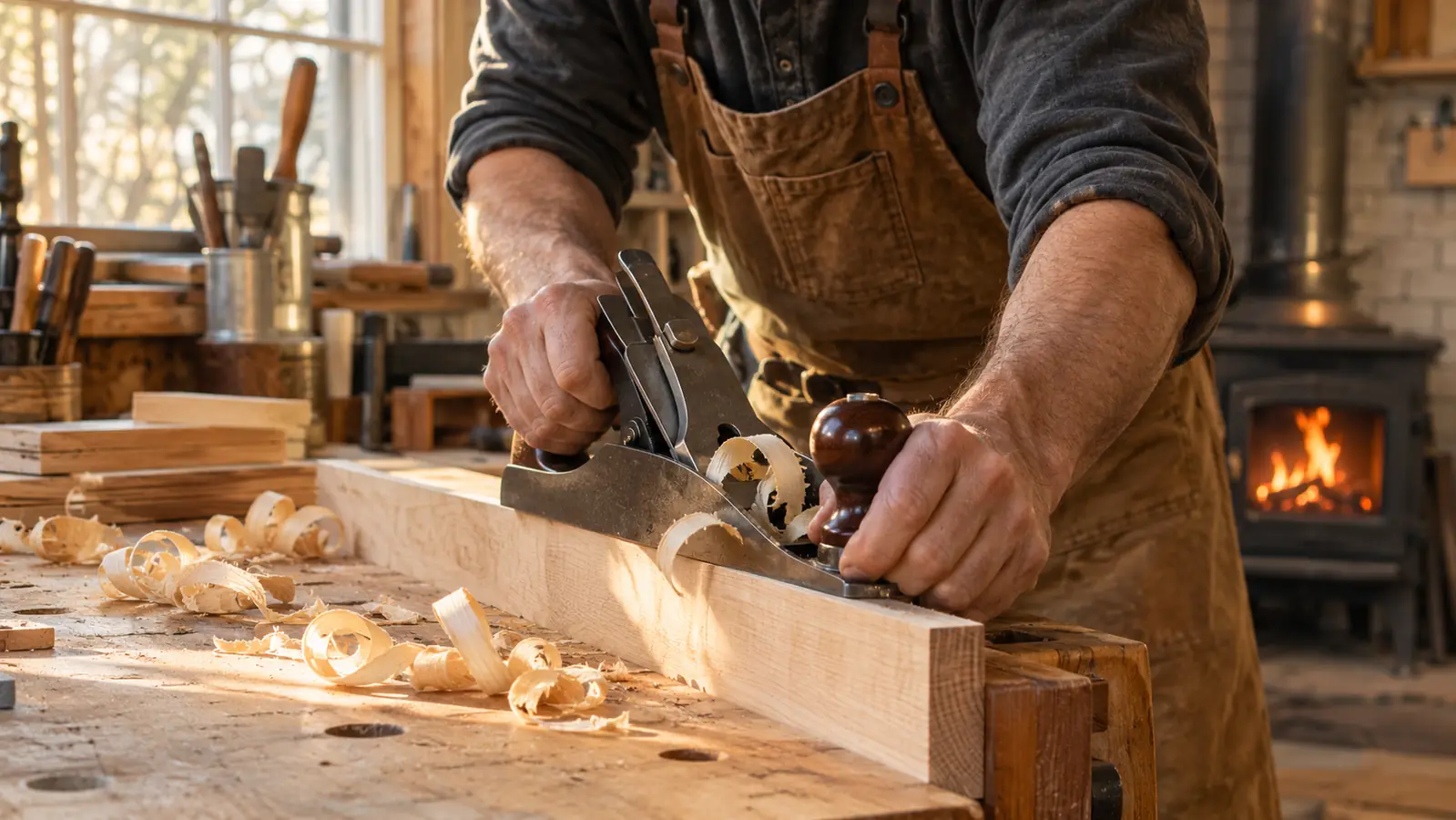
The block plane is the last tool to touch the work, not the first. It takes a proud plug down flush, breaks a corner so a hand doesn't catch on it, and lifts a shaving off end grain so a joint closes without a fight. I spent about thirty years cutting joinery by hand on old New England houses before I ever thought hard about which block plane was in my apron. For the past several months the one in my apron has been the Jorgensen No.60-1/2 low angle block plane.
Before this one I kept three planes in rotation and didn't much like any of them. A Stanley I inherited whose mouth a previous owner had filed too wide. A no-name hardware store plane that wouldn't hold a depth setting past the first board. And a heavier low angle plane that cut well but that I got tired of picking up. What I wanted was boring. A plane that came flat, took an edge, and stayed where I set it. The Jorgensen has done that. There are two things about it I'd change, and I'll get to both of them.
The Quick Verdict
Flat sole out of the box, an O1 iron that hones to a clean edge, and 1.5 pounds that rides a chamfer instead of tipping off it. The depth knob takes small bites, so you sneak up on a cut rather than guess at one.
Amazon Check Today's Price →The block plane I stopped swapping out
After months on the bench it's still the one I reach for first. Current price and the full listing details are on Amazon.
Amazon Check Today's Price on Amazon →How I've Used It
My shop is a single-car garage I converted maybe twenty years ago. One hard maple bench I built myself, a wood stove in the corner for January, and a sharpening station by the window because the light is better there. The work that comes off that bench now is furniture, small boxes, and the occasional repair for a neighbor whose old house has a door that won't close. Block plane work is a small part of any of those jobs, and it shows up in all of them.
The first real job I put this plane on was an oak box with a sliding lid. The lid ran in a groove and the groove was a hair shallow, so I had to take down the shoulder of the groove without touching the face of the box. That's a two-handed job done with your eyes close to the work, one thin shaving at a time. The Jorgensen weighs 1.5 pounds, which sounds light until you're holding it at an awkward angle over finished work for ten minutes. It never once dove on me.
Since then it's been chamfers on chair legs, end grain on a walnut breadboard, trimming walnut plugs in white pine, and easing the arris on a set of drawer fronts. Arris is just the corner where two faces meet. Easing it means knocking the sharp off without rounding it over, and that is the single most common thing I do with a block plane all week. If a plane is going to annoy me, that's where it does it.
One job from this spring sticks with me. A neighbor brought over a pine blanket chest her grandfather had built, and the lid had swollen shut against the carcass. I couldn't get a chisel into the gap without scarring the original finish, so I set the Jorgensen to its lightest cut and worked the seam from each end toward the middle, taking dust rather than shavings. It took about forty minutes of patient passes. The lid came free and the finish was untouched. A plane with a coarser depth adjustment would have gouged that lid on the first pass, and I'd have spent the rest of the week refinishing an heirloom instead of fixing a hinge.
What the Cast Iron Body and the O1 Blade Actually Change
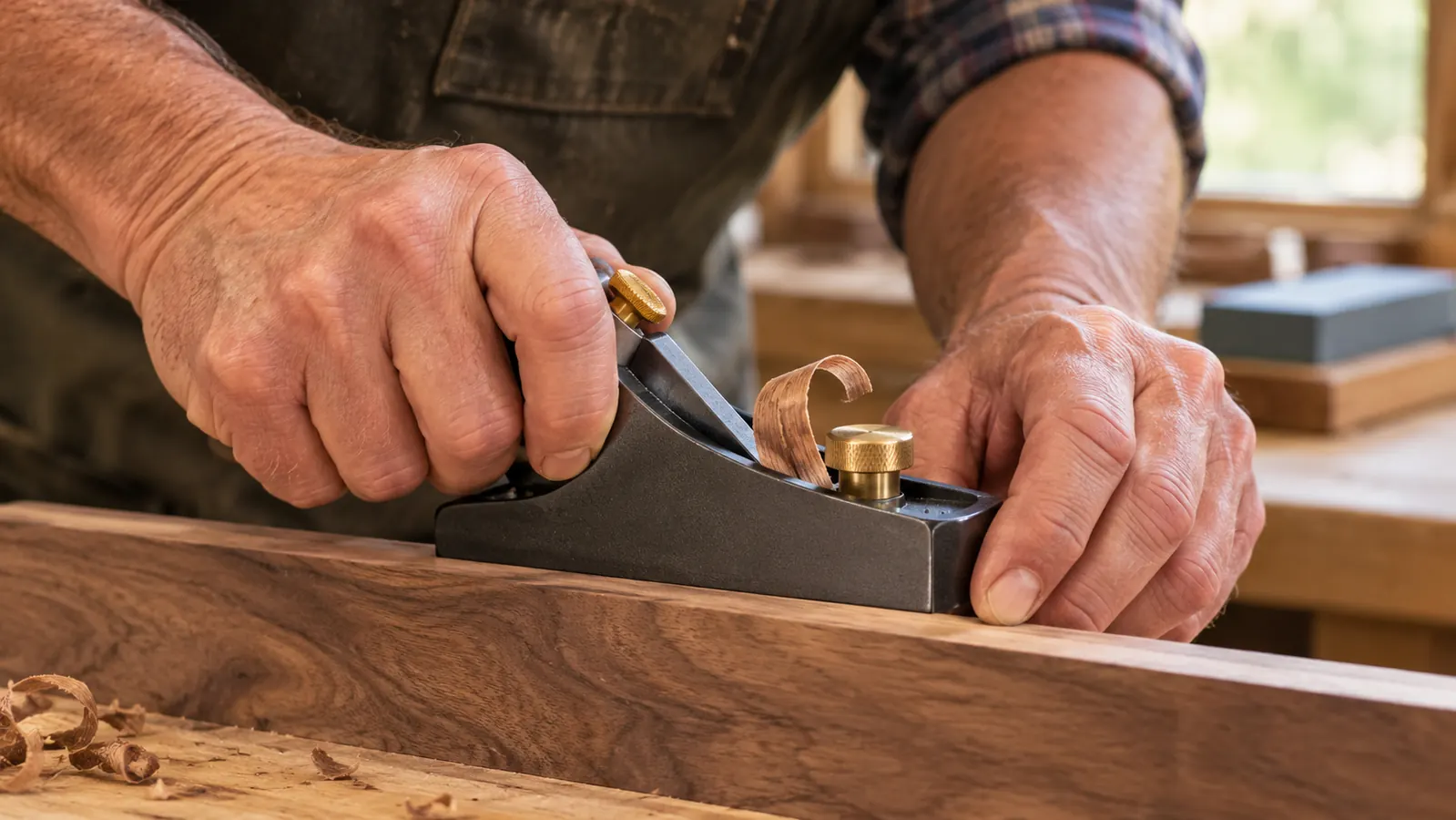
The body is cast iron with a polished flat sole, and I checked mine the way I check every plane that comes into the shop, with a straightedge and a look for light behind it. It was flat enough that I didn't touch it. That matters more than anything printed on the box, because a block plane with a hollow in the sole will rock, and a plane that rocks will cut a dish into a corner you were trying to keep crisp.
I check a sole with a straightedge laid across it in three places, down each side and corner to corner, then hold the whole thing up to the window and look underneath. Any light you can see is a hollow. Mine showed none, which is not something I could say for the hardware store plane I finally threw out. That one had a hollow in the middle you could have read a newspaper through, and it took me a shamefully long time to work out why my plugs kept coming out dished.
The iron is O1 tool steel, 1.38 inches wide. O1 is oil-hardening steel, the old standard for chisels and plane irons, and what it gives you is a fine, keen edge off a waterstone. What it gives up is wear resistance. On white oak or on end grain it wants a touch-up more often than the newer powder steels do. I hone it roughly every twenty minutes of hard cutting. That's not a complaint, it's the trade you make, and I'd rather have the edge O1 takes.
The blade arrived with a grinding bevel on it, so I took it to the stones before the first cut. That's normal and I don't hold it against the plane. I've never met one at any price that came out of the box ready to work, and I'd rather spend the twenty minutes myself than pay someone to do it badly.
On End Grain, Chamfers, and Trimming Plugs Flush
Low angle is the reason this plane is good on end grain. The iron sits on a shallow bed, so it meets the wood more like a chisel than like a wedge, and it shears the fibres instead of levering them up. On the end of a walnut board the difference is visible. A standard angle plane will leave end grain glazed and slightly crushed. This one leaves it bright.
Chamfers are where the weight works in your favour. A light plane with a wide sole rides the corner instead of tipping off it, and the 1.38 inch width keeps the cut where you put it. I cut chamfers by eye, no jig, and the plane tracked a straight line down a 30 inch chair leg without wandering on me. I could not say that about the hardware store plane I finally gave away.
A walnut breadboard I built in February is the clearest evidence I have. I cut the end grain on one breadboard end with this plane and on the opposite end with a standard angle plane, just to see the two side by side. Under a raking light the standard angle side looked cloudy, like the fibres had been pushed over rather than cut. The Jorgensen side looked like it had been pared with a chisel. I finished both ends the same way, same sandpaper, same oil, and you can still pick out the difference if you know to look for it.
Plugs are the honest test. I drill a counterbore, sink a screw, glue in a plug, then pare it flush. If the sole isn't flat, the plug ends up dished and you see it under a finish forever. Every plug on the last batch of boxes came down flush on the lightest pass the plane would take, and I didn't have to come back with sandpaper. That's the whole job, done.
The Depth Adjustment, and the Patience It Asks For
Cutting depth is set with a knob. You turn it, the iron moves, and you take a test cut. That's the whole mechanism, and it works, but the increments are small and nothing tells you where you are. I set it by feel. Back it off until it won't cut, then bring it in a quarter turn at a time until it makes a shaving you could read a newspaper through.
Some people find that fussy. I've come to prefer it. A quarter turn is a small enough bite that I've never blown through a line I'd struck, and once the depth is set it stays set through a whole afternoon. Mine has held its setting across a dozen boards without drifting, which is more than I could say for the last cheap plane I owned. If you're the sort who likes a positive stop and a number, this will feel like a step backwards.
The first week I owned it I got impatient and took a turn and a half at once on a piece of cherry for a small box lid. The plane dug in, stopped dead, and left a step in the board deep enough to catch a fingernail. I had to work it out by hand with a scrap block and sandpaper, which took twice as long as setting the plane properly would have. That was my mistake and not the tool's, and I've gone a quarter turn at a time ever since.
What Else I Tried, and Why This One Stayed
I borrowed a heavier low angle plane from a friend for a month of the same work. It cut end grain faster and it felt more settled in the hand on long chamfers. But it also cost more than I wanted to spend on a tool I use in short bursts, and by the end of the month my wrist knew the difference at the end of a day. If I were doing nothing but truing end grain for a living I'd own the heavy one.
I also tried a small standard angle plane, the kind that's been in every toolbox since forever. On softwood it was fine. On end grain it left the surface glazed and I had to sand afterwards, which is the exact job the block plane was supposed to save me from. That decided it for me. Low angle was the requirement, not a preference.
The Jorgensen landed in the middle and stayed. It doesn't have the mass of the heavy plane or the proven name of the old Stanley, but it came flat, it holds a setting, and the iron takes an edge I can maintain myself on the stones by the window. For the work I actually do, that's the whole list. A tool that does the ordinary job without needing attention is worth more to me now than a tool that does the extraordinary job and needs a fuss made over it.
Where It Falls Short
Two complaints, and neither one is fatal. The first is that 1.5 pounds is light enough to skip on hard end grain if you get into a hurry. The fix is to take a lighter cut, which is the correct fix anyway, but on a big glue-up with a lot of end grain to true up, a heavier plane is simply less work for your arm. I noticed it most on a run of eight drawer fronts in one sitting.
The second is the O1 iron on hard, abrasive woods. Over a long session on white oak you'll be back at the stones more often than you'd like, and you'll feel it in the cut before you see it on the edge. Keeping a second iron honed and swapping it solves most of that, but it's another piece of steel to buy and keep track of. Neither fault showed up in the first month. Both show up now that I've used it enough to be honest.
What I Liked
- Sole arrived flat and stayed flat, no lapping needed out of the box
- O1 iron takes a keen edge quickly on a waterstone
- 1.5 pound body rides a chamfer without tipping off the corner
- 1.38 inch cut width keeps the shaving where you aimed it
- Held its depth setting across a dozen boards in one session
- Low angle leaves end grain bright instead of glazed
Where It Falls Short
- Light enough to skip on hard end grain if you rush the cut
- O1 steel needs honing more often than powder steels on white oak
- Depth is set by feel with a knob, with no positive stop or number to read
- Blade needs honing before the first cut, as almost all planes do
Every plug on the last batch of boxes came down flush on the lightest pass the plane would take, and I didn't have to come back with sandpaper.
Who This Is For
This is a plane for the woodworker who wants one block plane that does the ordinary work well. Chamfers, arrises, end grain, plugs, and the small fitting that every project asks for at the end. If you're building furniture in a garage shop and you're tired of fighting a tool that won't hold a setting, this one holds it. That's a low bar and a lot of planes miss it.
It's also a sensible first block plane for someone returning to hand tools after a few decades away. The reason isn't the cost, it's that a beginner can verify the two things that matter himself. Lay a straightedge on the sole. Hone the iron and take a test cut on a scrap of pine. If both pass, you have a plane. Both passed on mine, and I checked because I've learned not to assume.
The person it suits best, honestly, is the one who does what I do. Short bursts of precise work between other operations, on furniture and boxes and small repairs, where a plane that behaves predictably is worth more than one that has a feature list. I don't need it to impress anyone. I need it to take a shaving off a plug and stop.
Who Should Skip It
If most of your block plane work is heavy stock removal on hard end grain, a heavier low angle plane will do more of the work for you and you'll feel the difference by mid-afternoon. If you want an iron that holds an edge through a long session on oak without a trip to the stones, a powder steel blade is the better answer, and it won't be this one.
And if you don't sharpen, don't buy it. No plane cuts well with a dull iron, and O1 steel here will tell you the truth about your sharpening faster than a blade that just grinds away at the wood. In a working shop that's a virtue. On a shelf it's a nuisance, and it will sit there.
One plane, flat sole, edge that holds. That was the whole list.
It's done months of chamfers, end grain and plug trimming on my bench without a fuss. Current price and specs are on the Amazon listing.
Amazon Check Today's Price on Amazon →