
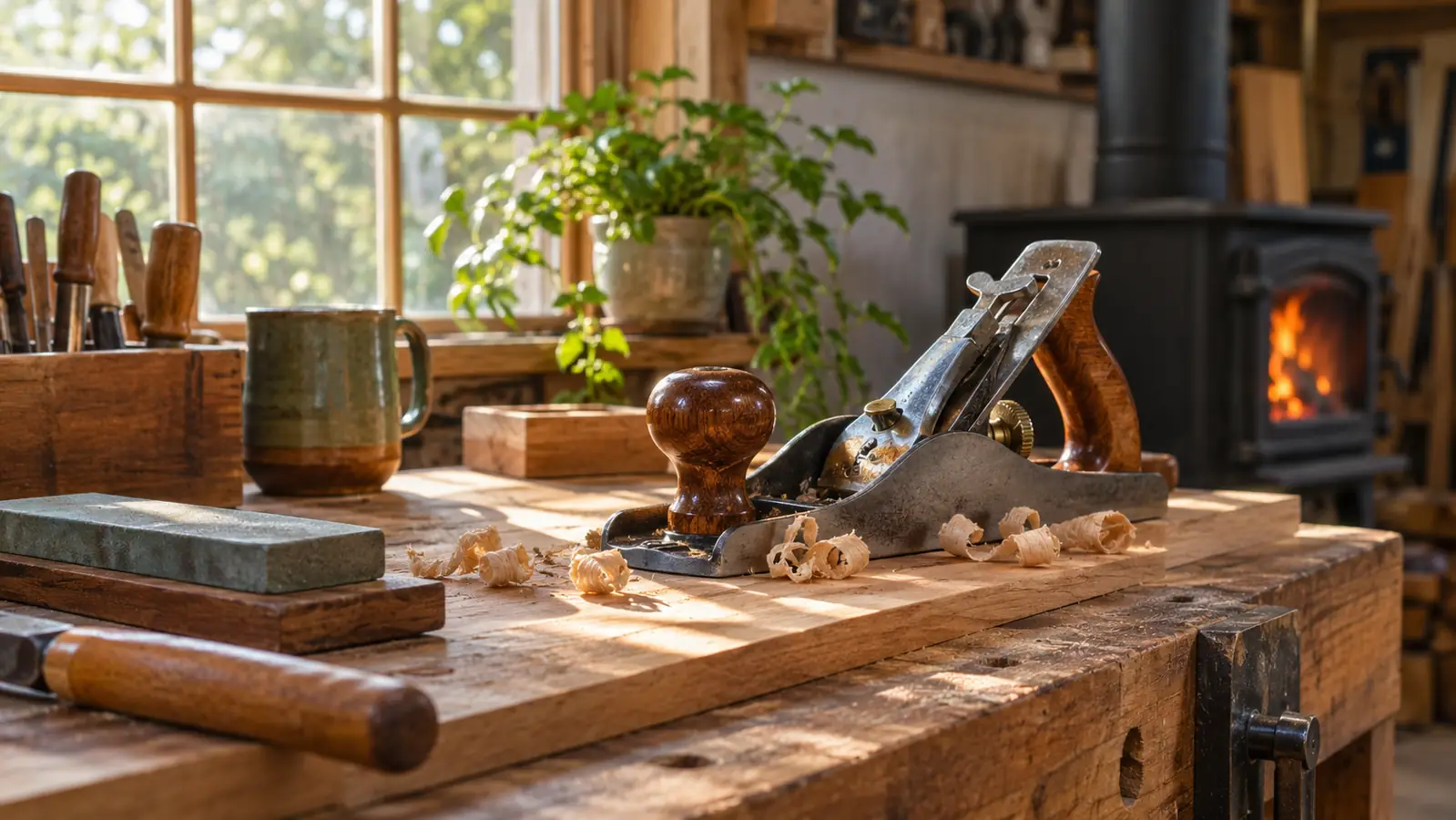
I have one bench in a converted single-car garage, hard maple, built by me, with the wood stove on one side and the sharpening station under the window on the other. For most of thirty years of restoration work there was no kanna anywhere near it. I came up under an old carpenter who cut joinery by hand long before anyone handed me a table saw, and to him a block plane was the small plane you kept in the apron for easing a door edge or chamfering a peg. The first Japanese plane I ever touched belonged to a cabinetmaker patching a chest front two towns over. He put it in my hands and said pull it, not push it. I nearly took the pad off my thumb.
Here is the short answer, and then I will show my work. The Jorgensen No.60-1/2 Low Angle Block Plane earns its place on a bench that has to handle a bit of everything. A kanna earns its place on a bench where one person does one kind of work and wants the finest surface a hand tool can leave, and will spend the hours required to get it. Jorgensen built this plane to be adjusted with a knob and put back on the shelf. A kanna was built to be fitted once and then respected. Jorgensen also sells this one as a working tool rather than an heirloom, and it behaves that way. If you are buying one plane this month, buy the block plane. If you are three years into hand work and still chasing a better surface off the plane, you already know which one you are.
| Jorgensen No.60-1/2 | Japanese kanna | |
|---|---|---|
| Cutting stroke | Push, bevel up, low angle | Pull, bevel down in a wooden body |
| Blade | O1 tool steel, 1.38 inch cutting width | Laminated steel, forged, generally a wider cut |
| Getting it working | Blade arrives in the box. Turn the knob and take a shaving. | The wooden body has to be fitted to the blade, usually over several sessions |
| Depth adjustment | Turn the knob | Tap the blade with a small hammer, then tap the body to release it |
| Sole | Cast iron with a polished flat bottom, stays where it was flattened | Wooden sole, glides sweeter in the cut, moves with the seasons |
| Surface left behind | Clean and dependable | Better than clean when the blade and the body are right |
| Weight in the hand | 1.5 pounds, light enough to run one handed along a rail | Lighter body but a longer reach, wants two hands |
| Contrary grain | The low angle geometry slices rather than scrapes | Depends entirely on how the body was fitted and how the blade was honed |
| Learning curve | An evening | A season, honestly |
| Best for | Trimming, easing edges, chamfers, end grain on small parts, site repairs | A final surface on visible work in good stock |
Where the Jorgensen Wins
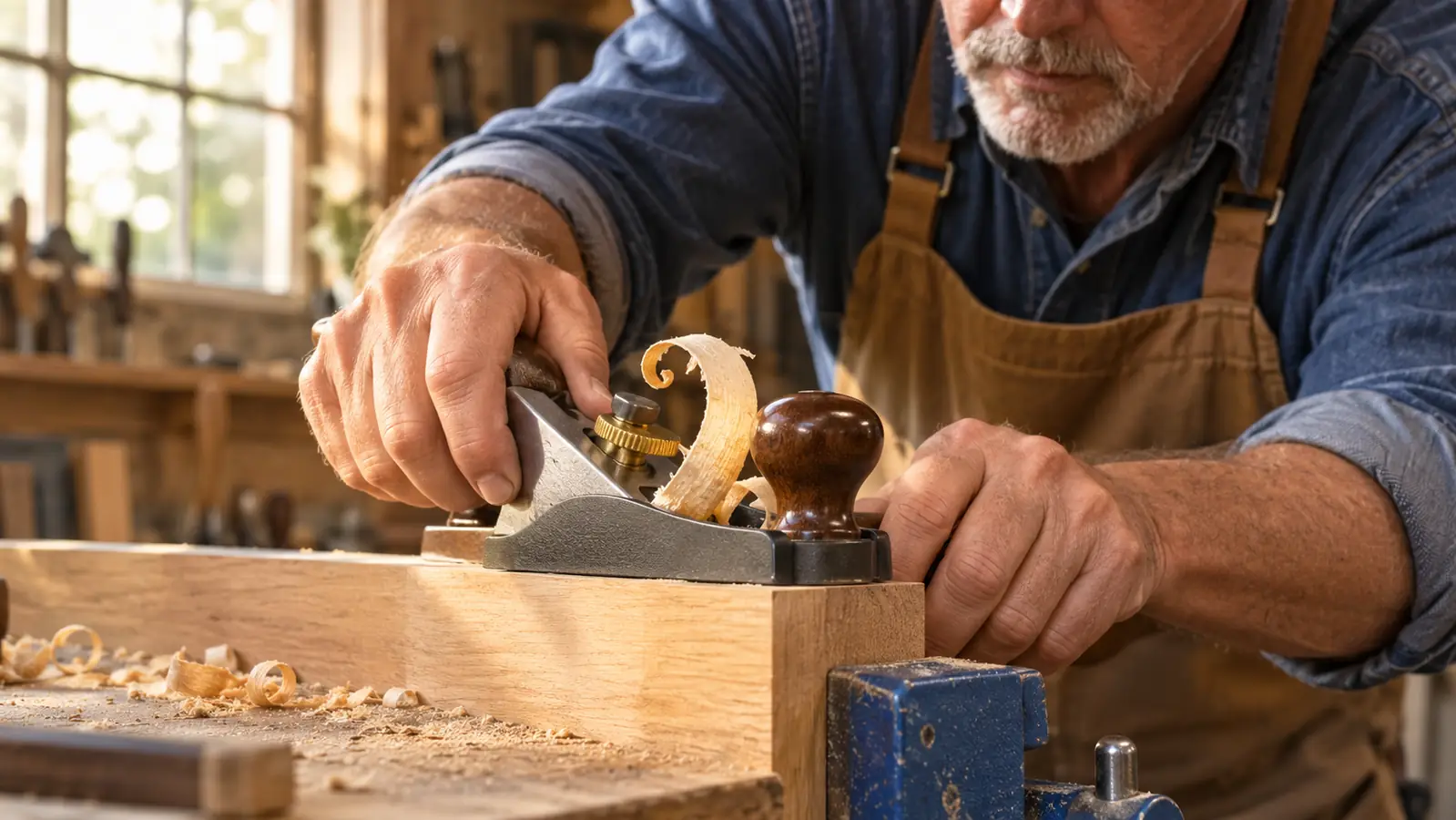
The cutting depth on this plane adjusts by turning a knob. That sounds like the dullest sentence in the article and it is the most important one. Set the blade fine, take a shaving, decide it is too fine, turn the knob, take another. No hammer, no feeler gauge, no swearing, no walking back to the sharpening station because you went a hair too deep. On a kanna you adjust by tapping the back of the blade with a small hammer and then tapping the body to release the pressure that holds it. It works, and it means every adjustment is a small act of judgment. After four hours of that your arm knows it.
The rest of the case is just as plain. The body is cast iron with a polished flat bottom, so the plane sits on the work instead of rocking across it, and it weighs 1.5 pounds, light enough to run one handed along a rail and heavy enough that you feel where the sole is making contact. The blade is O1 tool steel at a 1.38 inch cutting width, which takes a keen edge and holds it long enough for the work this plane is built for. Jorgensen designed it small and portable, and that is exactly how it gets used in my shop: trimming a sticking drawer, easing the lid of a small box, deburring a cut, chamfering a peg. It goes in the apron and it comes back out.
Where a Kanna Wins
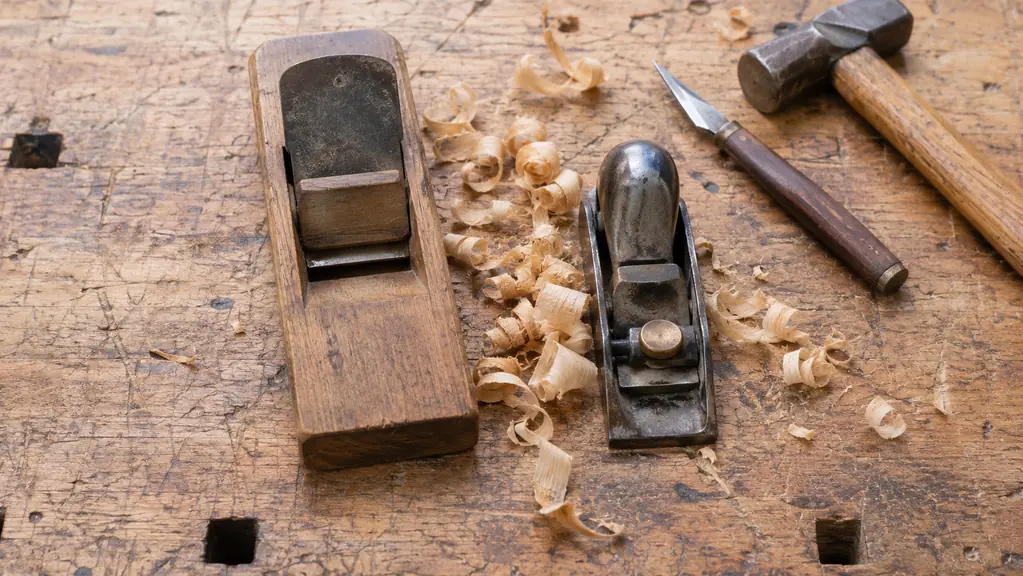
A kanna is a blade and a wooden body, and the two are not interchangeable between planes. The blade has to be fitted to the body, and that fitting is done with a plane and a chisel and a great many small taps spread over days rather than minutes. The mouth has to be tight enough to support the cut and open enough to pass a shaving. The sole has to be flattened and then it moves with the weather, so it wants checking again in February when the stove has been running for three months. None of that is a fault in the tool. It is the arrangement. You are trading an evening of learning for a season of setup.
What you get for that trade is a surface. A properly fitted kanna with a sharp laminated blade will leave a face that reads almost like glass in raking light, and on good stock you can go straight to a finish from the plane. My block plane leaves a clean, reliable surface and I still sand afterward on anything that shows. That is the honest difference between them, and it is not a small one if you are building furniture. It is close to irrelevant if you are hanging a door for a neighbor on a Saturday morning.
One plane that handles the odd jobs without a tuning session first
The Jorgensen No.60-1/2 takes a shaving the day it arrives. Cast iron body, flat polished sole, O1 blade, and a knob for depth instead of a hammer. This is the one I hand people who want to start tonight.
Amazon Check Today's Price on Amazon →The Adjuster Is the Whole Story
I want to spend a moment on the knob, because in thirty years of buying tools I have learned that the adjustment is usually what separates a tool you keep from a tool you sell at a yard sale. A plane that fights you on depth is a plane you stop reaching for, and a plane you stop reaching for is a plane that sits in a drawer while you do the job with a chisel and bad language. The knob on this Jorgensen turns freely and holds where you leave it, so the second shaving is better than the first and the third is better than the second. That is the whole loop of hand planing, and a tool that lets you run that loop quickly will make you better faster than a tool with a finer blade and a worse adjuster.
The flat bottom matters just as much and it is harder to see. A sole that is not flat will rock, and a rocking plane takes a shaving in the middle of a board and nothing at the ends, which is the opposite of what you want when you are trying to true an edge. The bottom on this one is polished flat from the factory, so you can check it against a straightedge and get on with your day. I have flattened planes out of the box before. I did not have to flatten this one.
What a Kanna Asks of You
The kanna asks for patience in a way that no metal plane does, and it asks for it up front, before it gives you anything. The blade is laminated, a hard steel layer forge-welded to a softer iron backing, which is why it can take an edge that a solid steel blade struggles to match and still be tough enough not to crumble. But it only does that if the body holds it at the right angle with the right pressure and the mouth supports the cut right at the edge. Get any of those three wrong and the plane chatters, or digs, or leaves a ridge down the middle of your board.
I spent the better part of two winters learning mine. I would not trade those winters back, and I also would not pretend the first one was pleasant. The plane did not make me a better woodworker. It made me a slower one, and the slower work came out better, which is a harder thing to admit than it sounds. If you are the sort of person who enjoys fitting a tool to a task more than finishing the task, a kanna will suit you. If you are the sort of person who wants the shelf hung before supper, it will not.
I stopped reaching for the kanna on the days I was in a hurry. That tells you everything about which of these two is doing the working in my shop.
Tearout, Grain, and the Honest Comparison
Low angle geometry, with the blade bevel up, puts the cutting edge at a shallow angle to the work. In practice that means this plane handles end grain and contrary grain better than a standard bench plane will, because it is slicing its way through rather than scraping. That is not some magic property of the design and it will not save a dull blade. A dull low angle plane will tear maple as happily as anything else in the drawer. But when the blade is sharp I can take a shaving across the end of a rail and get a clean shoulder, and a clean shoulder is most of what I ask of a small plane.
The kanna handles contrary grain differently, which is to say it depends on who fitted the body and how the blade was honed. A kanna with a tight mouth and a keen edge will cut figured stock that makes other planes complain out loud. A kanna whose mouth has opened up over a dry winter will chatter across the same board. The tool is not doing the work by itself and it never claimed to. That is exactly the point of it, and it is also why I cannot recommend one to a person I have never met.
What I Would Hand a Beginner
If someone brings a board into my shop and asks to learn, I hand them the Jorgensen. Not because it is the better plane in some absolute sense, but because they can make a shaving with it inside twenty minutes, and a shaving you can actually make is worth more than a surface you cannot. The knob turns. The blade is already in the box. The bottom is flat. There is nothing to fit, nothing to re-flatten in the spring, and nothing to blame when the shaving comes off ragged and it turns out the problem was your hands.
The kanna goes into their hands later, after they can sharpen, after they can read grain, after they have ruined a piece of good stock and understood exactly why. Handing a beginner a kanna is like handing someone a violin and telling them it sounds better than a guitar. True, and completely useless in that moment. A tool that rewards a skill you do not have yet is not a better tool for you. It is just a more expensive lesson.
Who Should Buy Which
Buy the Jorgensen if you want one small plane that covers trimming, easing, chamfering, deburring and end grain on small parts, and you want to be done thinking about it. Buy it if you work out of a bag or an apron and need something that survives being set down on a floor. Buy it if you learned on metal planes and never had a reason to change, or if you are returning to hand work after twenty years of power tools and want a win on the first evening. Buy it if your work is repairs and small furniture and the surface is going to get sanded anyway.
Buy a kanna if you build furniture and the surface coming off the plane is the finish rather than a step toward the finish. Buy it if you already sharpen well, because a kanna will punish an edge that is only nearly right in a way a block plane will not. Buy it as a second plane and not a first one, and buy it from someone who will talk to you about the body, because the body is half the tool. If you have a person nearby who can show you the fitting, that person is worth more than any plane you will buy this year.
Start with the plane that works on the first evening
The Jorgensen No.60-1/2 Low Angle Block Plane. Cast iron body, polished flat sole, O1 blade, 1.38 inch cut, 1.5 pounds in the hand. No fitting, no tuning, no season of learning before it earns its keep.
Amazon See the Jorgensen No.60-1/2 on Amazon →