
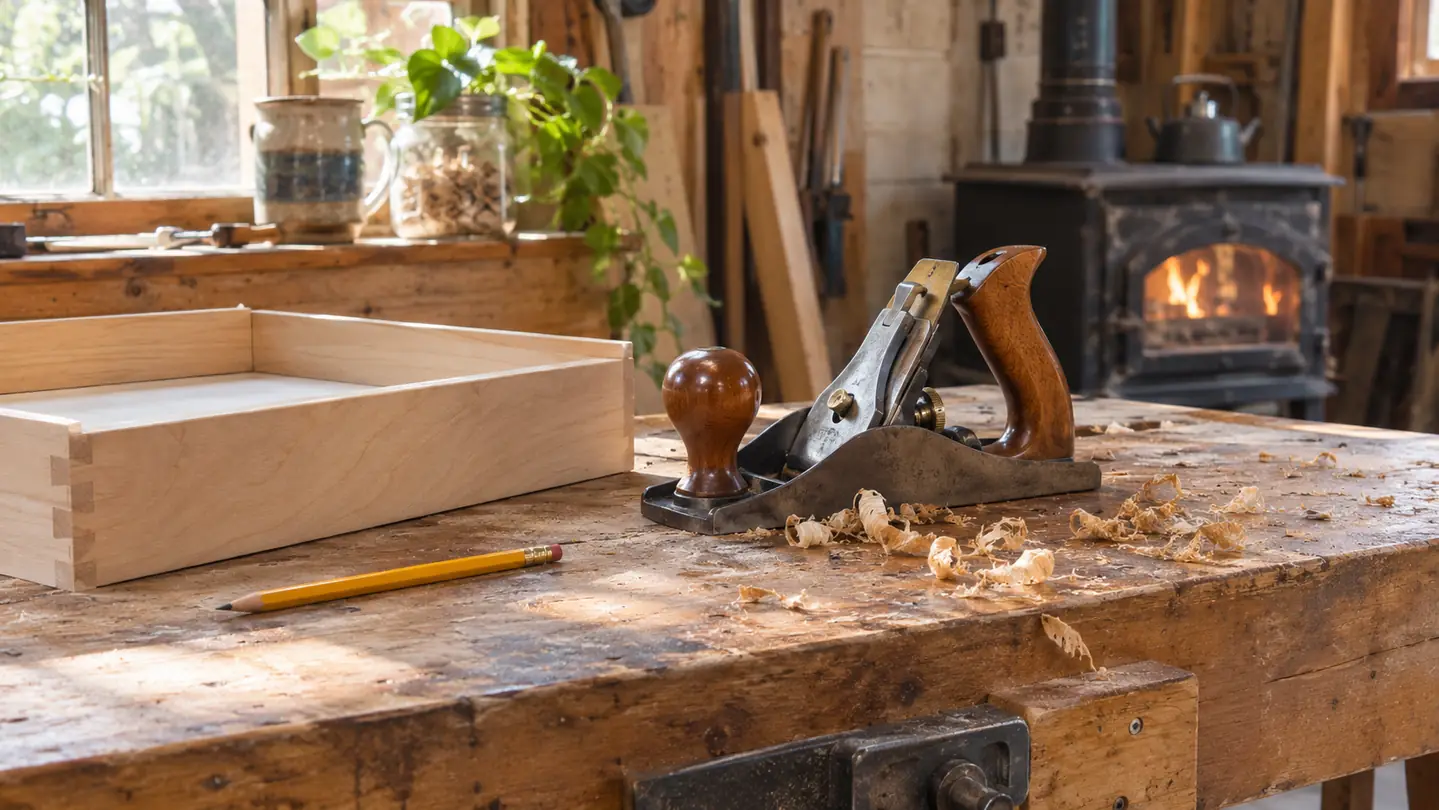
The drawer bottom I was fitting last March was a hair proud at the back corner, maybe a sixteenth of an inch, and I had already told the woman it would be done that afternoon. A block plane is what I reach for on a job like that, because it fits in one hand while the other hand holds the piece steady. The plane I had been using was not doing the work. It skipped across the end grain, took a shaving in one spot and nothing in the next, and left me with a corner that looked worse than when I started.
So I bought the Jorgensen No.60-1/2 Low Angle Block Plane. I am sixty four and I have been cutting joinery by hand since I was nineteen, and I had put off replacing that old plane for two seasons because I did not want to spend the money on something I might not like. The Jorgensen name I knew from clamps. I did not know their planes at all. What I wanted was simple. Something that would take a thin, even shaving across its full width with one hand, and keep doing it after a hundred passes.
What I read before I bought it was a cast iron base, a blade of O1 tool steel, a cutting width of 1.38 inches, and a weight of 1.5 pounds. Those numbers matter more than they sound. A block plane that is too light bounces. A block plane that is too heavy tires your wrist out before the job is done. 1.5 pounds sits in a good place for one handed work, and the cast iron gives it enough mass that the blade does the cutting instead of your arm shoving it along.
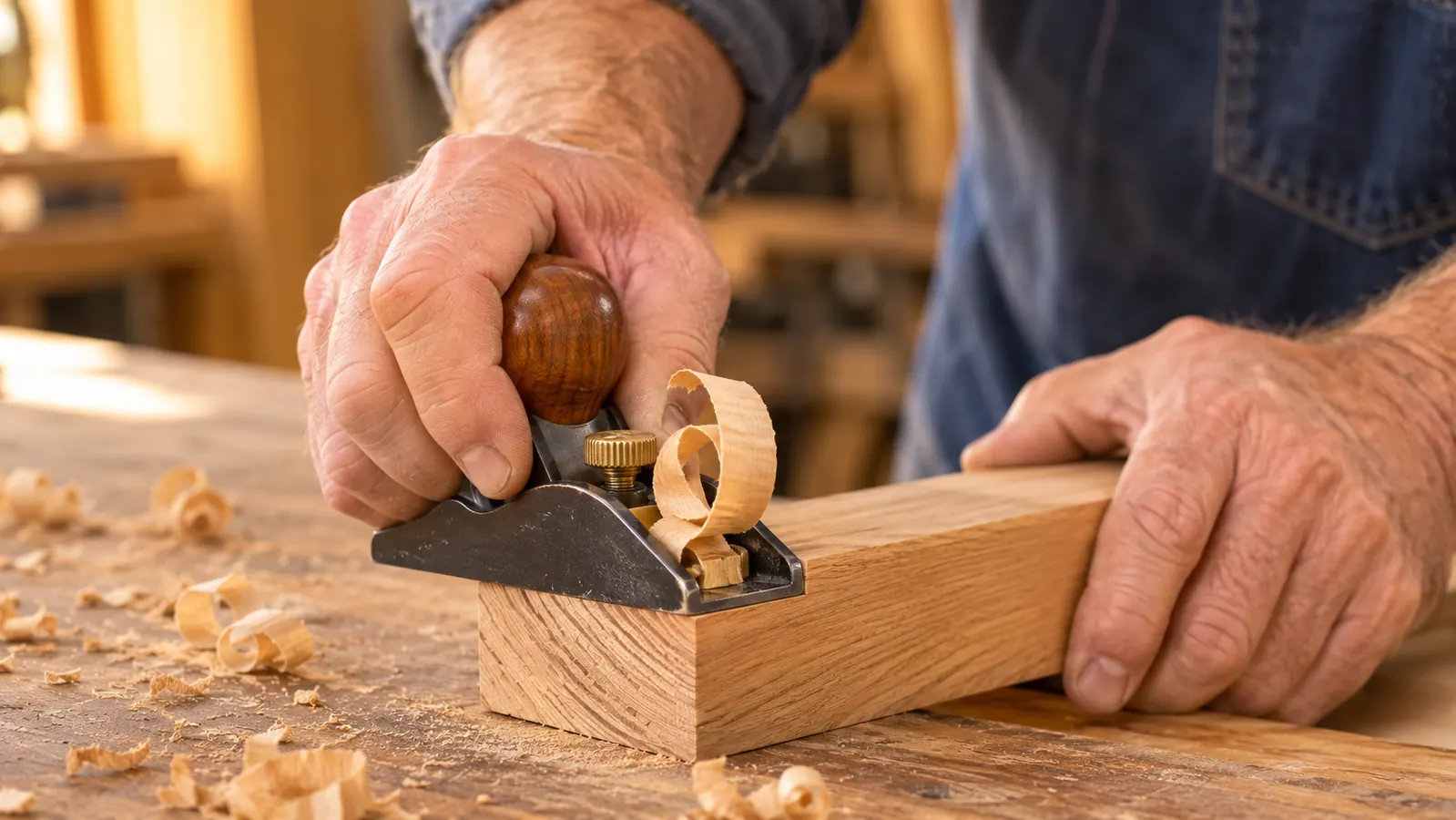
It arrived with the blade in it and one adjustment to think about, a knob that sets how far the blade sits below the sole. I turned it in small amounts until a shaving came up, then kept going until the shaving was thin enough to read newsprint through. The bottom of the plane is polished flat, which your fingers can feel before you ever take a cut, and the blade is a full 1.38 inches wide, so a chamfer on a table leg is two passes instead of four.
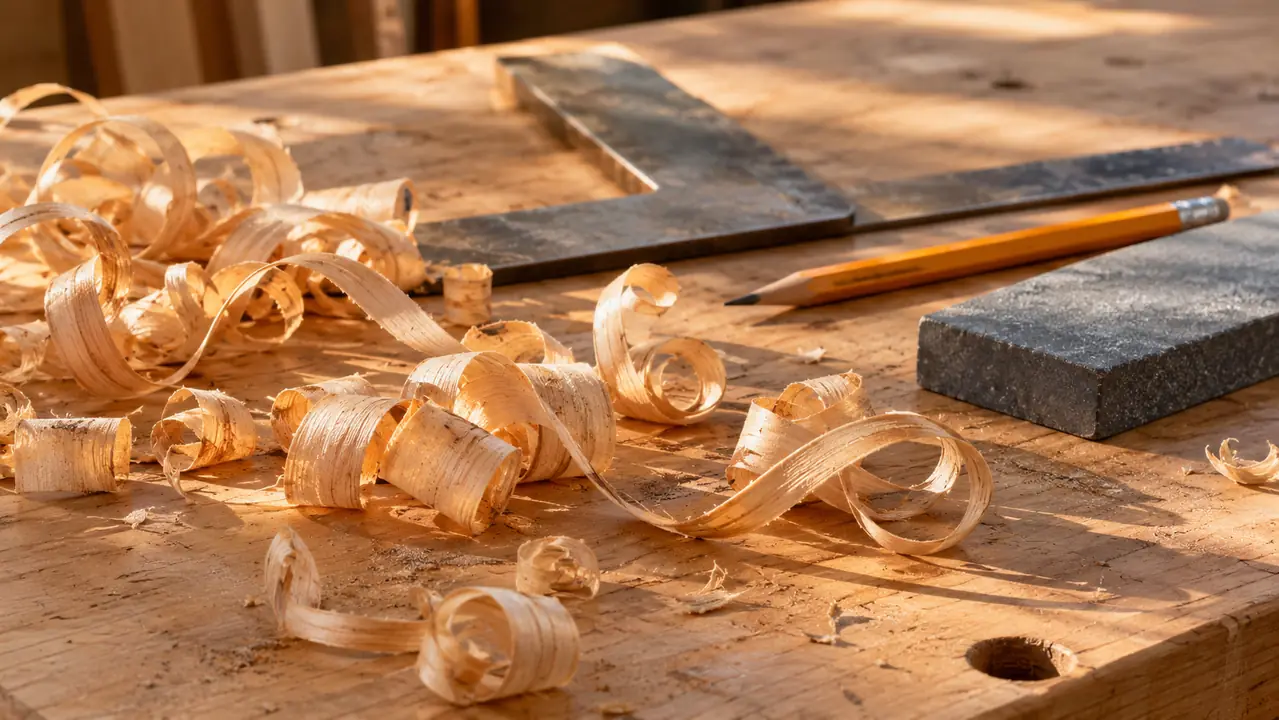
Back to the drawer bottom. I set the blade fine, ran the plane along the corner with the grain running downhill, and the corner came down flat in about four strokes. No chatter, no skip. The shaving came off in one ribbon, the full width of the blade. That is the whole test for me and the only one I trust. The tool either takes a continuous shaving or it does not, and this one does.
Four strokes took the corner down flat and the shaving came off in one ribbon the full 1.38 inches wide. That is the only test I trust.
The plane that ended the chatter on my bench
Jorgensen No.60-1/2 Low Angle Block Plane. Cast iron base, O1 tool steel blade, 1.38 inch cut, 1.5 pounds. Rated 4.7 across 624 reviews.
Amazon Check Today's Price on Amazon →A low angle plane, for anyone who has not used one, holds the blade closer to flat in the body than a standard plane does. What that does in practice is let the cutting edge meet end grain at a shallower angle, so it slices the fibers instead of lifting them. End grain is where cheap planes go to die. I trimmed the end grain on a set of ash drawer sides the week after that first afternoon and got clean, glassy cuts straight off the plane, with no tear out to sand back afterward.
Word got around the way it does in a small town, and a neighbor asked me to look at a rotted sill on a house from the 1840s. I ended up trimming the ends of the new piece in place, working left handed in a tight corner with the plane tipped on its side. The weight of the cast iron helped there. Something lighter would have skipped off that corner and put a gouge in a board I could not replace. I also broke the edges on the patch with it so the joint did not read as a patch.
Two things I would change. Mine needed a few minutes on the stones before it cut the way I wanted, and I sharpen everything before it touches a job anyway, so that is less a complaint than a fact of life with new cutting tools. The other is the depth knob. It moves in fine increments but there is no stop on it, so it is easy to overshoot by a hair while you are setting up. You learn to test the cut on scrap before you go near the work.
It lives on the bench now, not in the drawer. That is the highest compliment I can pay a tool. Anything that goes back in the drawer after a job is a tool I put up with. This one I pick up for a chamfer, a scribe line, a corner, a patch, and it is in my hand before I have thought about it. Joan says I have a favorite and I deny it, but she is right.
What I'd Tell You If We Were Sitting at My Kitchen Table
If we were at my kitchen table and you asked whether to buy it, I would ask you two questions first. Do you already own a block plane, and does it chatter? If it chatters, this one will stop that and you will wonder why you waited two seasons like I did. I would also tell you that a plane is only as good as the edge you put on it, so set aside time and a little money for the stones, not just the tool. If you are just starting out and your current block plane is already tuned and sharp, put your next dollar into a decent honing setup instead. The Jorgensen is worth the bench space. It will not make you a better woodworker. It will stop getting in the way of the woodworker you already are.
One plane, one hand, a shaving the full width of the blade
The Jorgensen No.60-1/2 Low Angle Block Plane. Cast iron base, O1 tool steel blade, adjustable depth, 1.5 pounds. 4.7 from 624 reviews.
Amazon Check Today's Price on Amazon →