
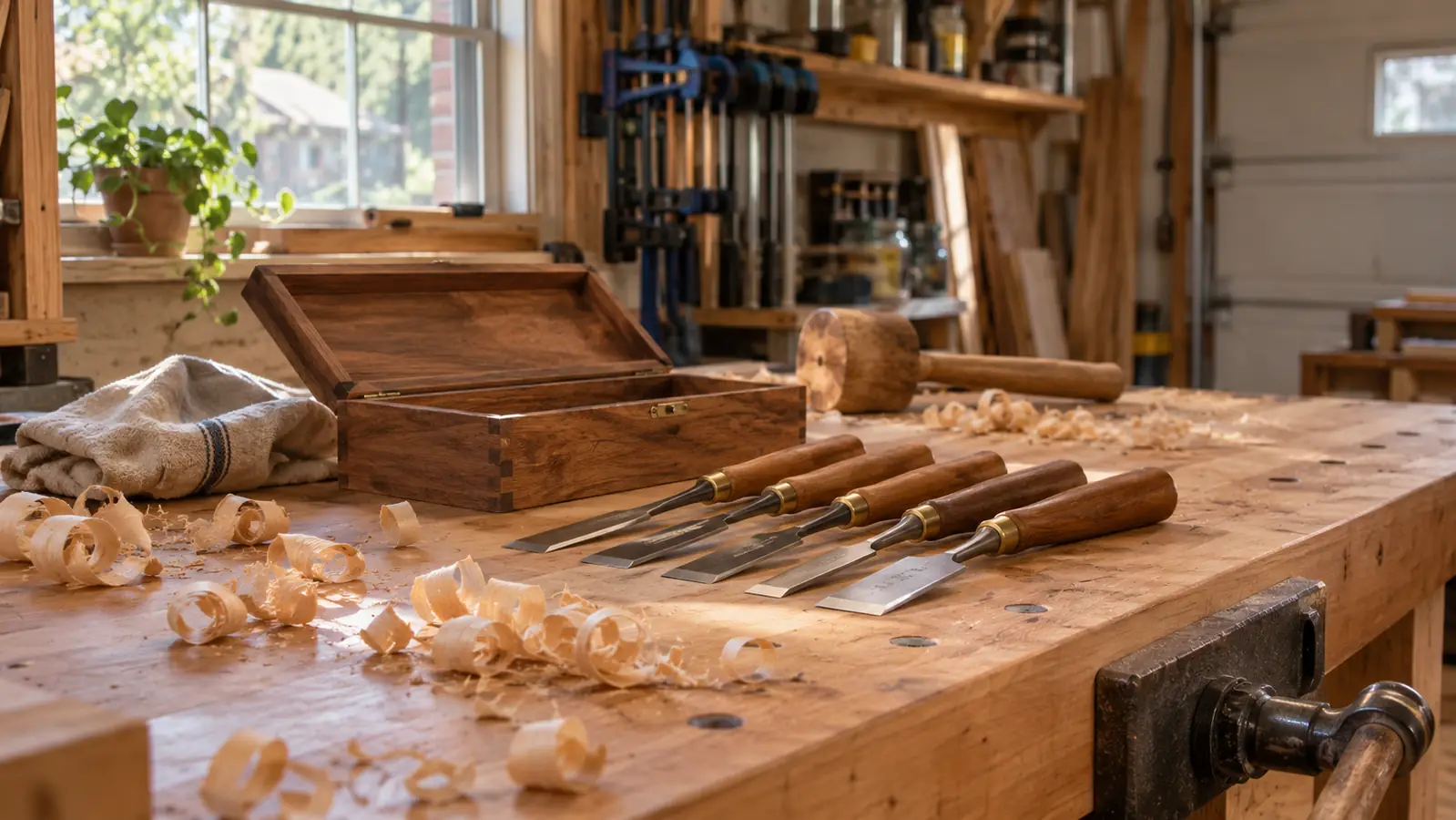
For thirty years I cut joinery by hand in old New England houses, and the tool I reached for more than any other was a chisel. Not the most impressive thing on the bench. The most useful. A chisel cleans a hinge mortise, pares a tenon cheek, chamfers a drawer front and lifts a bruised dent out of pine, and it does all of that without a cord or a setup. The set that stays within arm's reach of my maple bench is the Narex 6 pc Bevel Edge Chisel Set, six sizes running from 6 mm up to 26 mm.
Most people come to chisels backwards. They buy the saw, the plane and the sander first, then discover the joint still will not close because the shoulder sits a hair proud or the mortise has a lump in the bottom. A chisel is what fixes that. It is also the tool that teaches you how an edge behaves, which quietly makes every other edge in the shop sharper. Here are ten reasons it earns its place.
Six sizes, one box, and nothing in it you will not use
The Narex 6 pc Bevel Edge Chisel Set runs 6, 10, 12, 16, 20 and 26 mm on a 25 degree bevel, blades hardened to Rc 59. This is the set I would hand someone who is done improvising with three sizes.
Amazon Check Today's Price on Amazon →It reaches the corners a router bit cannot
Every hinge leaf I have hung needed a mortise with square corners, and every router bit leaves a radius. You can buy a corner chisel, or you can spend ninety seconds with a 12 mm chisel and a mallet and be finished. The same goes for the bottom of a stopped dado, the inside of a half-lap on a door stile, and the flat left at the bottom of a Forstner hole. Those small corners are where a job looks hand-cut or looks rushed, and the chisel is the only tool that gets in there.
Amazon See the twelve-millimeter that cleans a mortise corner →
Paring beats sanding on end grain
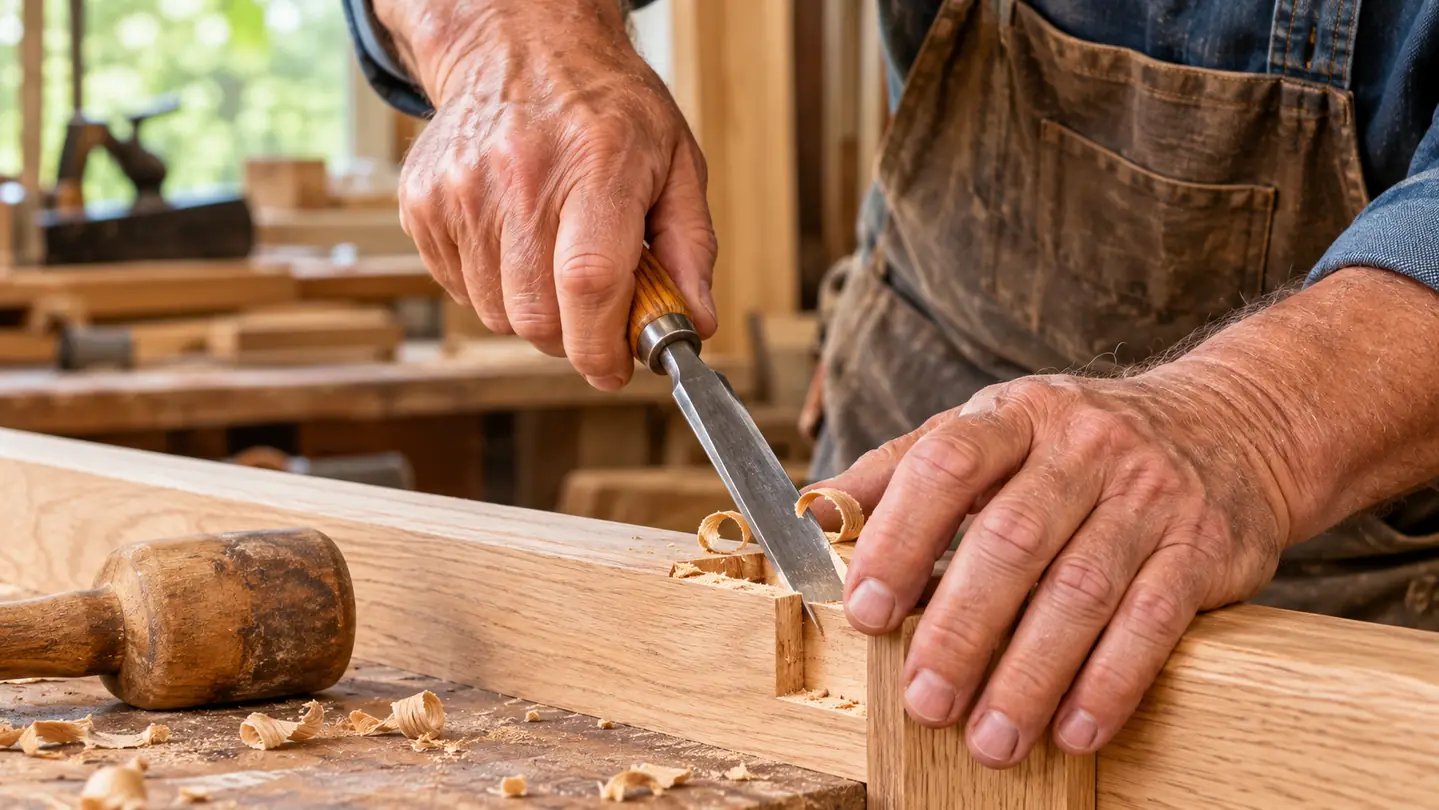
End grain does not sand clean, it burnishes. Press hard and you smear the fibers, press light and you spend twenty minutes getting nowhere. A sharp chisel laid flat on the end of a rail and pushed with the palm takes off a shaving you can read a pencil line through, and the surface is done in one pass. I pare tenon cheeks and rail ends with the 20 mm from the set because the width spans the cut in two passes. Learn this and you stop buying so much sandpaper.
You stop fighting tear-out on figured wood
Curly maple and quartered oak will tear out under a plane no matter how fine you set it, and no amount of sanding puts the figure back. What works is a chisel used as a paring tool, working downhill across the grain in light passes with the bevel up. The bevel edge on these blades lets you get into a corner without the flank of the tool bruising the surface beside the cut. That shape is the whole reason I would pick a bevel edge over a heavier firmer chisel for bench work.
Six sizes means you stop making do
The Narex set runs 6, 10, 12, 16, 20 and 26 mm, and that spread is not random. The 6 mm cleans out a small hinge mortise. The 10 and 12 mm handle most furniture joinery. The 16 and 20 mm pare tenons and clean wide shoulders. The 26 mm chamfers a table edge or eases a door into its frame. Working with three sizes and improvising the rest is exactly how you gouge a shoulder and then have to repair what you just cut.
The 25 degree bevel is a starting point, not a rule
The Narex blades arrive ground at 25 degrees, a sensible compromise for paring and light mallet work, and it is where I keep mine. If you are chopping mortises in white oak all afternoon you may want 30 degrees for a sturdier edge, and changing it is a ten minute job on a coarse stone. The bevel angle is yours to choose and the steel does not object. What it does care about is that you hold the same angle every time you hone it.
A chisel at Rc 59 that you can hone in two minutes beats a harder one you are afraid to touch.
Rc 59 steel holds an edge through a whole afternoon
The blades are fine-grained chrome-manganese steel, tempered and hardened to Rc 59. That number matters because it sits in a useful window. Hard enough to hold an edge through an afternoon of paring white oak, soft enough that a water stone still cuts it in a couple of minutes. Chisels up in the sixties are wonderful right up until you chip one, and then you lose an evening grinding the chip out. For bench work, 59 is the number I would ask for.
Beech handles take a mallet blow without complaint
The handles are stained European Beech. Beech is dense, close-grained and just springy enough that it absorbs a mallet hit instead of passing all of it into your palm. It also stays comfortable when your hands are dry in January, which is more than I can say for some of the plastic handles I have used. If you ever do crack one, a handle is a lathe job, not a reason to throw the chisel away. The handle is a serviceable part on a good chisel, not a sealed unit.
The wooden box earns its place, just not on the shelf
The set comes in a wooden presentation box. Most people leave the chisels inside it, and that is the mistake, because a chisel rattling against its neighbor loses its edge faster than one that gets used. I screwed a strip of pine above my bench, cut shallow notches in it, and the chisels sit edge-up where I can read the size at a glance. The box then holds stones and oil. Six chisels in one known place beats six chisels spread across three drawers.
A chisel is how you actually learn to sharpen
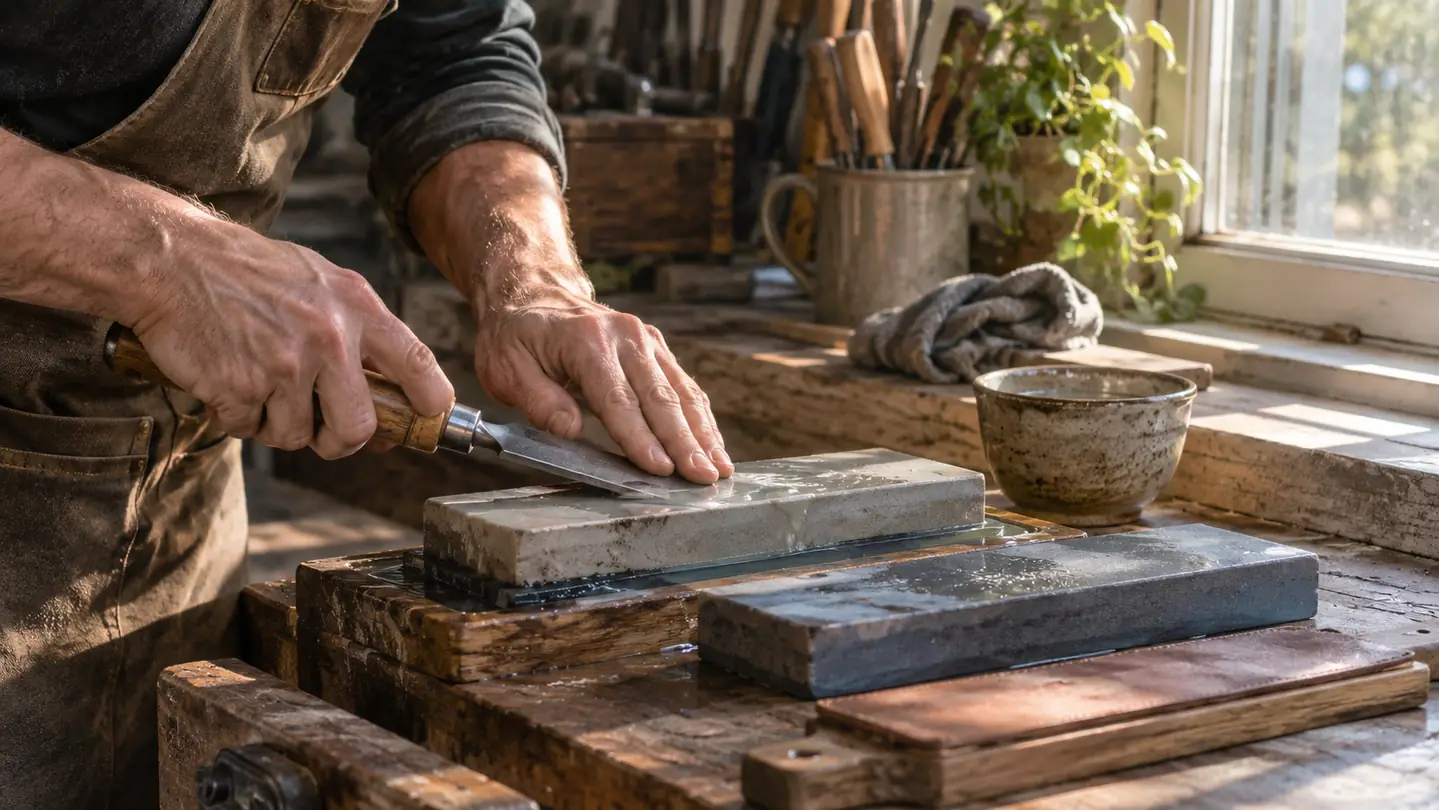
Nobody learns to sharpen on a plane iron, because the first dull edge sends them back to the sander. A chisel is forgiving to practice on, tolerant of an angle that is a degree or two off, and the result is immediate: you feel the difference on the very next paring cut. I keep a sharpening station by the window of my shop, two water stones and a strop, and I touch up at the end of a session rather than the start. The Narex blades took me from guessing to knowing, and that is worth more than the tools cost.
It makes you a better judge of every other edge you own
Once you can feel a wire edge with your thumb and know which way the bevel is riding, you start noticing dull tools everywhere. The plane iron that seemed fine last week is suddenly obviously not fine. The kitchen knives get better because somebody in the house finally understands what is happening at the edge. You stop buying gadgets that promise a sharp edge without teaching you anything. Six chisels, a stone and a strop are a complete education in what sharp means.
What I'd Skip
I would skip the twelve-piece set. Half those sizes will never leave the roll, and the money is better spent on a decent stone. Buy the six that cover real work, 6 mm to 26 mm, and add a specialist chisel later if a particular job demands it. I would also skip buying a wide 38 or 40 mm chisel first, because a wide blade needs a wide stone and a lot of honing time, and you will not reach for it until you are chamfering table tops.
And I would skip the bargain-bin chisels with a hollow back. Flattening one of those takes an evening on coarse paper, and a year later you are still fighting the same hollow every time you hone. A back that is flat when it arrives saves you the worst job in the shop, and that is the reason the Narex set stays on my bench while two cheaper sets went to the neighbor's kids. Check the back before you check anything else on the label.
Start with the sizes you will actually cut
Six chisels from 6 mm to 26 mm, a 25 degree bevel, Rc 59 steel and beech handles, in a box that keeps them together. Add a stone and a strop and you are set for joinery.
Amazon Check Today's Price on Amazon →