
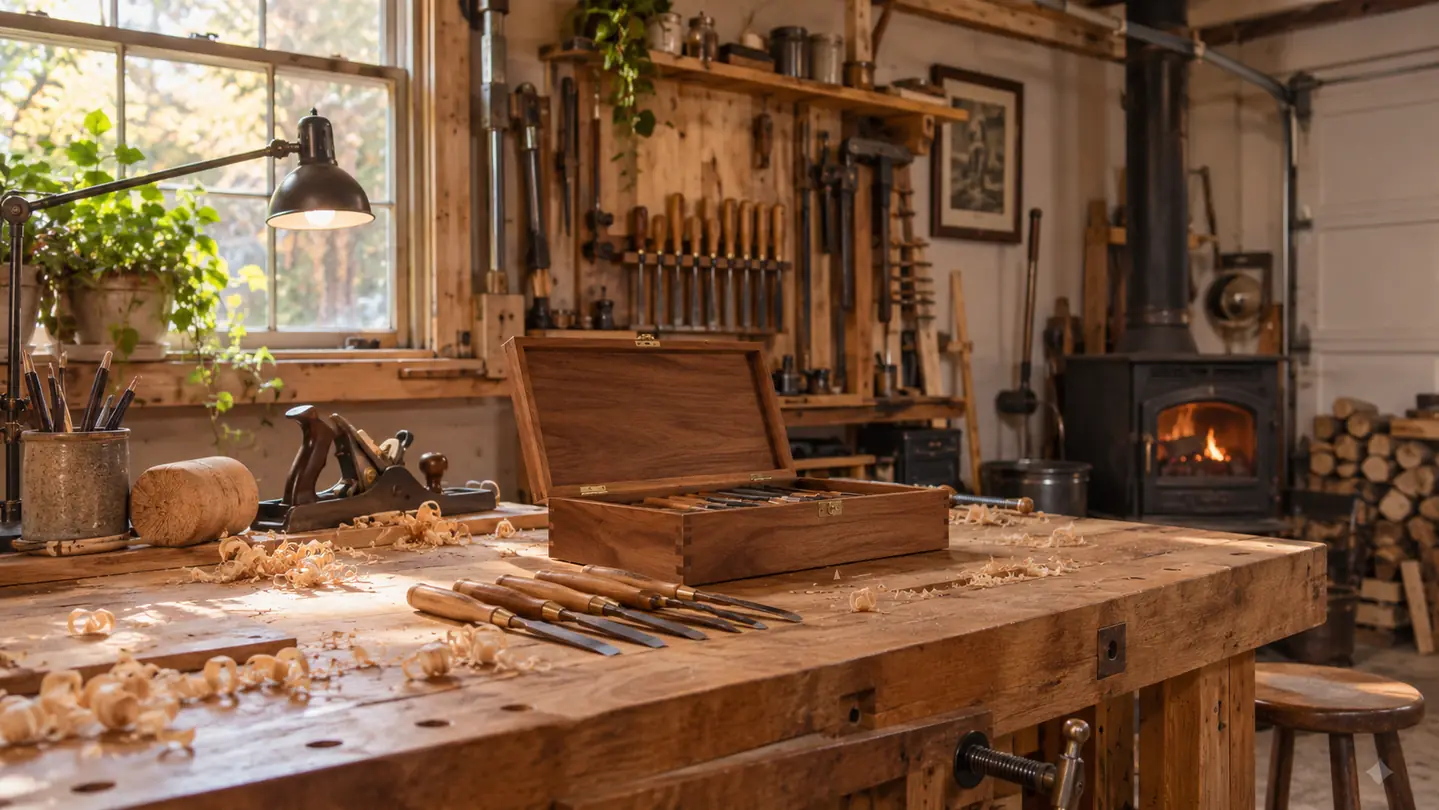
The first chisel set I owned came out of a hardware store bargain bin in the late seventies. Chrome vanadium, plastic handles, edges that folded the first time one of them met a knot in white oak. I spent more evenings at the sharpening stone than I did at the bench. Back then I assumed that was just how hand work went. You fought the tool, you touched up the edge, and you fought it again the next morning.
Thirty years of restoration carpentry later, I know better. A chisel is not a complicated object. It is a piece of tempered steel with a flat back and a handle, and nearly everything that makes one good or bad happens in the steel and in how flat that back arrives. Get those two things right and the tool disappears into the work.
The set I keep on the bench now is the Narex 6 pc Bevel Edge Chisel Set, the one that comes in the wooden presentation box. Six sizes: 6, 10, 12, 16, 20 and 26 mm. I have used it long enough that the box has a worn place where my 12 mm lives.
The first thing I do with any chisel is check the back. That is the flat face, the one that has to sit true against the work when you are paring. My discount set had backs dished like spoons and I never got them flat in twenty years of trying. The Narex backs came close enough that a few minutes on a coarse stone followed by a fine one had all six where I wanted them. Not perfect out of the box. Close. There is a difference, and it matters when you are fitting a hinge into an old jamb.
The blades are fine grained chrome-manganese steel, tempered and hardened to Rc 59. That is a Rockwell hardness reading. Fifty nine is a sensible place for a bench chisel to sit. Hard enough that a 25 degree bevel holds its shape in white oak and hard maple without me running back to the stones every twenty minutes. Soft enough that when I catch an edge on a hidden nail in an old sill, I can bring it back myself instead of sending it out.
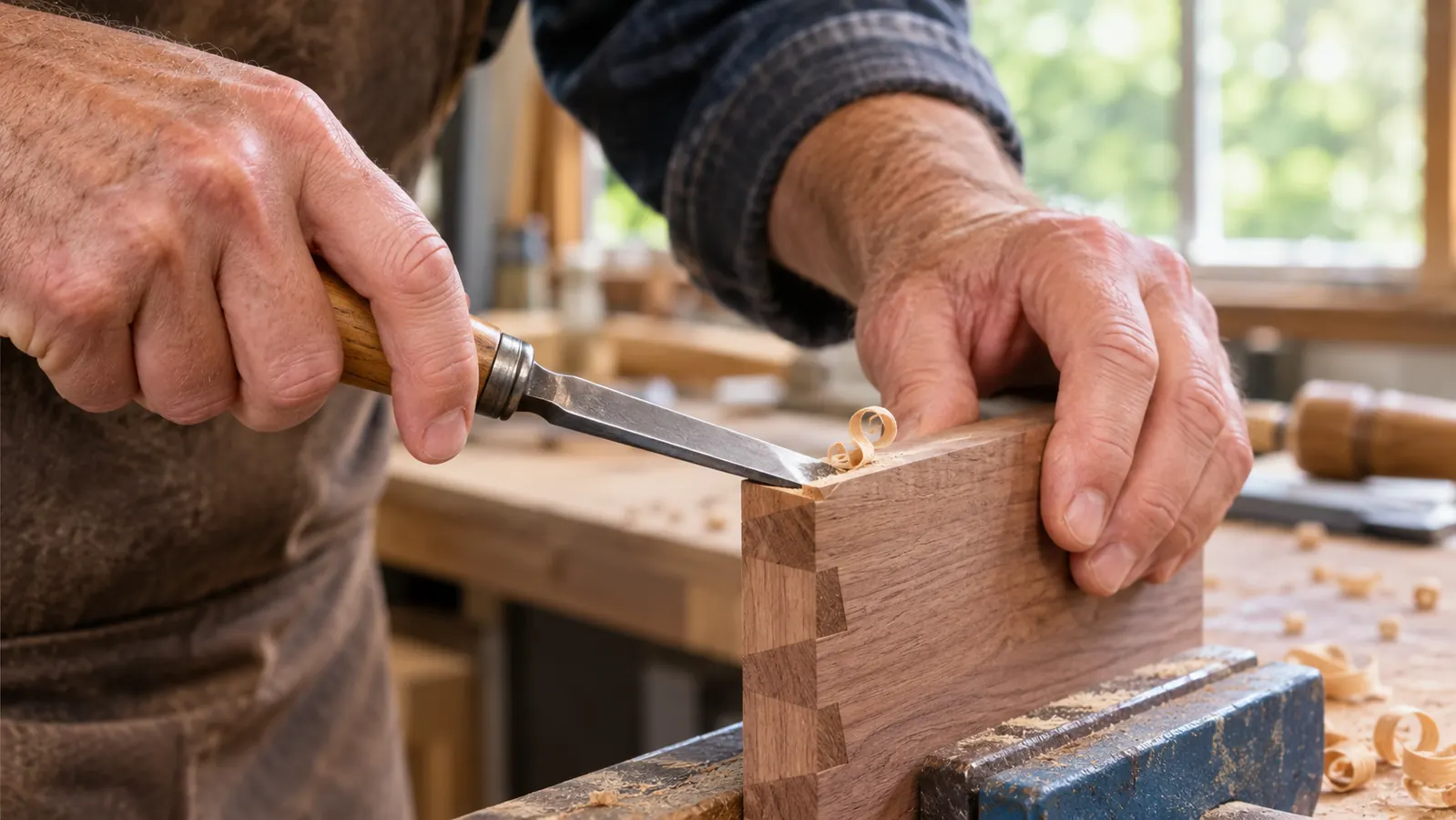
They arrive ground at 25 degrees, a good working angle for paring and light chopping, and I have kept mine there. The sides of the blade taper rather than sitting square, which is what the bevel edge in the name refers to. That taper lets you drop the chisel into the corner of a dovetail and clean it out without the side of the blade gouging the pin beside it. The handles are stained European Beech, and wood takes a knock better than plastic when the shop is cold. The whole set weighs 1.6 pounds, box and all, so it travels to a neighbor's house easily when I go to look at a sticking sash.
Fifty nine on the Rockwell scale is a sensible place for a bench chisel to sit. Hard enough to hold a 25 degree bevel in white oak, soft enough to bring back on the stones after you catch a nail.
Six sizes in one box, and backs you can flatten in an evening
Bevel edge blades, a 25 degree grind, Rc 59 steel, and a wooden box that keeps the sizes together instead of scattered through a drawer.
Amazon Check Today's Price on Amazon →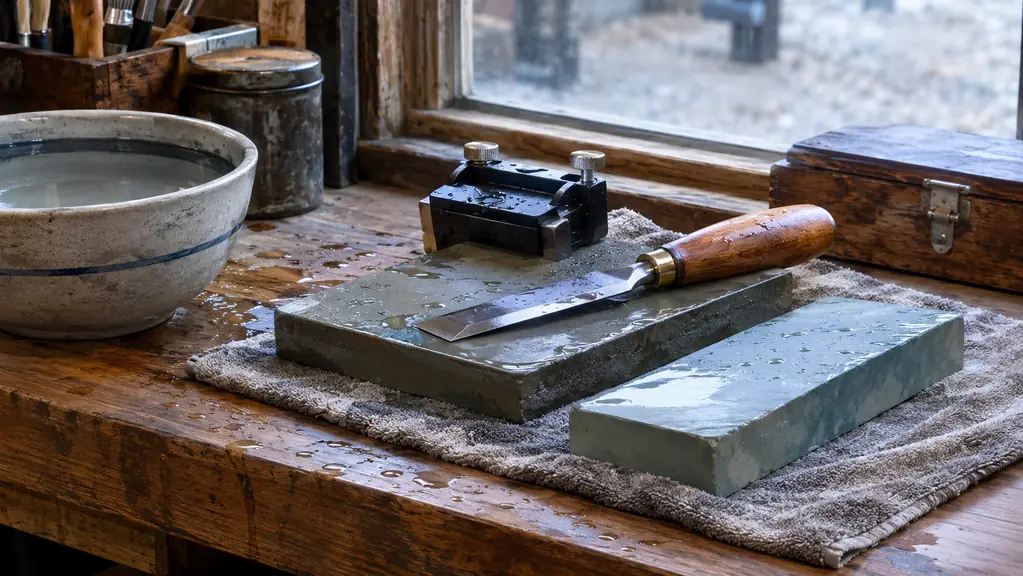
Where the set earns its place in my shop is in the middle sizes. The 12 mm and the 16 mm do most of the work: paring end grain on a box side, cleaning up a mortise, chamfering a drawer edge. The 20 and 26 mm handle heavier paring and wide rebates, and the 6 mm gets used on small hinge gains and delicate repairs to a chair leg. Having all six in one box means I am not hunting through a drawer for the one size I need.
Honest tradeoffs. The wooden presentation box is handsome and it takes bench space I do not always have, so on a busy day it lives on a shelf. The handles are on the chunky side, which suits my hands after forty years of gripping framing chisels, but may not suit smaller ones. And the backs still need that first flattening. That is true of most chisels in this class, and anyone who tells you otherwise is selling something.
Forty years ago I thought a sharp chisel was one you had just sharpened. Now I think a sharp chisel is one that is still sharp an hour later. That is the whole argument for better steel, and it is the reason the Narex set stayed on my bench after the novelty wore off.
I sharpen on water stones by the window, coarse to fine, and I hone the bevel at the angle it came with. Nothing fancy about it. The steel takes an edge quickly and holds it through a session, which is all I have ever asked of a tool.
What I'd Tell You If We Were Sitting at My Kitchen Table
Forget the brand argument and think about what you actually do at the bench. If you cut joinery by hand a few weekends a month, or you are coming back to hand tools after years away, you need a set that arrives with a usable back, honest steel, and sizes that match the work in front of you. The Narex set does that. If you are a professional who needs a chisel to arrive dead flat and stay that way through daily use, you will still spend an evening on the stones, and you should know that going in. What I would tell you is to buy the set, flatten the backs once, learn to hone at 25 degrees, and then stop thinking about chisels for a decade. The tool is not the interesting part. The work is.
If the backs are the only real work, that is an evening well spent
Start with the 12 mm, flatten the back, hone the bevel at 25 degrees, and go cut something.
Amazon Check Today's Price on Amazon →