
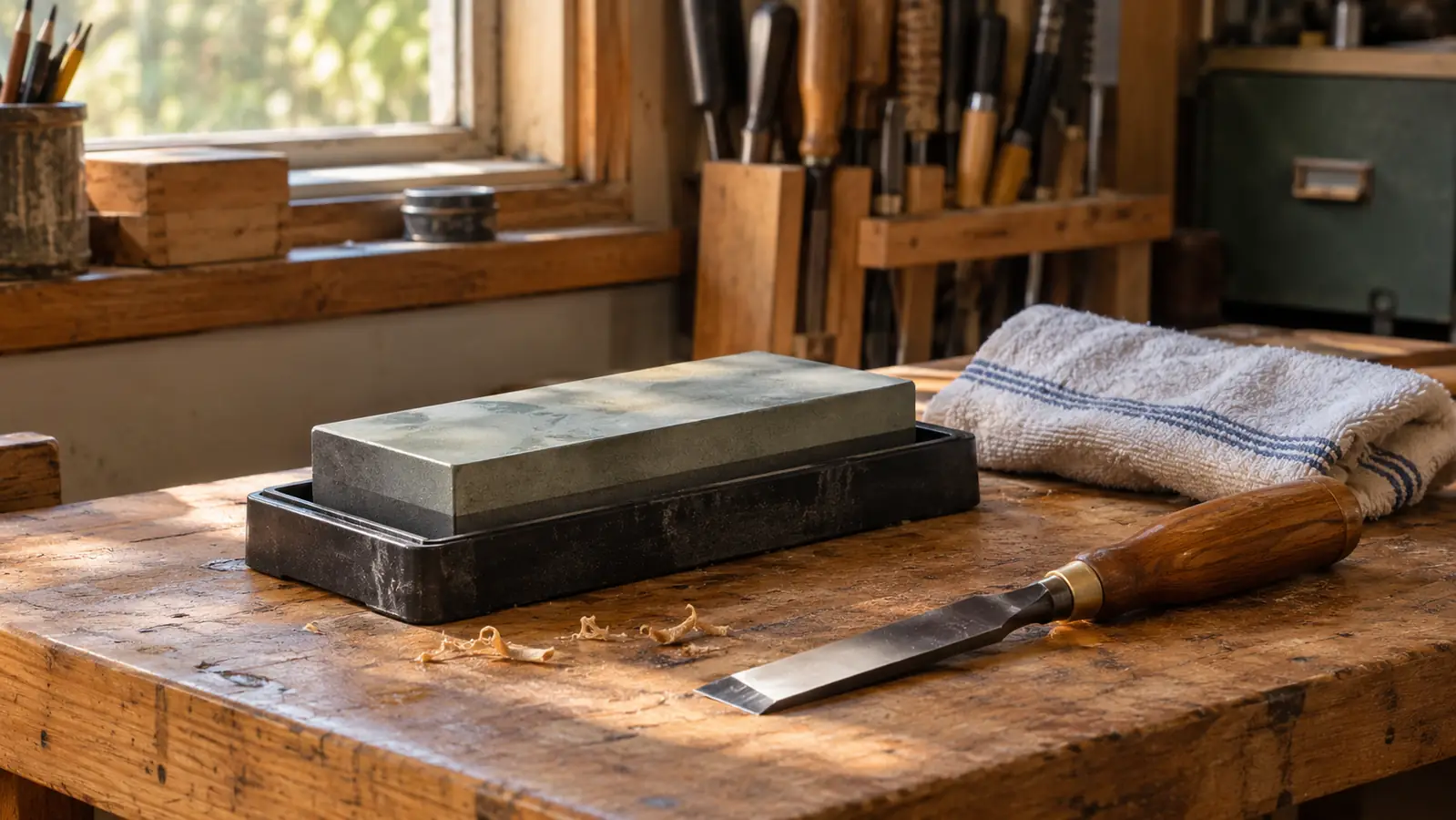
The old carpenter I learned from kept one stone in a coffee can of water and sharpened everything on it for thirty years, and I did the same for longer than I care to admit. It worked, mostly. A chisel off that stone would shave the hair on my forearm and then skate across a piece of white oak instead of biting, and for a lot of years I assumed that was my technique rather than my edge.
The King KW65 is a two-sided water stone, 1000 grit on one face and 6000 on the other, eight inches long, two inches wide and an inch thick, and it comes in a plastic base that holds it steady on the bench. I put mine at the sharpening station by the window last spring and have run every chisel, plane iron and gouge in the shop over it since. Some of that was a pleasure. Some of it was not. Here is the honest account, including the parts I would change.
The Quick Verdict
A soft, fast-cutting combination stone that takes a chisel from nicked to polished on one block, as long as you soak it and flatten it on schedule.
Amazon Check Today's Price →Two grits, one block, and an edge that stops skating on oak
If your chisels shave hair and still stumble in hard wood, the gap is between 1000 and 6000. This stone covers both sides of that gap and sits in a base that stays put.
Amazon Check Today's Price on Amazon →How I've Used It
My sharpening station is two feet of bench under the window, because the light is best there and because a low sun shows the scratch pattern on a chisel back better than any lamp I own. The King lives there now, in its base, with a shallow plastic tray beside it. I drop the stone in the tray when I come into the shop, set up my honing guide and my water can, and by the time I've found the chisel I want it's ready to work.
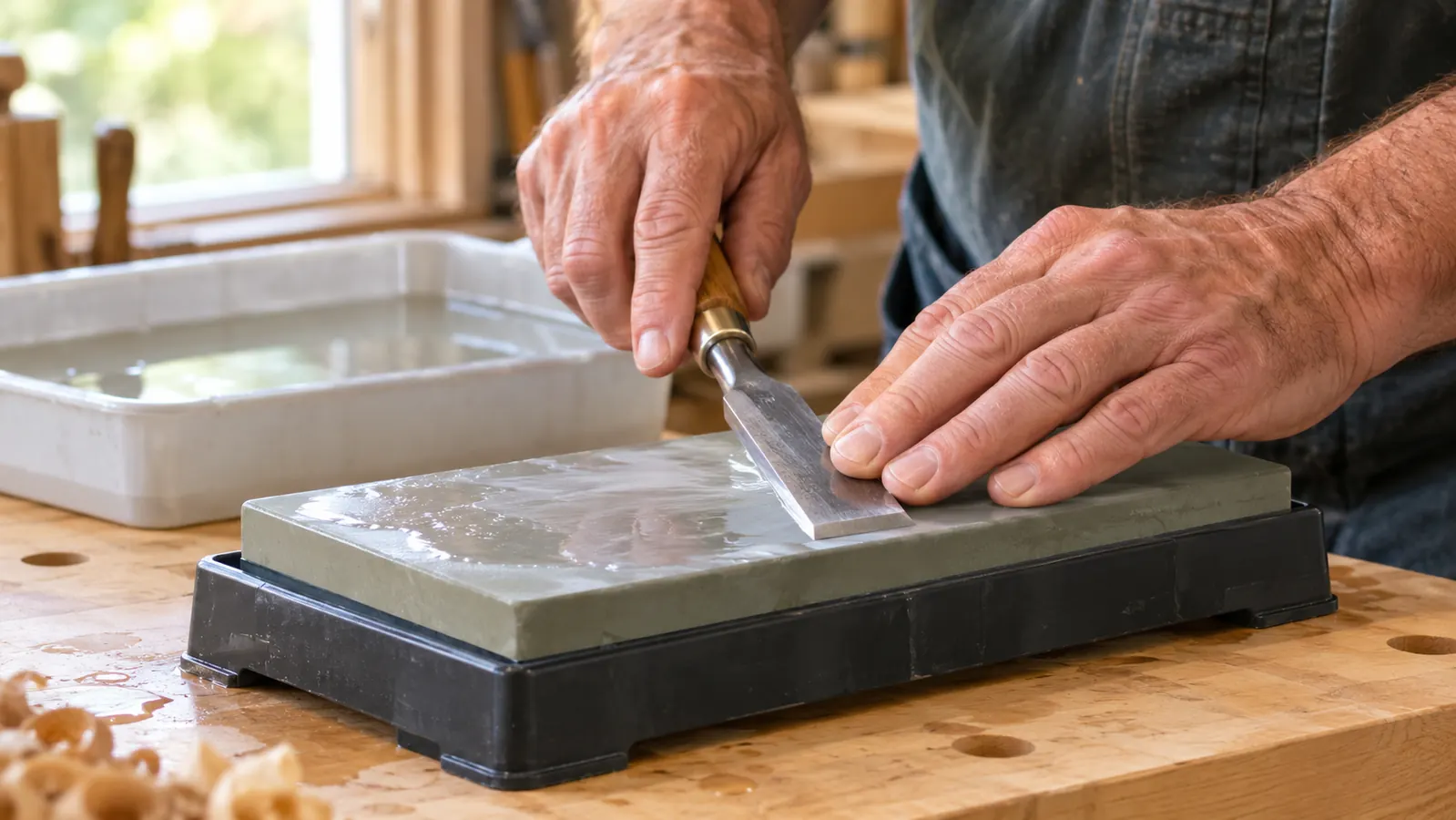
The first edge I put on it was a one inch bevel edge chisel I use for dovetails, a Stanley from the sixties with a bevel that had gone convex from thirty years of freehand sharpening. I flattened the back on the 1000 side, working the last inch and a half, then raised a wire edge on the bevel. Four minutes, maybe five. The wire edge came up even across the full width of the blade, which told me the face was flat, and that is not a small thing. I have bought stones that arrived dished and never fully recovered.
Since then the stone has seen four bench chisels, two mortise chisels, three plane irons, a scraper I was experimenting with, and a drawknife that had not been sharpened since the nineties. I sharpen on a Saturday morning about once a month and more often when I'm building small boxes and want a paring chisel that will take a shaving I can read through. Call it forty sessions. That is enough time to know how a stone behaves and enough time to find its bad habits.
What I have not done with it is repair damage. If you drop a chisel on a concrete floor and take a chip out of the edge, a 1000 grit stone will get you there eventually, but eventually is the word. I keep a coarse diamond plate for that work and use the King for everything after it. That division of labor is the one I would recommend to anybody setting up a sharpening station from scratch.
The 1000 Side Does the Real Work
People talk about the polishing grits because they feel like progress, but the 1000 side is where an edge is actually made. It cuts fast enough to reshape a bevel and fine enough that you aren't spending the next twenty minutes removing the scratches it left behind. That balance is the whole trick of a combination stone, and King has it right on this one.
The 1000 face is soft, and soft is not a criticism here. It breaks down as you work, and the slurry that comes off it does part of the cutting. The trade is that the stone dishes faster than a hard ceramic water stone would. I check mine with a straightedge every few sessions and flatten it on wet or dry paper on a plate of glass when the hollow starts to show. Twice since spring, both times after an afternoon spent on the wide iron of a jack plane.
The two inch width matters more than the numbers make it sound. It's wide enough for a two and three eighths inch plane iron if you hold the iron at a slight angle to the stone, and narrow enough that a quarter inch chisel doesn't wander off the edge into the base. A three inch stone is more comfortable to use. Two inches is easier to store, easier to soak, and easier to flatten, and I have not found it a hardship.
Grit numbers are not standardized between makers, so a 1000 from one company is not the same as a 1000 from another. What matters is the finish it leaves and how fast it leaves it. On this stone, the 1000 face leaves a scratch pattern you can see in raking light and remove with a dozen strokes on the 6000. When a stone's two grits are that well matched, the jump between them is short. That's the practical test of a combination stone, and this one passes it.
The 6000 Side and What It's For
The 6000 side is a polishing stone, and the first thing to understand is that it is not a repair stone. It will not fix a nick and it will not reshape a bevel in any reasonable amount of time. If the edge is damaged you go to the 1000 side, or to a coarse plate if the damage is deep, and you stay there until the nick is gone. The 6000 is for the last thirty seconds of the job.
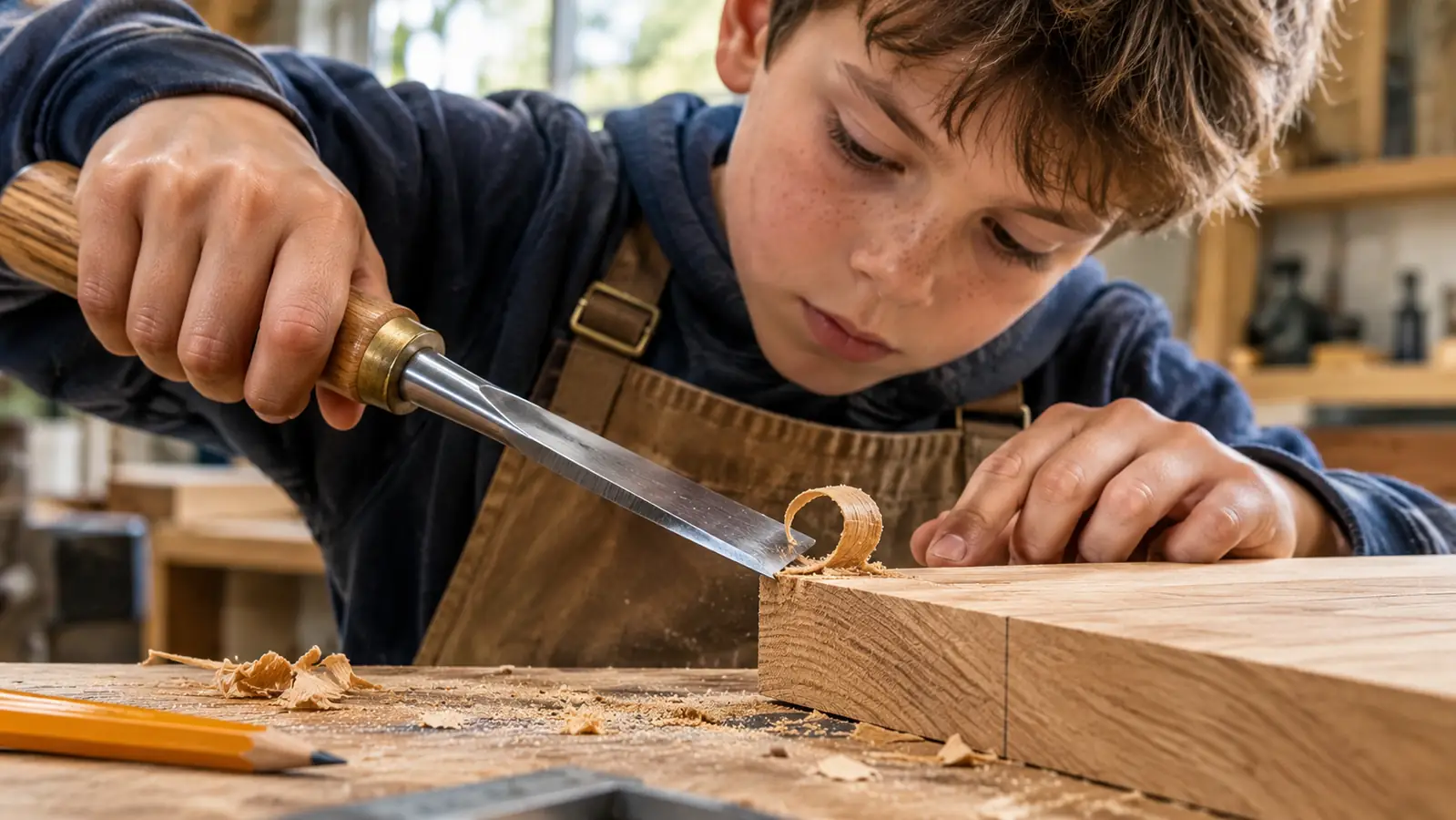
What those thirty seconds buy is a bevel with the scratches polished out, and in white oak the difference is not subtle. A 1000 grit edge cuts end grain and leaves a wall that looks fine until you run your thumb across it and feel the fuzz. The same edge taken to 6000 leaves a wall you can read newsprint through. In pine you will not notice. In oak, cherry, or anything with grain that fights back, you will notice every time.
I use it on the back of the chisel too, and that is the step most people skip. The back is half the edge, and it needs to be flat and polished for the first inch or so behind the tip. My routine is 1000 on the back, 1000 on the bevel, 6000 on the bevel, then two or three light passes with the back flat on the 6000 to take off the wire edge. That last pass is what stops an edge feeling toothy. Without it you have a sharp chisel that still tears fiber.
The drawknife was the surprise. I expected a curved bevel to be awkward on a flat stone and it was, for about a minute. You roll the blade as you push and the stone tells you where you are by the sound and the feel through your hands. Twenty minutes took a blade that had been crushing wood fibers into one that lifted a clean curl. A curved blade on a flat stone is a skill, not a limitation of the stone, and the King is wide enough to learn it on.
Forty sessions on, the 1000 face still takes a nicked bevel to a wire edge in under five minutes. That is the number I care about.
Water, the Base, and the Mess
This is a stone you soak, not a splash and go. Ten minutes in water is enough and it stays usable for a whole session. Mine lives in a shallow plastic tray with an inch of water in it and I top the tray up as I work. Leave it dry for a month and then dunk it and you'll wait. I left mine in the tray over a cold weekend by accident and it came through fine, which is more than I can say for a stone I owned years ago.
The base is a simple plastic holder and it does what a base is supposed to do. The stone sits down in it, the whole assembly sits on the bench, and nothing walks while you push a plane iron across the face. Most of my sharpening is done standing up, so a holder that stays put matters more than it sounds like it should. The stone lifts out for soaking and for flattening, which I appreciate. I have used holders that required you to fight the stone out of them every time.
It makes a mess. There is no version of water stone sharpening that doesn't. Slurry runs off both ends, the bench gets wet, and if you aren't paying attention it runs onto whatever you're working on. I keep an old towel under the tray and wipe the stone down when I'm finished. Cleanup is about a minute. If a minute of cleanup sounds like too much, oil stones are the answer, and you'll trade that minute for a slower edge.
One habit worth building is to rinse the stone and the base separately when you're done and let both dry apart. Slurry left sitting in the base sets like plaster and glues the stone down. Mine did it once and I had to work the stone loose with a putty knife. Ten seconds of rinsing prevents the whole problem.
How It Wears
I have six months on mine, roughly forty sessions, and the 1000 side has lost some thickness without losing any cutting speed. The 6000 side barely shows wear, which is normal given how little it cuts. Neither face has cracked. The stone lives in a shop that gets cold in a New Hampshire winter, and it has been frozen and thawed more than once without complaining.
The thing to watch is the hollow in the middle of the 1000 face. A soft stone wears where you work it, and if you always push in the same spot you'll end up with a dish that makes a chisel rock. You feel it before you see it. Flattening takes five minutes with 220 grit paper on a flat plate, and doing it before the dish gets deep is the difference between a stone that lasts years and one you give up on.
The other thing worth saying is that a combination stone is a compromise, and a good one. A dedicated 1000 grit stone of the same size would be thicker and would go longer between flattenings. A dedicated 6000 would be harder and would polish a bit faster. What you get here is both grits in one block you can carry in one hand, and for a shop with one bench and not much shelf space, that trade is worth making.
What I Liked
- Two usable grits in one stone, so a full sharpening happens without swapping stones
- The 1000 face cuts fast enough to reshape a bevel in four or five minutes
- The 6000 face leaves an edge that cuts end grain clean in oak and cherry
- The plastic base holds the stone steady and releases it easily for soaking
- Eight by two inches handles anything from a quarter inch chisel to a wide plane iron
Where It Falls Short
- It needs soaking, roughly ten minutes, before the first use of a session
- The 1000 face is soft and dishes, so it wants flattening every few sessions
- It is not a repair stone, so chips and deep nicks need a coarse plate first
- Water stone slurry makes a mess on the bench and has to be wiped down
Who This Is For
This is a stone for the woodworker who already sharpens and wants a better edge without building a shelf full of stones. If you own chisels and plane irons, if you have been getting by on a coarse diamond plate or an old oil stone, and if your edges cut pine happily and struggle in hardwood, the King fills the gap that is actually costing you.
It also suits anyone sharpening in a small shop. One stone, one tray, one base, and a towel. It stores on a shelf and sets up in ten minutes. For a hobby woodworker working Saturdays in a garage, that is the right size of kit. And it suits the person who sharpens freehand and doesn't want to buy a jig before they know whether they'll keep at it.
Who Should Skip It
If you only sharpen once or twice a year, or if your work is rough carpentry where a chisel gets hit with a mallet and driven through a knot, a 6000 grit polish is wasted effort. That edge is gone in ten minutes. A coarse diamond plate and a strop will serve you better and ask less of you.
Skip it too if you resent maintenance. This stone needs soaking before use and flattening every few sessions, and a stone that never gets flattened stops being flat and starts rounding your bevels. If that sounds like a chore you won't do, get a hard ceramic water stone or a set of diamond plates and accept a slightly rougher edge. And if you are repairing chipped tools for other people, buy the coarse stone first. The King is a finishing tool more than a rescue tool.
The last thirty seconds of a sharpening job are the ones you feel in oak
Soak it, flatten it now and then, and it will take a chisel from nicked to polished on one block. Mine has forty sessions on it and still cuts.
Amazon Check Today's Price on Amazon →