
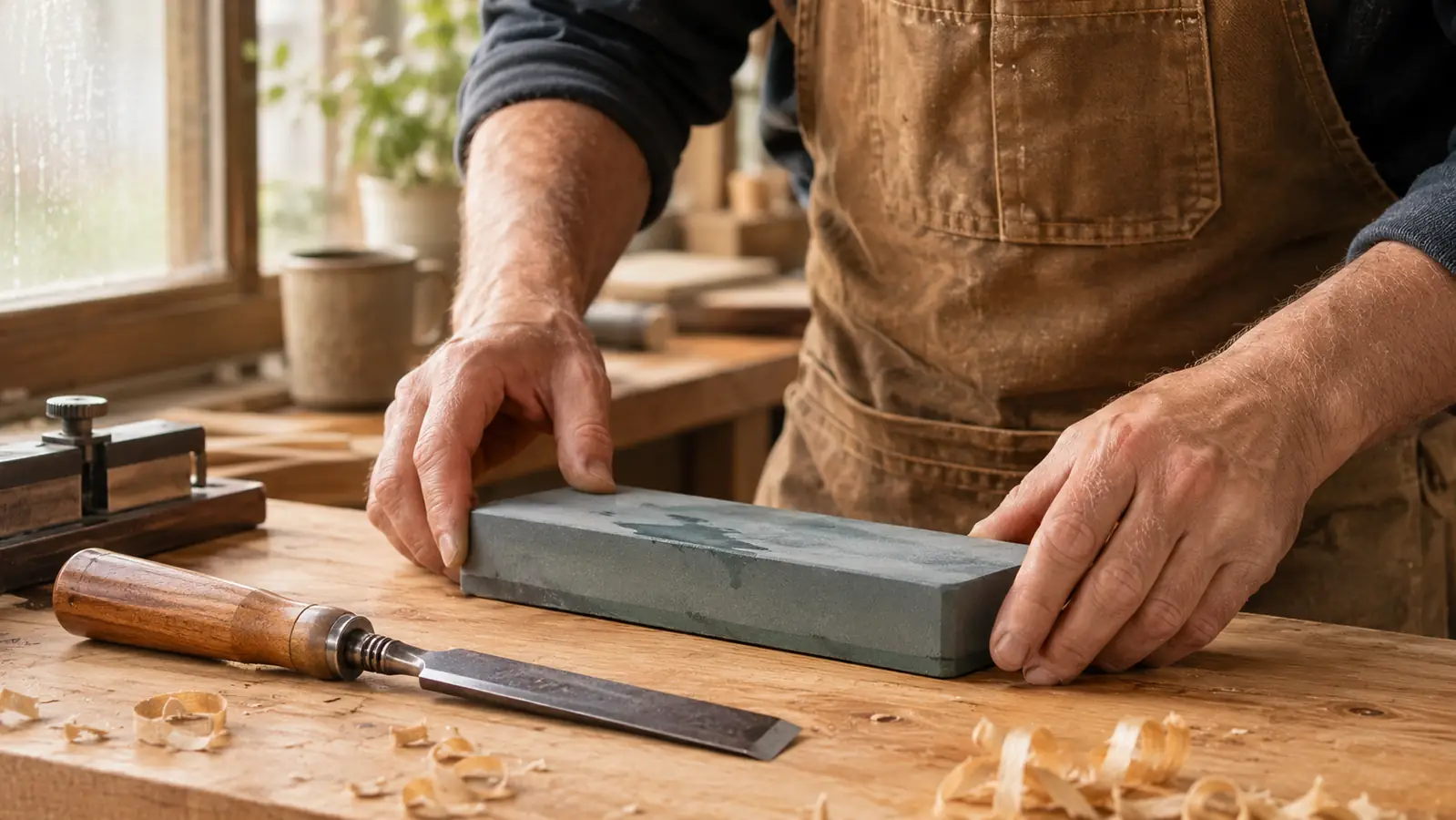
I sharpened on wet-or-dry sandpaper stuck to a plate of glass for the better part of a decade. It worked. It was also the reason I kept putting off sharpening until an edge was so far gone the tool was fighting me instead of the wood. A water stone sitting on the bench changes that arithmetic, because when the stone is already out and already wet, you touch up an edge in ninety seconds and go back to work.
The stone I keep by the window is a King KW65, a combination stone with a 1000 grit face and a 6000 grit face, eight inches long and two inches wide and an inch thick, sixteen ounces with the plastic base under it. That is not a fancy setup. It is the setup that made me stop dreading the sharpening bench. Below are ten reasons it earns its place, in the order they actually hit me.
One stone, two grits, and a base that keeps it from skating
The King KW65 puts a 1000 grit face and a 6000 grit face on a single eight-inch ceramic stone, with a sturdy plastic base included. It is the least fussy way I know to keep a chisel sharp enough to pare end grain on a Tuesday afternoon.
Amazon Check Today's Price on Amazon →You stop rationing sharpening
When sharpening means dragging out the glass plate, cutting fresh paper, spraying it down and then cleaning up the mess, you save it for a rainy day. When it means wetting a stone, you do it at the first sign of trouble. That is the whole game. A dull edge costs you more in tearout, in force, in wrist strain and in ruined layout lines than a sharpening habit ever will. The King sits on the bench with its plastic base under it and takes ten seconds to set up.
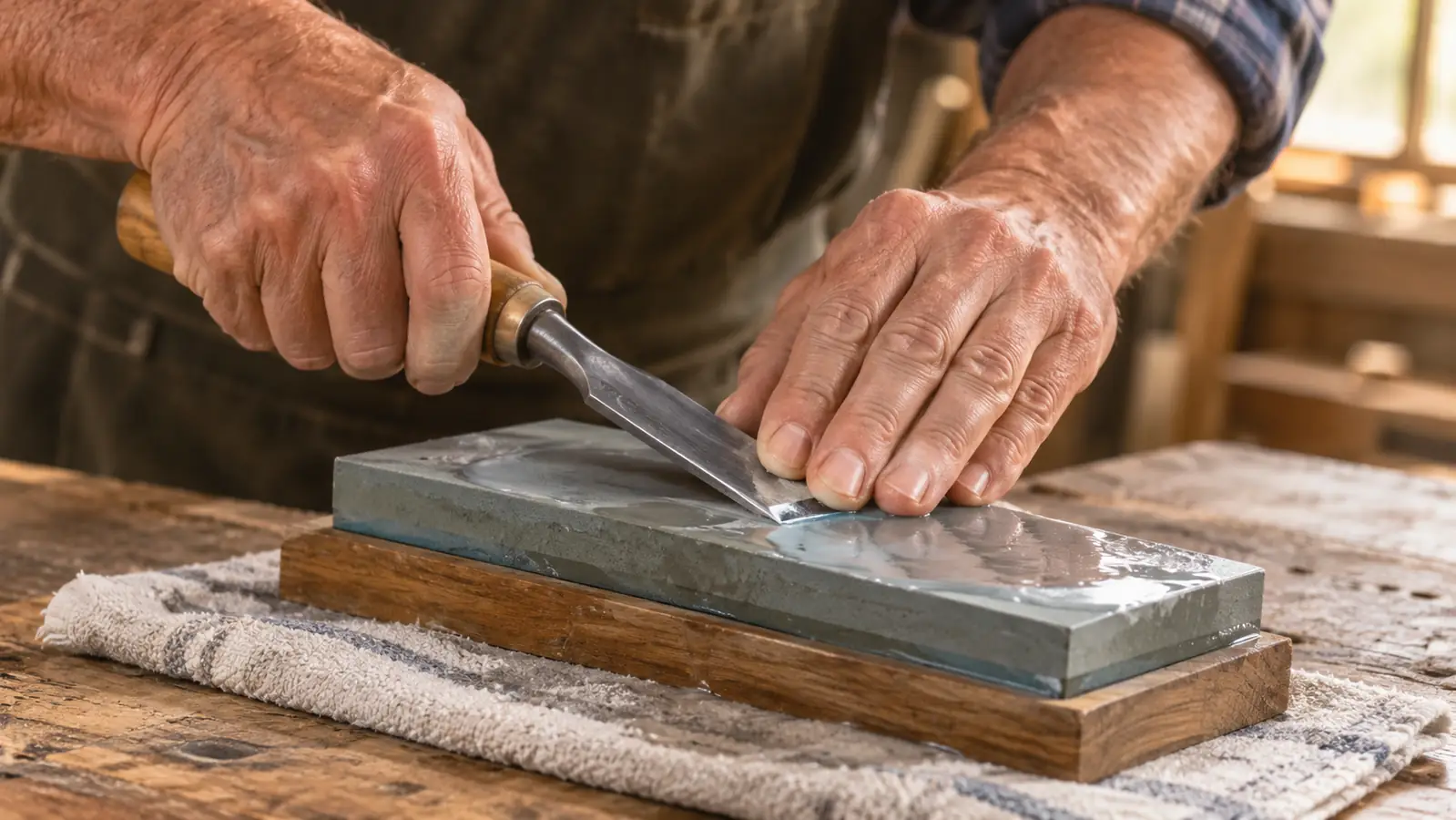
Two grits cover the whole job
The 1000 grit face does the work of raising a fresh edge. It cuts fast enough to reset a bevel that has been neglected, and it leaves a scratch pattern you can live with on a bench chisel. The 6000 grit face is where the polish happens. Flip the stone over and twenty or thirty passes turn a working edge into one that will shave a curl off end grain. You do not need a rack of stones to get there. One stone, two faces, and you are done.
It teaches you what a burr actually feels like
A burr is the wire of displaced steel that rolls over the back of the edge when you have ground all the way through. You cannot learn that feeling from a video. On a water stone the burr comes up in a predictable way and you can feel it with a fingertip dragged across the back, light as a feather, never along the edge. Once you know the burr, you know when to stop on the coarse face and when to flip to the fine one. That single skill does more for your edges than any jig.
The feedback tells you the truth
Diamond plates cut fast and they cut everything, which is their virtue and their trap. A water stone talks back. You feel it grab when the bevel is not sitting flat. You feel it go slick when you have loaded the surface and need to flush it. You hear the sound change when the steel is thin at the tip. That feedback is how you learn to hold an angle freehand, and it is why I reach for the stone before the plate on a chisel that only needs refreshing.
It will not gouge an edge in one careless pass
A coarse diamond plate removes steel the way a hatchet removes stock. Lose your angle for two strokes and you have a new bevel to grind out. A 1000 grit water stone is slower and more forgiving. It gives you a moment to feel the bevel settle before it starts cutting where you did not intend. For a woodworker sharpening freehand after a long day, forgiving is worth more than fast.
The stone that is already wet and already on the bench is the only sharpening system I have ever actually used at the first sign of a dull edge.
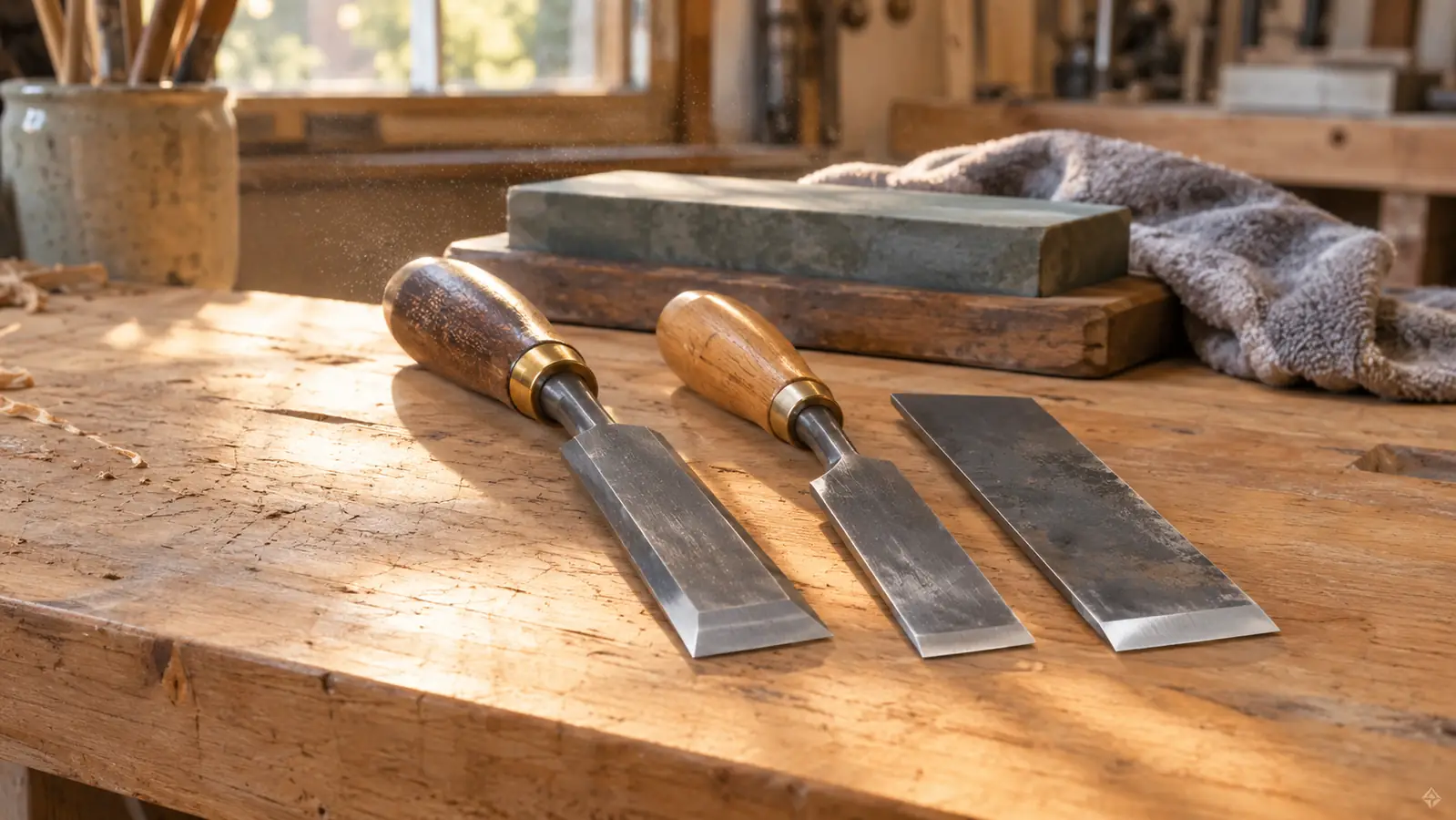
The plastic base keeps the stone where you put it
A water stone on bare bench is a stone that wants to travel. The KW65 comes with a sturdy plastic base, which holds the stone and gives you a lip to grip while you work. It is a small thing that turns into a big thing the first time you almost drop a chisel because the stone slid. Set the whole assembly on a damp towel and it stays put through a full session.
You can pare end grain without fighting the chisel
This is the test I use. Take a bench chisel, take a scrap of white oak, and try to pare a clean shaving off the end grain with the tool held by hand. A dull edge crushes and skips. A 6000 grit edge slices and leaves a surface you can read the grain in. I keep the fine face honest for exactly this, because paring end grain for a hinge or a box lid is where a sharp edge pays you back in one stroke.
It is a small stone that fits a small shop
Eight inches long, two inches wide, an inch high, sixteen ounces. My shop is a converted single-car garage with one maple bench, a wood stove, and a sharpening station by the window. I do not have room for a three-stone progression on a soaking tray. One stone lives under the bench on a scrap of towel, comes out when I need it, and goes back when I am done. Tools you can put away in ten seconds are tools you actually use.
It outlasts the cheap habit of buying sandpaper
I spent years buying wet-or-dry paper by the sleeve. It works, and it cuts fine, but it is a consumable. Every session ends with a worn sheet in the bin and a fresh one cut to size. A 1000/6000 ceramic stone is not a consumable in that sense. It wears, but it wears slowly, and it stays flat enough for chisel work if you keep an eye on it. That changes how you think about the cost of the whole operation.
It makes sharpening a habit instead of an event
Here is the real reason, and it is the one that matters most at sixty-four years old. Sharpening stops being a Saturday project and becomes something you do because it is easier than not doing it. Wet the stone, ten passes on the coarse face, twenty on the fine, strop on the back of your forearm, back to work. Do that every few hours of cutting and you will never again spend an afternoon grinding out a chipped bevel.
What I'd Skip
I would skip the stone holder with the adjustable jaws and the expensive flattening plate you have to buy before you have even learned to hold an angle. A damp towel under the plastic base does the job. I would also skip starting with a coarse grit. The 1000 grit face on this King handles a neglected bevel without eating the tool, and starting coarser than that teaches bad habits.
One honest limitation: a water stone needs water, and it needs to be flushed. The surface loads with steel and swarf and you have to rinse it and occasionally refresh the flatness. If you want a stone you can use dry with no maintenance at all, a diamond plate is the easier tool. A King stone is the better teacher.
Put a stone by the window and stop fighting dull edges
Eight inches of ceramic, a 1000 grit face and a 6000 grit face, a plastic base included, sixteen ounces on the bench. It is the sharpening kit I would hand a woodworker who is tired of sandpaper and tired of putting it off.
Amazon Check Today's Price on Amazon →