

Every few years a hand tool shows up with a reputation bigger than the tool, and the Jorgensen No.60-1/2 low angle block plane is the current example. I bought one this spring, mostly because the block plane I had carried for years had a sole worn hollow in the middle and I was tired of fighting it. What follows is the review I wanted before I ordered: what the Jorgensen actually does well on the bench, where the praise around it runs ahead of the tool, and what a hand-tool woodworker should reasonably expect from it.
A block plane is a simple object. A blade sits at a fixed angle in a body, and the entire argument about any of them comes down to four things: whether the sole is flat, whether the blade takes a good edge, how the depth adjustment behaves, and whether the tool feels right in your hand. The Jorgensen is a cast iron body at 1.5 pounds, with 1.38 inches of cutting width and a blade of O1 tool steel. That is the whole tool. Everything else is how those facts play out on real wood.
I am writing this after about eight months of regular use, not after an afternoon with a borrowed tool. That matters, because the first week with a new plane tells you how it arrived and the third month tells you how it holds up. Several of the observations below only showed up after the novelty wore off, which is the whole reason to read a review that comes late rather than early.
The Quick Verdict
A capable low angle block plane with a genuinely good blade and a depth adjustment that rewards a light hand. Buy it for trimming and edge work. Do not buy it expecting a smoothing plane in a smaller body.
Amazon Check Today's Price →The trim plane that stays within reach of my bench
Cast iron body, O1 tool steel blade, 1.38 inches of cut. If you are tired of fighting a worn sole on somebody else's hand-me-down, this is a straight replacement.
Amazon Check Today's Price on Amazon →How I've Used It
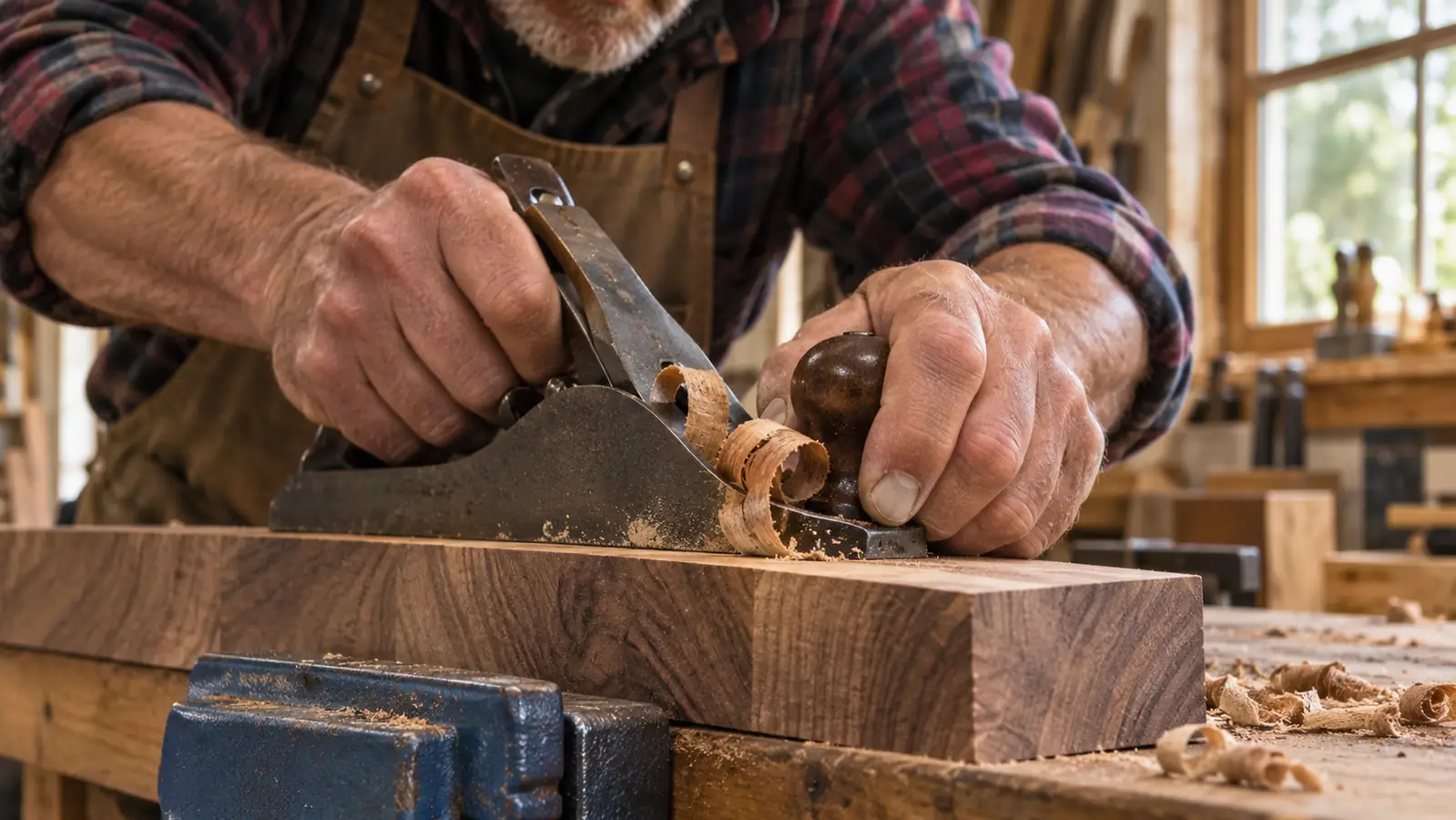
The shop here is a converted single-car garage, wood stove in the corner, one hard maple bench I built myself about fifteen years ago, and a sharpening station by the window where the light is honest. The block plane has lived on the shelf under the benchtop since March. In that time it has trimmed the ends of walnut drawer sides, broken the edges on close to sixty feet of ash casing for a neighbor's repair, cleaned up shoulders on a run of small box miters, and chamfered more pine than I want to count. Nothing exotic. That is the work a block plane actually does in a small shop.
The first thing I did was check the sole against a reference surface, because I do that with every plane that comes in, regardless of what the listing claims about the bottom being polished flat. Mine was close enough that I left it alone. If yours rocks on a straightedge, send it back rather than lapping it yourself on a plate. A new tool that is out of flat is a return, not a project.
The second thing I did was sharpen the blade, not because it arrived dull but because I want to know what edge geometry is in the tool before I judge anything else. That turned out to be the useful part of the exercise. The O1 steel took a clean edge on water stones and held it through a long afternoon of ash, and ash is a wood that will find every soft spot in a steel. O1 is not a fancy alloy. It sharpens quickly, and at the bench that matters more than wear resistance matters in a catalog.
What the Praise Gets Right
The blade is the reason this plane has a following, and the reason is not complicated. O1 takes a keen edge without a fight, and a block plane is a tool you sharpen often. A blade that sharpens in four minutes and holds for an hour of trimming is worth more to a hand-tool woodworker than a blade that sharpens in twenty and holds all day. The Jorgensen arrives with a usable edge, which is not something I would have said about an inexpensive plane twenty years ago.
The second thing the praise gets right is the sole. Cast iron, machined, and flat on the sample I received. A flat sole is the foundation of the entire tool. If the sole is not flat, no amount of skill at the stones will give you a shaving that comes off even across its width, and you will spend months wondering what you are doing wrong.
Where the Praise Runs Ahead of the Tool
Here is the part the five-star write-ups tend to leave out. Cutting depth on the Jorgensen is set with a knob, and a knob is a coarser instrument than the screw adjuster on a bench plane. A small turn moves the blade more than you expect the first several times you use it. On a fine trim cut, where you want a shaving you can read through, you will overshoot and back off and overshoot again until your hand learns the feel. It rewards a light touch and it punishes impatience.
The second thing to know is that this is not a smoothing plane and it does not pretend to be, though the internet will sometimes imply otherwise. On a wide panel with reversing figure, a low angle plane used flat will lift fibers where a steeper pitch would have cut them cleanly. That is not a defect. It is a mismatch between the tool and the job, and the people who complain loudest are usually asking a block plane to do work that belongs to a No. 4.
The third point is weight. At 1.5 pounds this is a light plane, which is exactly what you want when you are holding it one-handed to break an edge or chamfer a leg at the end of the day. It is less helpful when you want mass to carry a cut through dense end grain. On oak end grain I found myself pushing harder than I like, and pushing is where technique falls apart and the cut goes crooked.
The Low Angle Question
A low angle block plane beds the blade nearly flat to the sole, so the cutting edge meets the wood at a shallow angle. On end grain, that is the difference between slicing and scraping. The edge gets under the fibers and lifts a shaving instead of crushing them into dust. If you have ever tried to true the end of a board with a bench plane and gotten a ragged edge and a pile of sawdust, this is the geometry that fixes it.
It is worth saying plainly that low angle is not universally better. On face grain with contrary figure, a low angle can lift fibers. The usual answer is to hone a secondary bevel on the blade to raise the effective cutting angle, which is a five-minute job, and worth doing on a spare blade if you plan to use the plane hard. What you own with a low angle block plane is a tool that is excellent at one job and merely adequate at another. Marketing copy rarely puts it that way.
Setup, Sharpening, and What Arrives in the Box
The plane arrives with the blade installed. There is no case worth mentioning and no extra iron, so budget for a second blade only if you intend to keep two honed angles on hand. Because the blade is the part that matters, it is worth describing what I do with it. I sharpen at the factory angle with a micro bevel, on water stones, at the station by the window. Twenty strokes on a 1000 grit, ten on a 6000, a couple of light passes on the back to clear the wire edge. Then back to work.
The blade in the Jorgensen is 1.38 inches wide, a little over an inch and a quarter of cut. On a block plane that is about right. Wide enough to true the end of a drawer side in two passes, narrow enough to steer into a corner without gouging the adjoining face. The tool itself is small and portable, which is why mine lives in an apron pocket more often than on the shelf.
What the Reviews Do Not Tell You About Learning It
The largest thing missing from most write-ups is that a block plane is a skill before it is a purchase. People buy one expecting a tool that fixes an edge, and what they get is a tool that teaches them how much downward pressure to use, how to register the sole flat against the work, and how to read a shaving. None of that arrives in the first week. It arrives in the first month, in small increments, on scrap pine you were going to burn anyway.
The other thing nobody says is that most of the work happens before the plane touches the wood. A sharp edge, a flat sole, a board that is not rocking on the bench because you did not check the bench for a shaving. A dull blade on a block plane will skid and burnish the surface, and if you do not recognize that feel you will decide the tool is bad when the tool is fine and the edge is not. I have watched that happen to more than one person who bought a decent plane and quietly gave up on it.
How It Compares to the Plane It Replaced
The plane this one replaced was a secondhand block plane I bought at a tool meet in the nineties and used hard for thirty years. Its sole had gone hollow in the middle, which means the blade could not reach the wood in the center of the cut, so every shaving came off as a pair of ribbons instead of one. I could have flattened it. I did not, because the body was thin and I had already spent more evenings on it than it was worth.
The Jorgensen, being new and flat, cut full width from the first shaving. That is an unglamorous improvement and it is the one I notice every single time I pick it up. Add the O1 blade, which holds an edge noticeably longer than the carbon steel in the old plane, and the practical difference is that I spend less of an afternoon at the stones and more of it at the bench. That is the whole case for buying new instead of nursing old iron.
On Chamfers and Edge Breaking
Most of what a block plane does in a furniture shop is not joinery, it is edge work. A chamfer on the underside of a table apron, a light break on a drawer front so it does not feel sharp in the hand, the arris on a box lid, which is the corner where two faces meet. All of it is the same motion: a flat sole registered on the corner, light pressure, one continuous pass from end to end. The weight of this plane suits that work. A heavier plane would fight you on a vertical surface.
The trick is to take the whole chamfer in one pass if the board is not too long. Two passes that meet in the middle will show a line, and no amount of sanding hides a line that runs the length of a table apron. With practice the light body and the 1.38 inch blade make a consistent chamfer easy to repeat, and that is the sort of thing that makes a piece look like it came from someone who knows what they are doing.
What I Liked
- O1 blade takes a keen edge in minutes and holds it through a long afternoon
- Sole arrived flat on my sample, no lapping needed
- 1.5 pounds is light enough to use one-handed for chamfers and edge breaking
- 1.38 inch cut trues the end of a drawer side in two passes
- Small enough to keep in an apron pocket
Where It Falls Short
- Depth knob is coarse until your hand learns the feel
- Light weight works against you on dense end grain
- Will lift fibers on face grain with reversing figure
- You will need to learn to sharpen before it gives you its best
A sharp edge, a flat sole, and a board that is not rocking on the bench. Most of the work is finished before the plane touches the wood.
Who This Is For
The Jorgensen is for the woodworker who already owns a bench and a way to sharpen, and who wants a trim plane that will not need replacing in two years. It suits anyone cutting dovetails or box miters who needs to clean a shoulder, and anyone who wants to break an edge on a tabletop before the finish goes on. It is also a reasonable first block plane for someone coming back to hand tools, because the blade is forgiving and the tool is simple enough to understand in a single afternoon.
Who Should Skip It
If you want one plane to flatten a panel, this is not that plane. Buy a bench plane first. If you have no way to sharpen, put your money into stones and come back for the plane later, because a block plane with a dull edge is a paperweight with a nice sole. And if you are looking for a tool that produces a finished surface with no setup and no practice, this will disappoint you, and the disappointment will not be the plane's fault.
A trim plane you will still be using in ten years
Cast iron body, flat sole, O1 blade that sharpens in minutes. It does the small work, and it keeps doing it long after the box is gone.
Amazon Check Today's Price on Amazon →