
I marked out drawer sides with a pencil for about fifteen years longer than I should have. Not because a pencil is wrong. Because I was stubborn, and because I had talked myself into believing that a line is a line. It is not. A pencil line is wide, wide enough that somebody has to decide which side of it the saw goes on. That somebody is usually me at nine at night with tired eyes, and that is how a drawer ends up binding on one corner.
A marking gauge takes that decision away from you. You set the fence to a distance, you lock it, you run the tool along the edge of the board, and the cutter leaves a line you can drop a chisel straight into. The one that finally got me to put the pencil down was the Clarke Brothers Wheel Marking Gauge. It has been on my bench for the better part of a year, through box work and one neighbor's kitchen cabinet repair, and I have not once thought about going back.
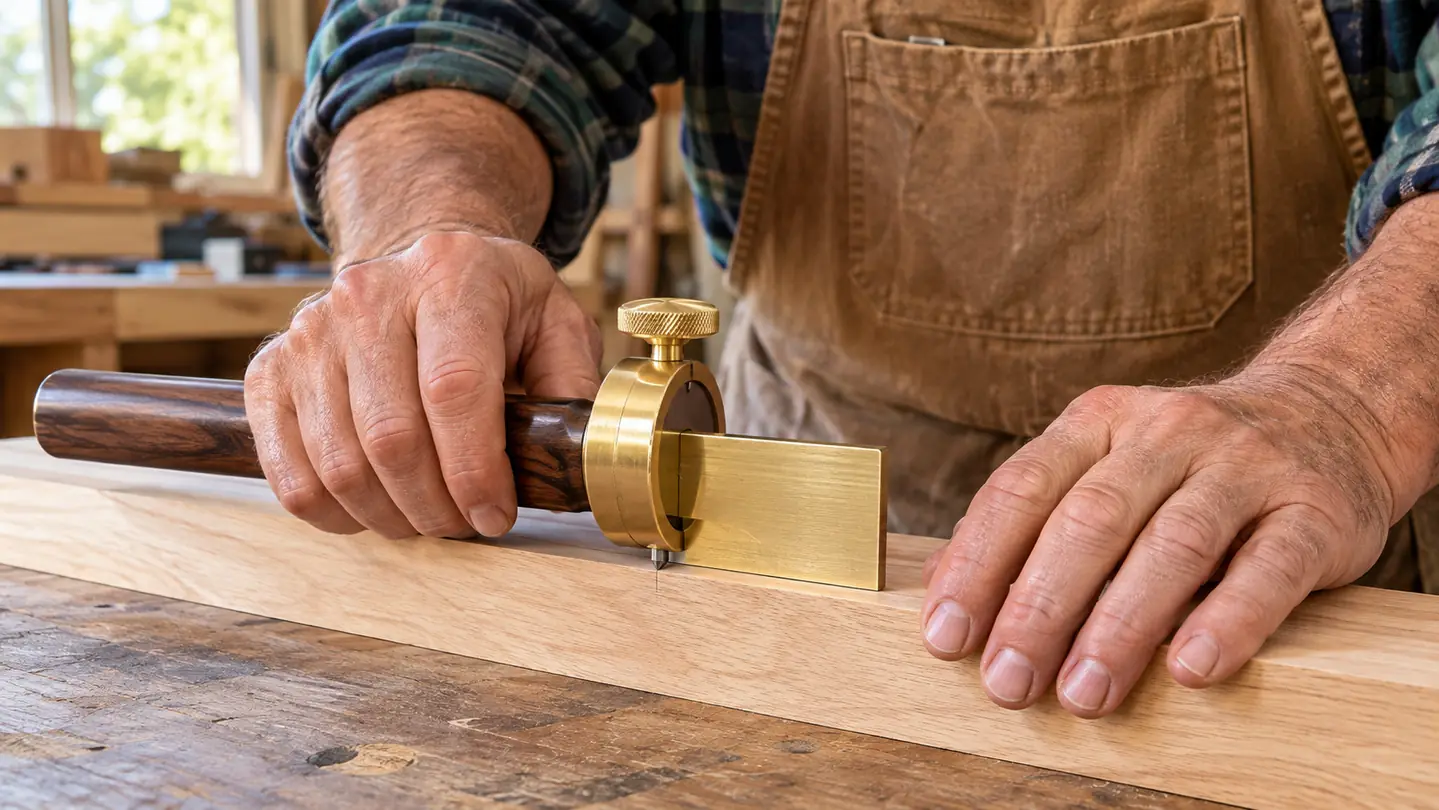
What arrived was simpler than I expected. The body is solid brass, with steel and aluminum alloy in the working parts, round in section and two inches across, on an eight inch bar. It weighs 0.17 kg. That is light enough that you forget you are holding it and heavy enough that the fence sits down on the board instead of skating across it. The body is knurled, so your fingers have somewhere to go when you have sawdust on them, and it is ambidextrous, which matters more than most right-handed woodworkers realize until they try to mark a face they cannot get behind.
The graduations are laser engraved on the bar in both metric and imperial, out to six inches or 150 mm. I still set mine from a steel rule most days, out of habit, but when I have to come back to a setting an hour later the marks are honest and they do not rub off the way a painted scale does. There are also two extra hardened steel wheel cutters in the box. That is the sort of thing you only truly appreciate the year the first wheel finally goes dull on you mid-project.
The feature I was most suspicious of is the fence. It has a flat spot machined into it, which they call a roll stop, and it is patent pending. I read that line and assumed it was copywriting. Then I set the tool down on the bench, it stayed exactly where I put it, and I stopped thinking about it. A round fence rolls. It rolls off the edge of the bench, it lands cutter first on a concrete floor, and you spend twenty minutes on your knees looking for a wheel the size of a shirt button. That flat spot is the least interesting good idea on the whole tool.
A round fence rolls. It lands cutter first on a concrete floor. The flat spot is the least interesting good idea on the tool, and it is the one I would not give up.
The tool that got the pencil out of my layout work
Solid brass body, an eight inch graduated bar, and two spare hardened steel cutters in the box. This is the gauge I reach for now on anything that has to be right the first time.
Amazon Check Today's Price on Amazon →The first board I marked with the Clarke Brothers gauge was a piece of cherry for a small box, and the difference was immediate and slightly annoying. A wheel slices the fibres rather than crushing them. Where a pin gauge will sometimes tear a softwood and leave you with a fuzzy trench, the wheel leaves a line you can feel with a fingernail. Across the grain it is clean. With the grain, on something soft, you can burnish the line instead of cutting it if you lean on the tool, so I stopped leaning on it. Light pressure, two passes, done.
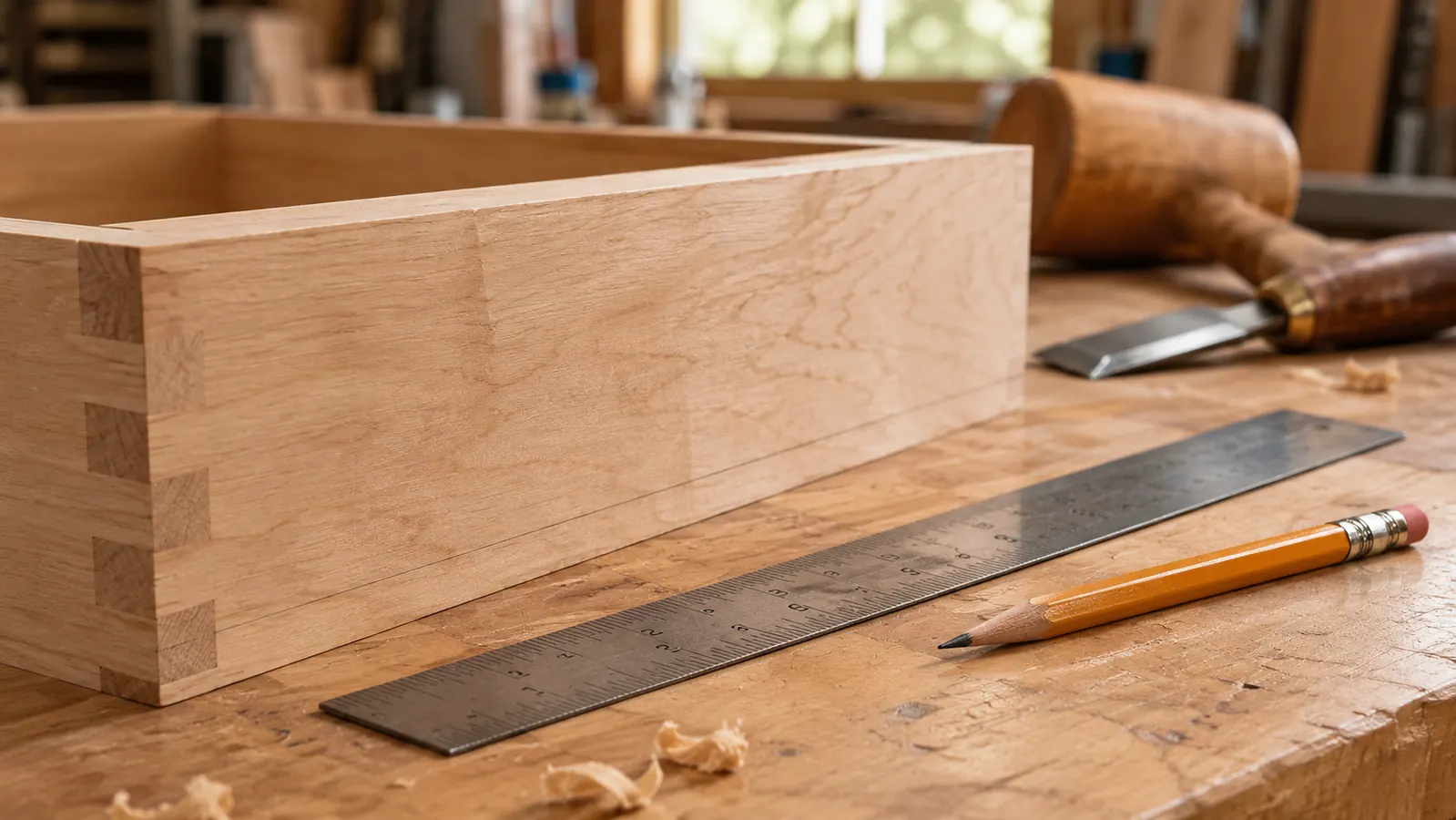
There was the usual learning curve. A wheel gauge wants the fence held flat against the face of the board, not tipped, and if you roll your wrist the wheel walks away from the fence and your line wanders off toward the other end. That is me, not the tool. Once I settled into holding the fence flat and letting the wheel do the cutting, my lines got straight and stayed straight. The eight inch bar helps as well, since I can mark the full width of most of the drawer sides I build without resetting anything.
The cons are real, just small. The cutter is fine, and fine cutters dull. Two spares in the box softens that, but eventually you are buying more, and you cannot hone a wheel that small forever. The graduations are useful and I would still not lay out a project from them alone, because a steel rule is the reference and the etched marks are a convenience. And the light weight at 0.17 kg suits me, but if you are used to the heft of a heavy wooden gauge this will feel like holding a pencil for the first week.
It has lived in an unheated New Hampshire garage through a winter and come out the other side without any fuss, which is what corrosion resistant is supposed to mean and often does not. The listing sits around 4.7 stars across a few thousand reviews, and that reads about right to me for a tool that does one job and does it without asking for attention. I am not going to tell you a marking gauge will make you a better woodworker. It will not. What it will do is remove one small nightly decision from your life, and if you cut joinery in the evening after a day of other work, that is worth more than it sounds.
One more thing worth saying plainly. I still keep a pencil in my apron. It comes out for rough stock, for anything that goes through a machine, for framing a repair on a neighbor's barn. The gauge comes out for the work that has to be right the first time, which for me is drawer sides, mortises, and the shoulders on a tenon. That is the honest split, and it took me fifteen years to make it.
What I'd Tell You If We Were Sitting at My Kitchen Table
I would tell you to buy the Clarke Brothers gauge if you already cut joinery by hand and you are still marking it with a pencil. I would tell you to skip it if every cut you make gets fed into a machine fence, because then a pencil line is just a suggestion and nobody cares how wide it is. And I would tell you the thing I tell everybody who asks me about layout: set the fence, test it on scrap, and measure the line before you trust the number. The tool holds a setting. It does not know what you meant. That part is still your job, and no gauge on earth will do it for you.
Set it, test it on scrap, and stop guessing which side of the line to cut
Eight inch graduated bar, roll stop fence, knurled body, two spare cutters included. If you mark joinery by hand in the evenings, this is the small upgrade you will notice on the very first drawer.
Amazon See the Clarke Brothers Gauge on Amazon →